

Precision Medicine in Oncology®
Latest News
Advertisement
Latest Videos
































































Advertisement
More News
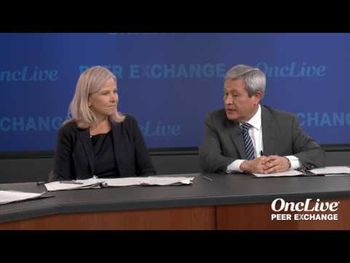
A divide has developed between pathways that primarily serve physicians and those that cater to payers that are trying to rein in costs.
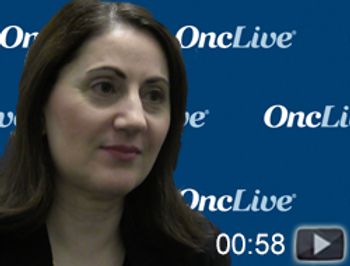
Vassiliki A. Papadimitrakopoulou, MD, professor, Department of Thoracic/Head and Neck Medical Oncology, The University of Texas MD Anderson Cancer Center, discusses treatment options for patients with EGFR-mutant non-small cell lung cancer (NSCLC).
Jonathan C. Trent, MD, PhD, discusses Sylvester Comprehensive Cancer Center’s ongoing efforts to advance the precision medicine process to improve patient care.

Foundation Focus CDx BRCA, can detect both germline and somatic BRCA1/2 mutations in women with ovarian cancer who are candidates for the PARP inhibitor rucaparib (Rubraca).
In an OncLive Peer Exchange® discussion, experts in breast malignancies reviewed some exciting new developments in TNBC.
Ramaswamy Govindan, MD, discusses the rapid therapeutic changes in NSCLC and the sequencing questions physicians are currently asking.

Christopher J. Kane, MD, discusses the challenges and impact of genetic testing on patients with prostate cancer.

W. Marston Linehan, MD, discusses the landscape of kidney cancer, current clinical trials, and hope for the future of immunotherapy in this disease.
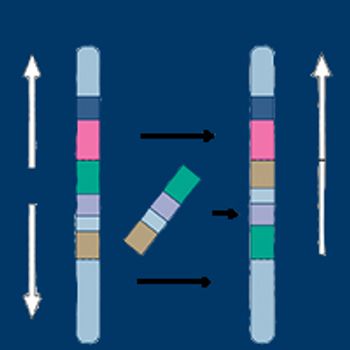
Thus far, only a small portion of known gene fusions have been tested with functional assays in an effort to understand if, and how, they drive cancer. Newly identified and well-established gene fusions alike continue to provide promising therapeutic targets and broaden our understanding of cancer development.
Targeted therapies have improved outcomes for HER2-positive breast cancer, which is characterized by an aggressive tumor phenotype and lower overall survival. However, questions remain on how to predict which patients will benefit from neoadjuvant or extended HER2-targeted therapies and how to treat patients with triple-positive breast cancer.

Matthew Gubens, MD, an assistant professor of thoracic oncology at the University of California San Francisco, discusses the prevalence of patients with non–small cell lung cancer (NSCLC) who harbor mutations in EGFR/ALK/ROS1 as well as PD-L1 expression.

C. Kent Osborne, MD, director, Dan L. Duncan Comprehensive Cancer Center, Baylor College of Medicine, discusses targeting the HER2 pathway in breast cancer.

Mike Janicek, MD sheds light on why physicians are slow to educate patients on testing, the detection of genes aside from BRCA1/2, and the lesser-known benefits of getting genetic testing early on in a diagnosis.
David I. Quinn, MD, MBBS, associate professor of Medicine, medical director of USC Norris Cancer Hospital, on combinations of targeted therapies for patients with renal cell carcinoma (RCC).
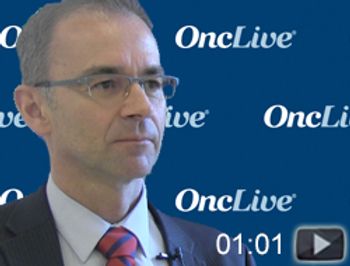
Wolfgang Janni, MD, PhD, University of Ulm, discusses the benefits of HER2-targeted therapies for patients with all stages of HER2-positive breast cancer.
Mark B. Stoopler, MD, discusses ongoing developments in immunotherapy and his vision for the future of non-small cell lung cancer treatment.
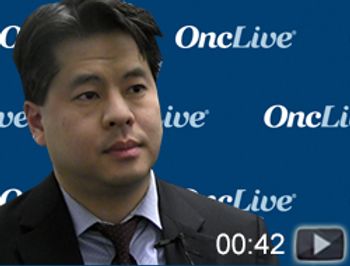
David M. Jackman, MD, medical director of Clinical Pathways, Dana-Farber Cancer Institute, assistant professor of Medicine, Harvard Medical School, discusses overcoming resistance to EGFR inhibitors in non–small cell lung cancer (NSCLC).

Elizabeth Swisher, MD, professor, Department of Medicine, Division of Medical Genetics, University of Washington School of Medicine, Breast and Ovarian Cancer Prevention Program, Seattle Cancer Care Alliance, discusses the results of the ARIEL2 trial in patients in patients with relapsed, platinum-sensitive, high-grade ovarian carcinoma with a germline or somatic BRCA mutation.

Maintenance therapy with olaparib showed a 70% reduction in the risk of progression or death compared with placebo for patients with platinum-sensitive, relapsed, BRCA-mutant ovarian cancer.

Treatment with a carboplatin desensitization regimen led to improved overall survival in patients with BRCA-proficient ovarian cancer.
Mismatch repair-deficient endometrial cancers exhibited significantly higher levels of PD-L1 expression compared with MMR-intact tumors.
The PARP inhibitor rucaparib slowed progression of relapsed BRCA-mutant ovarian cancer regardless of whether the mutations were somatic or germline, a new analysis of a phase II trial showed.
Leonard Gomella, MD, discusses the current state and critical next steps for optimizing genetic testing in prostate cancer.
The so-called butterfly effect, in which a small creature can cause something on the scale of an earthquake merely by flapping its wings, is fodder for debate on whether the digital revolution in medicine can deliver on its promise for precision medicine.
Advertisement
Advertisement
Trending on OncLive
1
Ifinatamab Deruxtecan BLA Voluntarily Withdrawn in Previously Treated Extensive-Stage SCLC
2
Etentamig Improves Response and PFS vs Standard Therapies in Triple-Class Exposed Relapsed/Refractory Myeloma
3
Dr Voorhees on Eligibility Criteria for the CERVINO Trial in Multiple Myeloma
4
Long-Term PERSEUS Data Confirm Durable PFS Benefit With D-VRd in Transplant-Eligible Newly Diagnosed Myeloma
5