



Chronic Lymphocytic Leukemia
Latest News
Advertisement
Latest Videos



























































Advertisement
More News
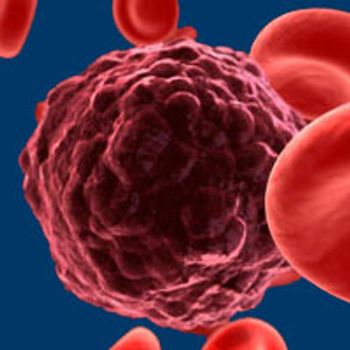
There have been updates in chronic lymphocytic leukemia prevalence and diagnosis, with an emphasis on testing options.
In December 2018, pivotal trial data were presented at the ASH Annual Meeting that demonstrated promising results for the first-line treatment of patients with chronic lymphocytic leukemia (CLL) or small lymphocytic leukemia. In particular, new courses of CLL care in several patient populations emerged from the findings of 3 trials.

Jennifer Woyach, MD, discusses the current treatment spectrum of chronic lymphocytic leukemia and the significance of the ALLIANCE trial.

Matthew S. Davids, MD, MMSc, characterizes the significance of the ALLIANCE, ECOG E1912, and iLLUMINATE trials within the broader treatment spectrum for chronic lymphocytic leukemia.

The European Medicines Agency’s Committee for Medicinal Products for Human Use has recommended expanding the indications of ibrutinib (Imbruvica) to include use in combination with obinutuzumab (Gazyva) for adult patients with previously untreated chronic lymphocytic leukemia, and also in combination with rituximab (Rituxan) for the treatment of adult patients with Waldenström’s macroglobulinemia.
Jennifer Woyach, MD, discusses the 3-year follow-up from the single-arm study of the combination of acalabrutinib (Calquence) and obinutuzumab (Gazyva) showcase the efficacy of the regimen in both patients with treatment-naïve and relapsed/refractory chronic lymphocytic leukemia and the future of treatment in the space.

Patients with high-risk relapsed/refractory chronic lymphocytic leukemia who failed or were intolerant of ibrutinib derived more benefit from CD19‐targeted CAR T-cell therapy when the BTK inhibitor was concurrently administered than when it was not.
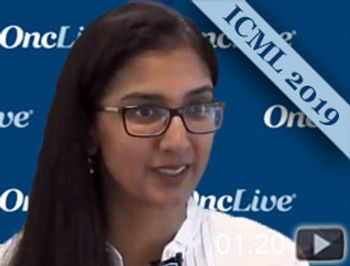
Tanya Siddiqi, MD, a hematologist/oncologist at City of Hope, discusses the phase I/II TRANSCEND CLL 004 trial, which evaluated the efficacy of anti-CD19 CAR T cells in patients with relapsed/refractory chronic lymphocytic leukemia or small lymphocytic lymphoma.

The CAR T-cell therapy lisocabtagene maraleucel demonstrated high rates of response, including minimum residual disease in blood and marrow in patients with relapsed/refractory chronic lymphocytic leukemia or small lymphocytic lymphoma.

Acalabrutinib elicited high rates of response as well as prolonged survival and was well tolerated in patients with chronic lymphocytic leukemia who demonstrated intolerance to ibrutinib.
In a careful evaluation of chemotherapy‐free regimens, the combination of obinutuzumab plus venetoclax compared to obinutuzumab plus chlorambucil, objective and complete response rates, as well as progression-free survival were superior with the venetoclax combination in the overall study population and across all genetic subgroups evaluated in patients with chronic lymphocytic lymphoma.

The phase III ASCEND trial is only one of the pivotal trials that have presented data to suggest that acalabrutinib (Calquence) could see an FDA approval for the frontline treatment of patients with chronic lymphocytic leukemia.
Paul Barr, MD, medical director, Cancer Center Clinical Trials Office, and assistant professor, School of Medicine and Dentistry, University of Rochester, discusses the 6-year follow-up in patients with chronic lymphocytic leukemia (CLL) or small lymphocytic lymphoma (SLL) on ibrutinib (Imbruvica) as part of the RESONATE study.

Jennifer R. Brown, MD, PhD, highlights the new and upcoming research regarding acalabrutinib in the field of chronic lymphocytic leukemia.
Matthew S. Davids, MD, MMSc, associate director, Center for Lymphocytic Leukemia, physician, Dana-Farber Cancer Institute, and assistant professor of medicine, Harvard Medical School, discusses the use of CAR T-cell therapy for the treatment of patients with chronic lymphocytic leukemia (CLL).

Chemotherapy-free treatment with single-agent acalabrutinib provided a statistically significant and clinically meaningful improvement in progression-free survival compared with physicians’ choice of standard therapy in patients with previously treated chronic lymphocytic leukemia.
Among the most highly anticipated study results to be presented during the 2019 European Hematology Association Congress were those of the phase III ASCEND trial, which investigated the use of acalabrutinib monotherapy in patients with previously-treated chronic lymphocytic leukemia.

Ibrutinib monotherapy significantly improved event- and progression-free survival compared with placebo in treatment-naïve patients with early-stage, asymptomatic chronic lymphocytic leukemia.

Alessandra Tedeschi MD, Department of Hematology, Azienda Ospedaliera Niguarda Ca' Granda in Milan, Italy, discusses the long-term findings of the phase III RESONATE-2 trial during the 2019 European Hematology Association Congress.

Othman Al-Sawaf, MD, discusses findings from the CLL14 trial, the rationale for exploring this proposed combination, and shares his thoughts on the emerging treatment paradigms in chronic lymphocytic leukemia.

Frontline therapy with ibrutinib was successfully administered for more than 60 months in patients with chronic lymphocytic leukemia aged 65 years and older and provided improved progression-free and overall survival compared with chlorambucil.

The combination of acalabrutinib (Calquence) and obinutuzumab (Gazyva) demonstrated a statistically significant and clinically meaningful improvement in progression-free survival compared with obinutuzumab/chlorambucil in patients with previously untreated chronic lymphocytic leukemia, meeting the primary endpoint of the phase III ELEVATE-TN trial.
Simultaneous targeting of Bruton’s tyrosine kinase and the CD20 antigen led to overall responses in more than 90% of patients with chronic lymphocytic leukemia, including untreated and relapsed/refractory disease.

The addition of venetoclax to obinutuzumab reduced the risk for disease worsening or death by 65% compared with obinutuzumab plus chlorambucil in patients with previously untreated chronic lymphocytic leukemia.

Sameem Abedin, MD, assistant professor, Medical College of Wisconsin, discusses the role of venetoclax plus obinutuzumab in chronic lymphocytic leukemia.
Advertisement
Advertisement
Trending on OncLive
1
Sacituzumab Govitecan Triplet Elicits Durable Responses in Treatment-Naive Metastatic Urothelial Cancer
2
Perioperative Enfortumab Vedotin Plus Pembrolizumab Improves ctDNA Clearance in Cisplatin-Eligible MIBC
3
Ad Hoc Analysis Supports Contributions of Both Enfortumab Vedotin and Pembrolizumab in Cisplatin-Ineligible MIBC
4
Pembrolizumab Plus Chemo Misses EFS End Point in Cisplatin-Eligible MIBC
5