


Colorectal Cancer
Latest News
Advertisement
Latest Videos




























































Advertisement
More News

Vivek Subbiah, MD, discusses outcomes with selpercatinib in patients with RET fusion–positive cancer.

The majority of independently adjudicated interstitial lung disease cases associated with fam-trastuzumab deruxtecan-nxki were low grade and occurred within the first 12 months of treatment, with lower risk of developing the effect observed in patients who were on the drug for longer than 1 year.

Andrew Coveler, MD, discusses the toxicity profile of NUC-3373 in metastatic colorectal cancer.

Atezolizumab elicited durable clinical activity irrespective of microsatellite instability status in patients with advanced solid tumors with a tumor mutational burden of more than 16 mutations per megabase.

Syed Kazmi, MD, highlights the go-to regimens for patients with mCRC.
The FDA has authorized the marketing of the first device that utilizes artificial intelligence based on machine learning to help clinicians detect lesions like polyps or suspected tumors in the colon in real time during a colonoscopy.
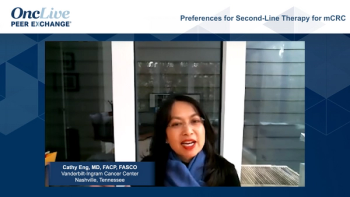
Drs Cathy Eng and Joleen M. Hubbard explain how patients with metastatic colon cancer typically respond to initial treatment and describe the factors that impact second-line treatment decisions.
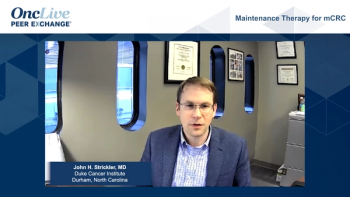
Recommendations regarding the selection, initiation, and length of maintenance therapy to help manage cases of metastatic colon cancer.

Atrayee Basu-Mallick, MD, highlights established and emerging biomarker-directed therapies in colorectal cancer.

The FDA has approved a new biweekly dosing regimen of 500 mg/m2 as a 120-minute intravenous infusion for cetuximab (Erbitux) for patients with KRAS wild-type, EGFR-expressing colorectal cancer or squamous cell carcinoma of the head and neck.

Nageshwara Arvind Dasari, MD, discusses the eligibility criteria for the phase 3 FRESCO-2 trial, which examined the use of fruquintinib in patients with metastatic colorectal cancer.
Axel Grothey, MD, discusses the potential applications for ctDNA in CRC and shed light on the updated analysis from the pivotal IMbrave150 trial in advanced hepatocellular carcinoma.

Tony Philip, MD, discusses research efforts underway in colorectal cancer.
Investigation into a novel oncolytic adenovirus as a treatment option for patients with colorectal cancer and other cancers with liver metastasis is underway.
The rationale for treating select patients with metastatic colorectal cancer with intensive therapy in the first-line setting vs waiting until disease progression.
Cathy Eng, MD, FACP, FASCO, of Vanderbilt-Ingram Cancer Center reacts to the increasing rate of colorectal cancer among the younger population and highlights topics that apply specifically to counseling younger patients.

Cathy Eng, MD, FACP, FASCO, discusses the rising incidence of early-onset colorectal cancer.

A prospective, multicenter, observational USOPTIVAL study has been initiated in the United States to examine an investigational cell-free DNA blood test to detect advanced adenoma and colorectal cancer.
Axel Grothey, MD, discusses the differences between available assays evaluating circulating tumor DNA in colorectal cancer.

Tanios S. Bekaii-Saab, MD, FACP, discusses the challenges of utilizing chemotherapy-free regimens in colorectal cancer.
An overview of topics that oncologists should counsel patients on when working with them to select therapy to treat metastatic colon cancer.
Experts in gastrointestinal oncology highlight their approaches to assessing patients with newly diagnosed metastatic colorectal cancer and explain the variables that factor into first-line treatment decisions.
The FDA has granted 2 breakthrough device designations to cover new intended uses of the Signatera molecular residual disease test developed by Natera, Inc.

The pipeline of new agents in gastrointestinal cancers is robust, with the emergence of several antibody-drug conjugates, KRAS G12C inhibitors, and novel TKI/immune checkpoint inhibitor combinations.

Cathy Eng, MD, FACP, FASCO, discusses the ongoing phase 3 FRESCO-2 trial in metastatic colorectal cancer.
Advertisement
Advertisement
Trending on OncLive
1
Dr Reiss Binder on the FDA Approval of Daraxonrasib for Metastatic PDAC
2
FDA Approves Daraxonrasib for Metastatic Pancreatic Ductal Adenocarcinoma
3
ASCO Issues Warning Regarding Ifosfamide Shortage for Cancer Care
4
Dr Ayanambakkam on the Safety of Darlifarnib Plus Cabozantinib in RCC KD
5