



Colorectal Cancer
Latest News
Advertisement
Latest Videos



























































Advertisement
More News

Average cumulative relative dose was found to be associated with survival over average relative dose intensity in patients with colorectal cancer, highlighting that obese patients receive lower cumulative doses of adjuvant chemotherapy and therefore may be attributed to their poorer survival outcomes.

Implications for using the combination of pembrolizumab and lenvatinib to treat patients with metastatic colorectal cancer based on updated data from the LEAP-005 study.
Considerations for treating patients with metastatic colorectal cancer with the combination of nivolumab and regorafenib based on preliminary data.

Steven H. Itzkowitz, MD, discusses the importance of screening for CRC in younger adults, the results of the database analysis, and strategies for implementing early messaging in the community setting for this population.

The first participants from the United States have been dosed with LUT014, a novel, topical BRAF inhibitor in a phase 2 trial that is evaluating the agent in patients with metastatic colorectal cancer who have developed dose-limiting acneiform lesions following treatment with an EGFR inhibitor.
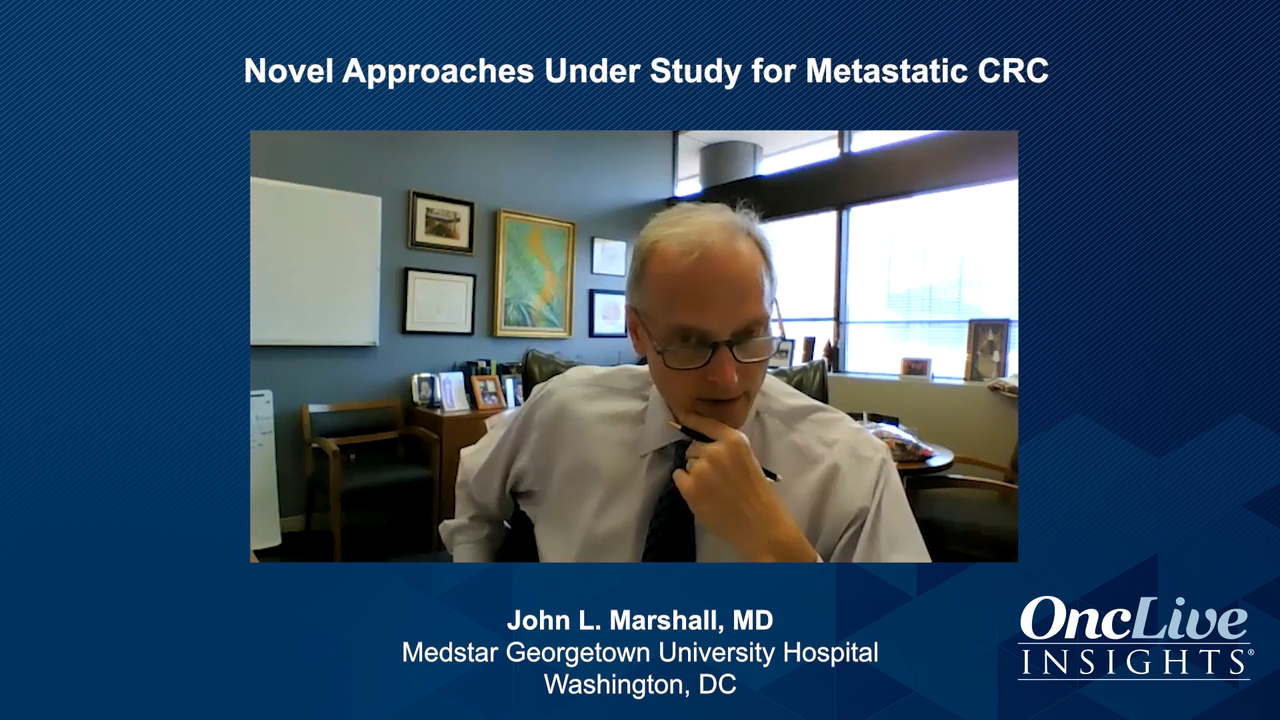
Drs. John L. Marshall, Marwan G. Fakih, and Joleen M. Hubbard, describe the current role of chemotherapy for frontline metastatic colorectal cancer based on novel treatment advances.

Jeremy C. Jones, MD, discusses key lessons learned from the phase 3 KEYNOTE-177 trial.
Considerations for frontline immunotherapy for patients with microsatellite instability high metastatic colorectal cancer based on data from the KEYNOTE-177 and CheckMate 142 studies.

Stacey A. Cohen, MD, discusses the standardization of triplet-based chemotherapy regimens in colorectal cancer.

Mayo Clinic’s Joleen M. Hubbard, MD, interprets data recently presented on the use of EGFR inhibitors as frontline therapy for appropriate patients with metastatic colorectal cancer.

Tumor characteristics, patient factors, and supporting data that affect frontline treatment decisions for patients with microsatellite stable (MSS) metastatic colorectal cancer.

Doublet and triplet chemotherapy-based therapies are standard treatment options for patients with BRAF V600–mutant metastatic colorectal cancer.

Ardaman Shergill, MD, discussed the use of EGFR inhibitors in metastatic colorectal cancer and advantages of expanded dosing indications.

Richard Kim, MD, discusses the utility of EGFR inhibitors in patients with RAS wild-type colorectal cancer, the convenience of biweekly dosing with cetuximab, recommendations for managing EGFR inhibitor–related treatment-related adverse effects, and novel combinations on the horizon.
Metastatic colorectal cancer (CRC) experts discuss tumor sidedness and their current use of next-generation sequencing panels to assess patients and guide treatment decisions.

Reactions to the increase in prevalence of metastatic colorectal cancer (CRC) among a younger patient population despite treatment advances.

Stacey A. Cohen MD, discusses the preliminary results of the ongoing GALAXY trial, part of the CIRCULATE-Japan project, in colorectal cancer.

Jeremy C. Jones, MD, discusses targeting HER2 alterations in colorectal cancer.

Jaffar A. Ajani, MD, and Zev A. Wainberg, MD, discuss FDA updates regarding the dosing schedule of cetuximab for metastatic colorectal cancer and the value of real-word data on clinical practice patterns in the community when administering this drug.

Zev A. Wainberg, MD, and Jaffer A. Ajani, MD, discuss how to best utilize information provided to inform treatment decisions, treatment approaches for patients with newly diagnosed RAS wild-type mCRC, and factors that affect influence selecting a 2- vs 3-drug chemotherapy regimen.

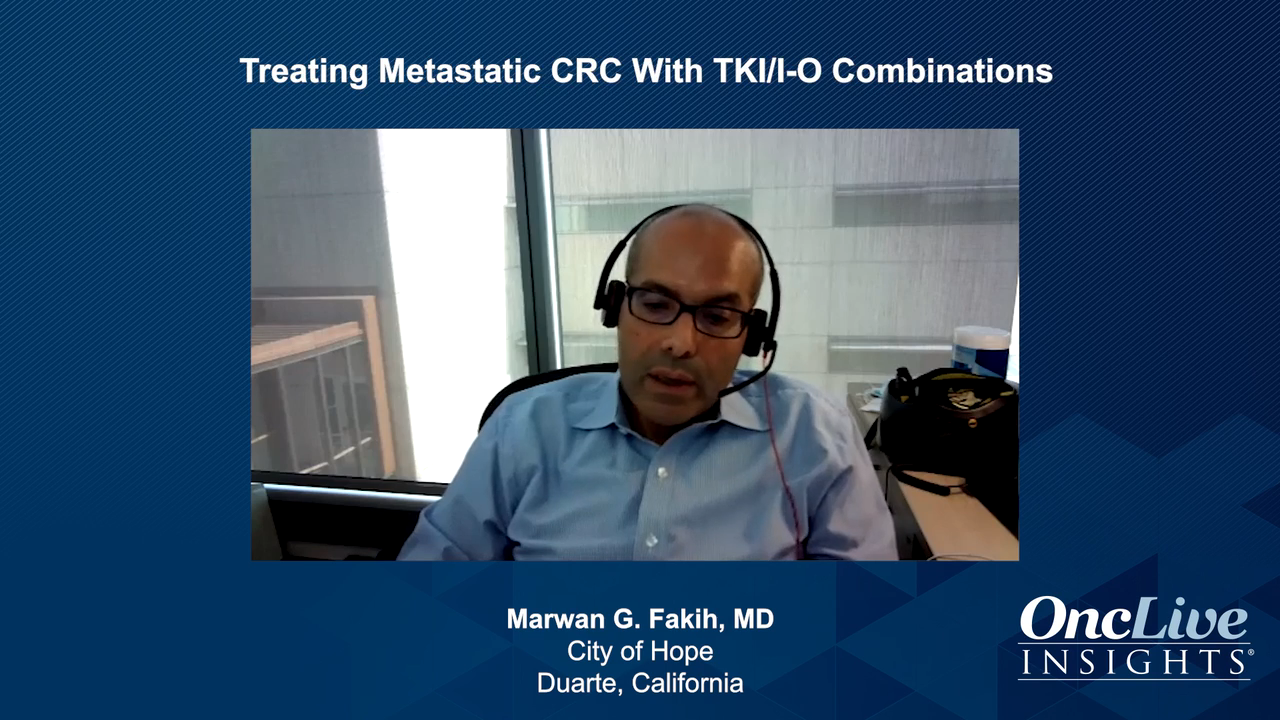
Marwan Fakih, MD, discusses the efficacy of regorafenib plus nivolumab in patients with pMMR/MSS CRC, the potential for VEGFR/PD-1 inhibitor combination regimens in this population, and future directions for research.

Jeremy C. Jones, MD, discusses the risk of interstitial lung disease with fam-trastuzumab deruxtecan-nxki in colorectal cancer.

Dr. Wainberg discusses factors that help steer treatment selection in HER2-positive gastrointestinal malignancies, advances on the horizon, and more.

Joleen M. Hubbard, MD, discusses the utility of minimal residual disease assessment for stage II colorectal cancer.

The combination of adagrasib and cetuximab is being investigated in patients with previously treated, advanced, KRAS G12C–mutant colorectal cancer in the international, phase 3 KRYSTAL-10 study.
Advertisement
Advertisement
Trending on OncLive
1
FDA Approves Daraxonrasib for Metastatic Pancreatic Ductal Adenocarcinoma
2
Dr Reiss Binder on the FDA Approval of Daraxonrasib for Metastatic PDAC
3
ASCO Issues Warning Regarding Ifosfamide Shortage for Cancer Care
4
Dr Ayanambakkam on the Safety of Darlifarnib Plus Cabozantinib in RCC KD
5