




Gynecologic Oncology
Latest News

First-line Pembrolizumab Plus Chemo Meets PFS End Point in Advanced or Recurrent Endometrial Carcinoma
By Chris Ryan

Avutometinib Plus Defactinib Generates Responses in Recurrent Low-Grade Serous Ovarian Cancer
By Chris Ryan
Advertisement
Latest Videos































































Advertisement
More News

Efforts to target the folate metabolism network have entered a new stage, with the approval of a novel therapy directed at folate receptor–α and the potential for additional agents aimed at that target in solid tumors.

Closing their discussion, the panel shares advice for new nurse practitioners caring for patients who have endometrial cancer.
The panel shares the most critical unmet needs for patients with endometrial cancer.

A triplet regimen comprised of COM701, BMS-986207, and nivolumab was found to have encouraging antitumor activity and favorable tolerability in patients with heavily pretreated, platinum-resistant ovarian cancer.

because of the differences between the characteristics of research subjects and individuals routinely cared for outside the confines of a clinical trial, appropriately designed examinations of “real-world” populations may provide a more relevant picture of the actual influence of a particular therapeutic intervention.

Treatment with the folate receptor α–directed antibody-drug conjugate luveltamab tazevibulin led to a 37.5% overall response rate in Frα-selected patients with advanced ovarian cancer, defined by a tumor proportion score above 25%.

Erin K. Crane, MD, MPH, talked to Oncology Fellows about helping trainees care for their own health and wellness, navigate the politics surrounding gynecologic care, and the lessons she hopes they take away from the program.
Kimberly A. Spickes, CNP, discusses how often patients with endometrial cancer have dose reductions or interruptions at her institution, and who is involved in the decision to dose-reduce.
Nurse Practitioner Kimberly Halla explains the proactive measures she takes to ensure patients with endometrial cancer are prepared to experience and manage the adverse effects of treatment.

Treatment with PDS0101 plus the tumor-targeting IL-12 fusion protein M9241 and bintrafusp alfa elicited encouraging overall survival data in patients with checkpoint inhibitor–naïve and –refractory advanced human papillomavirus–positive anal, cervical, head and neck, vaginal, and vulvar cancer.

Data concerning the long-term benefit of PARP inhibitors as maintenance therapy for select patients with ovarian cancer in later-line settings have come under fire in 2022 as several agents have failed to demonstrate improvements in OS outcomes.

Ritu Salani, MD, MBA, discusses the continued evolution of molecular profiling in endometrial cancer, advances in immunotherapy for endometrial and cervical cancer, and ongoing research in gynecologic cancers.

Peter Dottino, MD, FACOG, discusses the need for more accurate early screening tests for ovarian cancer, why testing for early-stage endometrial cancer is also important, the process used to develop the screening test, and how it could be implemented into practice if it is approved by the FDA.

During his career, David M. Gershenson, MD, has helped turn ovarian cancer treatment into an evidence-based field and built better therapies through an improved biological understanding of the disease.

Caroline Billingsley, MD, discusses the effect of mirvetuximab soravtansine’s approval on the treatment landscape in ovarian cancer and avenues for future research with antibody-drug conjugates and immunotherapy in this space.
Kimberly A. Spickes, CNP, details the adverse events she sees with combination lenvatinib and pembrolizumab treatment for recurrent endometrial cancer.
Kimberly Halla, NP, describes the standards for monitoring patients on therapy for recurrent endometrial cancer, including how often patients are seen in-person.
Overall survival is a critically relevant end point in randomized oncology clinical trials, but its interpretation is often not as straightforward as some may wish to acknowledge.
The panel explains how to educate patients on the adverse effects they may experience with chemotherapy, their options for management, and the importance of encouraging patients to contact their care team.
The panel reviews the second-line treatment options for patients with recurrent endometrial cancer.
Nurse Practitioner Kathleen Lutz talks about the efficacy of chemotherapy in patients with endometrial cancer, and how she discusses the chance of disease recurrence with patients.
Continuing her discussion, Kathleen highlights the most common adverse events she sees in patients treated with chemotherapy for advanced endometrial cancer who are unfit for surgery.
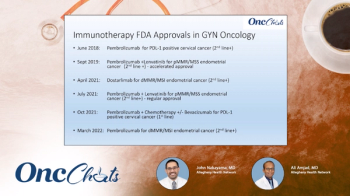
In this seventh episode of OncChats: Immunotherapy and You, John Nakayama, MD, and Ali Amjad, MD, walk through a timeline of FDA approvals of immunotherapy approaches in gynecologic oncology and discuss associated toxicities to be aware of as well as how to manage them.
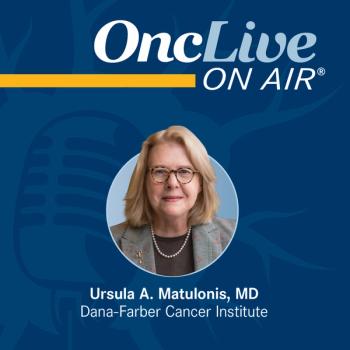
Dr Matulonis discusses the FDA approval of mirvetuximab soravtansine-gynx in folate receptor alpha–positive, platinum-resistant ovarian cancer, key efficacy and safety data from the SORAYA trial, and how further research can continue the momentum behind finding effective ovarian cancer treatments.
Dostarlimab plus standard-of-care chemotherapy, followed by dostarlimab alone, produced a statistically significant and clinically meaningful improvement in progression-free survival vs chemotherapy alone in patients with primary advanced or recurrent endometrial cancer.
Advertisement
Advertisement
Trending on OncLive
1
The OncFive: Top Oncology Articles for the Week of 10/4/2026
2
FDA Approves Atezolizumab Plus Chemo for Stage III dMMR Colon Cancer
3
FDA Grants Breakthrough Device Designation to Natera’s Multi-Cancer Early Detection Assay
4
FDA Flashback: Hematologic Cancer Decisions and News From September 2026
5