



Gynecologic Oncology
Latest News
Advertisement
Latest Videos
































































Advertisement
More News

A panel of experts on ovarian cancer review ongoing trials on maintenance therapies for recurrent ovarian cancer.

The addition of pembrolizumab to external beam radiotherapy and concurrent chemotherapy, followed by brachytherapy, improved progression-free survival vs concurrent chemoradiotherapy alone in newly diagnosed patients with high-risk locally advanced cervical cancer.

The novel bifunctional fusion protein SHR-1701 combined with standard first-line treatment with the bevacizumab biosimilar BP102 and platinum-doublet chemotherapy produced high, durable responses and was deemed tolerable in patients with cervical cancer.
A detailed discussion focused on recent data on PARP inhibitors in the recurrent ovarian cancer setting.
Ovarian cancer experts review clinical trial data on the efficacy of later-line therapies in advanced ovarian cancer.

Michael J. Birrer, MD, PhD, highlights the effect of improved molecular characterization in endometrial cancer, the clinical significance of the KEYNOTE-775 trial, and recent changes in the frontline treatment landscape in advanced endometrial cancer.

Paola Gehrig, MD, discusses the optimal use and timing of genetic testing in endometrial cancer.
A comprehensive overview of recent clinical trial data on PARP inhibitors in the first-line maintenance setting in ovarian cancer presented at ASCO 2023.
An expert panel highlights current unmet needs in the maintenance setting for ovarian cancer.
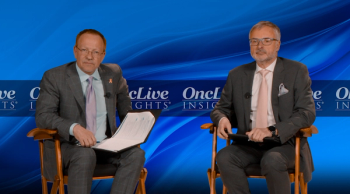
Christian Marth, MD, PhD, reviews the adverse effects of pembrolizumab and lenvatinib in the treatment of endometrial cancer, as well as the patient experience with these treatments.
Bradley J. Monk, MD, FACS, FACOG, and Christian Marth, MD, PhD, share treatment approaches to patients with endometrial cancer with a low response rate to chemotherapy, highlighting a biomarker-based approach.

Alessandro Santin, MD, discusses the clinical activity of sacituzumab govitecan-hziy in patients with recurrent endometrial cancer who overexpress Trop-2.

Marilyn Huang, MD, discusses the need for non-chemotherapy options in advanced ovarian cancer, as well as data on the use of neoadjuvant PARP inhibitors for this population in the phase 1 NOW study.
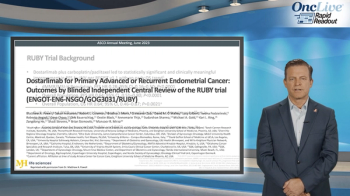
Matthew Powell, MD, presents data from the blinded independent central review of the RUBY trial, which studied dostarlimab in patients with primary advanced or recurrent endometrial cancer.
Experts on ovarian cancer discuss germline and somatic testing practices and provide clinical insights on factors that influence treatment decisions.
A panel of expert gynecologic oncologists introduce themselves and review frontline maintenance treatment options in ovarian cancer.
Experts discuss the possibility to avoid use of chemotherapy by using immunotherapy.
Christian Marth, MD, PhD, and Bradley J. Monk, MD, FACS, FACOG, discuss data from the NRG GY018 and RUBY trials regarding the use of immunotherapies for the treatment of endometrial cancer.
Bradley J. Monk, MD, FACS, FACOG, reviews the available chemotherapy options for treating advanced and recurrent endometrial cancer, as well as compares notes with Christian Marth, MD, PhD, on his clinical experience.
Christian Marth, MD, PhD, discusses the prevalence of endometrial cancer, as well as the steps that lead to diagnosis.
A survey conducted by the National Comprehensive Cancer Network Best Practices Committee found that 93% of United States cancer centers polled in the report are experiencing a shortage of carboplatin, and 70% currently have a shortage of cisplatin.

The FDA has accepted and granted priority review to a supplemental biologics license application seeking the approval of dostarlimab plus chemotherapy for use in adult patients with mismatch repair–deficient/microsatellite instability–high primary advanced or recurrent endometrial cancer.
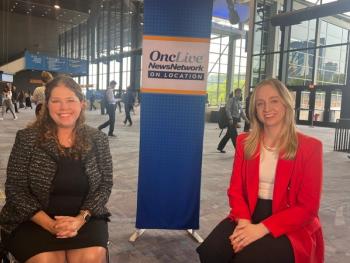
Gaining Ground in Gynecologic and Hematologic Cancers at ASCO 2023: Drs Herrera, Westin, and Jabbour
OncLive® will be LIVE with OncLive® News Network: On Location at the 2023 ASCO Annual Meeting. Each day, we will broadcast a series of interviews with top thought leaders, to learn their thoughts and reactions to data presented across hematologic oncology during the conference.

Dostarlimab maintained the health-related quality of life in patients with primary advanced or recurrent endometrial cancer.
Mirvetuximab soravtansine-gynx demonstrated a 35% reduction in the risk of disease progression or death compared with investigator’s choice of chemotherapy in patients with folate receptor alpha-high, platinum-resistant ovarian cancer.
Advertisement
Advertisement
Trending on OncLive
1
The OncFive: Top Oncology Articles for the Week of 10/4/2026
2
FDA Approves Atezolizumab Plus Chemo for Stage III dMMR Colon Cancer
3
FDA Grants Breakthrough Device Designation to Natera’s Multi-Cancer Early Detection Assay
4
VIR-5500 Receives FDA Fast Track Designation in mCRPC
5