
Head & Neck Cancers
Latest News
Advertisement
Latest Videos
































































Advertisement
More News
Rindopepimut (Rintega) has gained a Breakthrough Therapy Designation from the FDA to treat adult patients with glioblastoma multiforme that test positive for the epidermal growth factor receptor variant.

Marcia S. Brose, MD, PhD, associate professor of Otorhinolaryngology: Head and Neck Surgery at the Hospital of the University of Pennsylvania, discusses lenvatinib as a new treatment option for patients with radioactive iodine-refractory differentiated thyroid cancer.
The FDA has granted approval to lenvatinib (Lenvima) as a treatment for patients with progressive, radioactive iodine-refractory differentiated thyroid cancer.

With a deadline of April 14, the FDA will soon make its final approval decision on the oral multikinase inhibitor lenvatinib as a treatment for patients with progressive, radioactive iodine (RAI)-refractory differentiated thyroid cancer (DTC).
Surgery remains the most effective curative treatment for esophageal cancer. Yet, many eligible patients do not undergo esophagectomy.
Although prognostic biomarkers have become increasingly important in the treatment of many types of cancer, no such markers have yet been identified and validated for thyroid cancer.
Cetuximab is the only FDA-approved EGFR inhibitor for the treatment of squamous cell carcinoma of the head and neck.
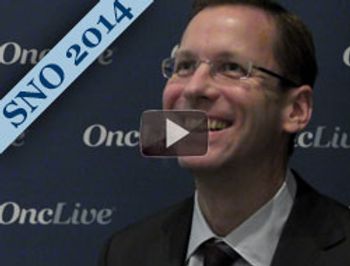
John F de Groot, MD, nuro-oncologist, MD Anderson Cancer Center, discusses the efficacy of the novel c-MET inhibitor altiratinib in glioblastoma.
Roger Stupp, MD, Professor of Oncology, University of Zürich; Chairman, Department of Oncology and Cancer Center, University of Zürich Hospital, Zürich, Switzerland, discusses the interim analysis of the EF-14 trial, which compared NovoTTF-100A together with temozolomide versus temozolomide alone in patients with newly diagnosed glioblastoma multiforme (GBM).
Both HPV-positive and -negative head and neck cancers are "outstanding candidates for immunotherapeutic strategies," said Andrew G. Sikora, MD, PhD, Baylor College of Medicine, at the 2014 Chemotherapy Foundation Symposium.
Marcia S. Brose, MD, PhD, assistant professor, Abramson Cancer Center at the University of Pennsylvania, discusses the rapidly changing treatment landscape for patients with differentiated thyroid cancer.
Julie A. Sosa, MD, MS, professor of surgery and medicine, chief of endocrine surgery, Duke University, discusses molecular testing for thyroid cancer.

A next-generation sequencing assay has shown promise as a new tool to aid in the diagnosis and treatment of indeterminate thyroid nodules.

The ThyroSeq v2 next-generation sequencing assay was highly accurate at diagnosing cancer in thyroid nodules with follicular neoplasm or those suspected of follicular neoplasm cytology.
Preoperative vitamin D deficiency is associated with postoperative symptomatic hypocalcemia in patients with thyroid cancer undergoing total thyroidectomy plus central compartment neck dissection.
In vivo models for two aggressive thyroid cancers have shown that downregulation of miR-30a-5p leads to overexpression of LOX, a target which appears amenable to treatment with β-aminopropionitrile fumarate.

The detection of BRAFV600E in patients with papillary thyroid cancer using a blood-based assay was shown to be feasible in a cohort of patients undergoing thyroidectomy.
Ian Ganly, MD, PhD, from Memorial Sloan Kettering Cancer Center, discusses the development of a postoperative nomogram for predicting cancer-specific mortality in MTC.
Keith C. Bible, MD, PhD, professor of oncology, Mayo Clinic, discusses the promise of pemetrexed and carboplatin as a potential treatment option for patients with follicular cell-derived thyroid cancers.

The impact of RAI on long-term outcomes, potential combination strategies, molecular profiling, and novel therapeutics for patients with thyroid cancer were among some of the topics highlighted at the 2014 ATA Annual Meeting.
Naifa L. Busaidy, MD, associate professor, MD Anderson Cancer Center, discusses the results of a cooperative study that investigated the association between long-term thyroid hormone suppression therapy and improved outcomes in patients.
Long-term moderate thyroid hormone suppression therapy is associated with improved outcomes in patients with differentiated thyroid cancer.
Carmelo Nucera, MD, PhD, endocrinologist, assistant professor, Harvard Medical School, Division of Experimental Pathology, Beth Israel Deaconesss Medical Center, Boston, discusses the role of RNA in thyroid cancer
Advertisement
Advertisement
Trending on OncLive
1
FDA Approves Nogapendekin Alfa Inbakicept Plus BCG for High-Grade, Papillary-Only BCG-Unresponsive NMIBC
2
SurVaxM Cancer Vaccine Shows Clinically Meaningful OS Signal in Newly Diagnosed Glioblastoma
3
VS-7375 Elicits Responses in KRAS G12D–Mutated Pancreatic Cancer
4
FDA Accepts BLA Resubmission for Tabelecleucel in EBV+ Post-Transplant Lymphoproliferative Disease
5