





Head & Neck Cancers
Latest News
Advertisement
Latest Videos






































































Advertisement
More News

Loren K. Mell, MD, chief, Head and Neck Malignancy Service, associate professor, University of California, San Diego, discusses toxicities associated with GL-ONC1 for the treatment of patients with head and neck cancer.

Eighteen new research grants, totaling more than $19 million, have been awarded by the FDA for product development in rare diseases such as HPV-related head and neck cancer and recurrent glioblastoma.

Patients who have HPV 16 DNA in their saliva following treatment of their oropharyngeal cancer are more likely to have their cancer recur, and a prospective cohort study has shown that a simple mouth rinse can be used to detect it.

The attenuated vaccinia virus GL-ONC1 demonstrated safety and clinical benefit when delivered intravenously with concurrent chemoradiation therapy for patients with locoregionally advanced head and neck carcinoma in a recent phase I study.
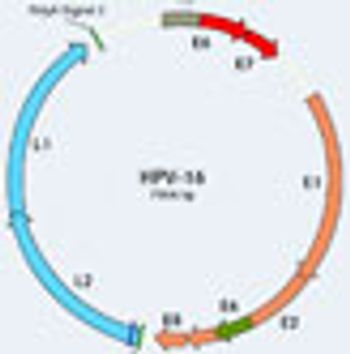
An improved understanding of the natural history of HPV, its interaction with the host immune system, and the distinct molecular alterations underlying HPV-positive cancers, are fueling development of new drugs, particularly immunotherapies geared toward generating an HPV-specific immune response.

Barbara Ann Burtness, MD, discusses the impact of two studies examining reductions in radiation and chemotherapy dose in low-risk HPV-associated oropharyngeal cancer.

Tanguy Y. Seiwert, MD, discusses the significance of the expansion results of KEYNOTE-012 for advanced squamous cell carcinoma of the head and neck.

A group of researchers at Washington University in St. Louis recently opened a clinical trial to evaluate pembrolizumab as treatment intensification therapy for patients with high-risk locoregionally advanced, previously untreated, HPV-negative head and neck squamous cell carcinomas.

Olanzapine (Zyprexa) demonstrated an improvement in antinausea effects in patients receiving concurrent highly emetogenic chemotherapy and radiation therapy for advanced stage head and neck and esophageal cancer when compared to fosaprepitant.

Tanguy Seiwert, MD, assistant professor of medicine and associate leader of the head and neck cancer program, University of Chicago, discusses the efficacy of pembrolizumab in head and neck cancer.

Loren Scott Michel, MD, Assistant Professor Medicine, Washington University, medical oncologist Siteman Cancer Center, discusses the link between human papillomavirus (HPV) and oropharyngeal cancers.














Advertisement
Advertisement
Trending on OncLive
1
FDA Approves Nogapendekin Alfa Inbakicept Plus BCG for High-Grade, Papillary-Only BCG-Unresponsive NMIBC
2
SurVaxM Cancer Vaccine Shows Clinically Meaningful OS Signal in Newly Diagnosed Glioblastoma
3
VS-7375 Elicits Responses in KRAS G12D–Mutated Pancreatic Cancer
4
FDA Accepts BLA Resubmission for Tabelecleucel in EBV+ Post-Transplant Lymphoproliferative Disease
5