

Head & Neck Cancers
Latest News
Advertisement
Latest Videos






























































Advertisement
More News

Brian Nussenbaum, MD, Christy J. and Richard S. Hawes III Professor, Otolaryngology-Head and Neck Surgery, director, Head and Neck Surgical Oncology, vice chair of Clinical Affairs, patient safety officer, Washington University School of Medicine in St. Louis, discusses which patients with larynx cancer are eligible for organ preservation surgery.
The FDA has granted an accelerated approval to pembrolizumab as a treatment for patients with recurrent or metastatic head and neck squamous cell carcinoma following progression on a platinum-based chemotherapy.
Robert Ferris, MD, PhD, vice chair for Clinical Operations, associate director for Translational Research, and coleader of the Cancer Immunology Program at the University of Pittsburgh Cancer Institute, discusses the impact of the FDA approval of pembrolizumab (Keytruda) for the treatment of patients with head and neck cancer.

Cristina P. Rodriguez, MD, hematology oncologist, University of Washington School of Medicine in Seattle, discusses the emerging role of systemic therapy for patients with salivary gland cancer.

Two phase III trials examining afatinib (Gilotrif) in head and neck cancer have been stopped after an independent panel determined the pan-HER inhibitor was unlikely to demonstrate an efficacy benefit over placebo.
Treatment with vemurafenib (Zelboraf) demonstrated an objective response rate of up to 38.5% for patients with radioactive iodine-refractory BRAF V600E-mutant papillary thyroid cancer who were multikinase inhibitor-naive.
After a decade of advances in the treatment of differentiated thyroid cancer, researchers are looking for ways to improve outcomes through a more personalized approach that includes risk-based strategies and appropriate use of molecular testing.

The FDA has granted a priority review designation to nivolumab as a treatment for patients with previously treated metastatic or recurrent squamous cell carcinoma of the head and neck.
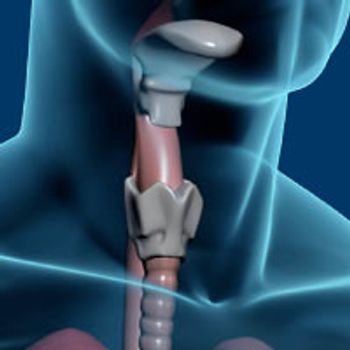
The progression-free survival benefit with lenvatinib over placebo in patients with radioactive iodine–refractory differentiated thyroid cancer was sustained in an updated analysis of the phase III SELECT trial.
Although paradigms for treating older patients with head and neck cancer are not well defined, advancements in targeted and immunotherapies and less toxic radiation regimens suggest that physicians can aim for a more individualized approach to treating this patient population.
Marcia S. Brose, MD, PhD, sheds light on the biomarker assessment of the DECISION trial and the overall developments with biomarker research in the field of differentiated thyroid cancer.
Pembrolizumab (Keytruda) demonstrated promising antitumor activity with durable responses in patients with advanced thyroid cancer.
Marcia S. Brose, MD, PhD, discusses the updated SELECT findings, how practitioners are treating patients with lenvatinib, how its use compares with sorafenib, and the challenges that still exist with both therapies for patients with thyroid cancer.
PD-L2 and the IFN-γ 6-gene signature may offer options beyond PD-L1 to predict response to pembrolizumab (Keytruda) in patients with recurrent or metastatic head and neck squamous cell carcinoma.

Adding the pan-PI3K inhibitor buparlisib (BKM120) to chemotherapy reduced the risk of disease progression or death by 35% in patients with advanced head and neck squamous cell carcinoma.
Thomas M. Churilla, MD, Department of Radiation Oncology, Fox Chase Cancer Center, discusses a study exploring the impact of health insurance status on the presentation, local management, and outcomes of patients with head and neck cancer.

Ranee Mehra, MD, discusses what the KEYNOTE-012 findings could mean for patients, the growing role for the immunotherapy agent in head and neck cancer, and what else is on the horizon for the treatment landscape.

Jan S. Lewin, PhD, professor, Department of Head and Neck Surgery, Division of Surgery, The University of Texas MD Anderson Cancer Center, discusses the impact of lymphedema in patients with head and neck cancer.

To investigate the possibility of environmental impacts as a predisposition for thyroid cancer, researchers sought to identify counties in California with possible geographic clustering of advanced thyroid cancer cases.

Ranee Mehra, MD, chief, Head and Neck Hematology/Oncology, associate professor, Department of Hematology/Oncology, Fox Chase Cancer Center, discusses the results of the KEYNOTE-012 study, which examined the efficacy of pembrolizumab (Keytruda) in patients with recurrent/metastatic head and neck squamous cell carcinoma.
Pembrolizumab demonstrated an objective response rate of 18% in data from two clinical trials exploring the PD-1 inhibitor as a treatment for patients with pretreated recurrent or metastatic head and neck squamous cell carcinoma.
Robert Ferris, MD, PhD, vice chair for Clinical Operations, associate director for Translational Research, and coleader of the Cancer Immunology Program at the University of Pittsburgh Cancer Institute, discusses the CheckMate-141 trial, which found that treatment with single-agent nivolumab (Opdivo) reduced the risk of death by 30% and doubled 1-year overall survival (OS) rates compared with investigator's choice of therapy for patients with recurrent or metastatic head and neck squamous cell carcinoma (SCCHN).
Treatment with single-agent nivolumab improved overall survival and objective response rates compared with investigator's choice of therapy for patients with recurrent or metastatic head and neck squamous cell carcinoma.
Advertisement
Advertisement
Trending on OncLive
1
FDA Approves Nogapendekin Alfa Inbakicept Plus BCG for High-Grade, Papillary-Only BCG-Unresponsive NMIBC
2
SurVaxM Cancer Vaccine Shows Clinically Meaningful OS Signal in Newly Diagnosed Glioblastoma
3
VS-7375 Elicits Responses in KRAS G12D–Mutated Pancreatic Cancer
4
FDA Receives NDA Resubmission for Rivoceranib Plus Camrelizumab in Frontline Unresectable or Metastatic HCC
5