


Head & Neck Cancers
Latest News
Advertisement
Latest Videos

































































Advertisement
More News

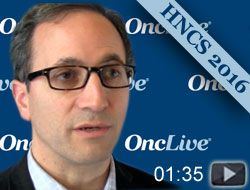
Tanguy Y. Seiwert, MD, assistant professor of Medicine, University of Chicago Medicine, discusses the impact of immunotherapy agents as treatment of patients with head and neck cancer.
Concurrent chemoradiation significantly improved overall survival compared with radiation therapy alone for elderly patients with locally advanced head and neck cancers.
Ezra Cohen, MD, associate director, Moores Cancer Center, professor of Medicine, University of California, San Diego Health System, discusses tumor biomarker association with clinical outcomes in patients with recurrent and/or metastatic head and neck squamous cell carcinoma treated with afatinib versus methotrexate.
Robert Ferris, MD, PhD, discusses CheckMate-141, the biggest remaining challenges in head and neck cancer, and the potential for nivolumab as a treatment of patients with the disease.

Nivolumab has improved overall survival versus investigator's choice of therapy for patients with platinum-refractory squamous cell carcinoma of the head and neck in the phase III CheckMate-141 trial.

Patients with a certain type of oral human papilloma virus have an increased risk of developing head and neck squamous cell carcinoma.

Results of a recent study show that patients with low-risk thyroid-related microcarcinoma who choose to undergo immediate surgery are at higher risk for adverse events and unnecessary risk compared with those who decide on active surveillance.

Substantial evidence exists that a subset of squamous cell cancers of the head and neck display phenotypic changes that predict activity for immune checkpoint inhibitors.
Sudipto Mukherjee, MD, associate staff, Department of Hematology and Oncology, Cleveland Clinic, discusses a study examining the association between radioactive iodine treatment of thyroid cancer and the risk for developing myelodysplastic syndromes.
Barbara A. Burtness, MD, professor of Medicine (Medical Oncology), clinical research program leader, Head and Neck Cancers Program, co-director, Developmental Therapeutics Research Program, Yale Cancer Center, discusses emerging immunotherapies and ongoing clinical trials in head and neck cancer.
Marcia Brose, MD, PhD, associate professor of Otorhinolaryngology, Head and Neck Surgery, at the Hospital of the University of Pennsylvania, discusses the lenvatinib trial.
Yael Cohen, MD, vice president of Clinical Development at VBL Therapeutics Pharmaceuticals, discusses VB-111, a highly targeted anti-angiogenic agent that is being investigated in several tumor types.
John Copland, PhD, faculty member in the department of cancer biology, Mayo Clinic, explains his research on patient-derived xenograft (PDX) models in anaplastic thyroid cancer.
Abnormal thyroid function tests were reported in up to 15% of patients treated with the PD-1 inhibitor pembrolizumab.
The recent American Thyroid Association guidelines to abstain from cytological evaluation by biopsy for patients with thyroid cancer on the basis of having thyroid nodules ≤1 cm is not advisable.

Pazopanib demonstrated significant clinical activity for patients with RAI-refractory differentiated thyroid cancer; however, a predictive biomarker for the therapy could not be uncovered.

Researchers have identified molecular markers in medullary thyroid cancer that were associated with response to vandetanib and the development of metastases.
Stephen Huang, MD, Associate Professor of Pediatrics, Harvard Medical School, Dana Farber Cancer Institute, discusses the challenges of pediatric thyroid cancer.
Marcia Brose, MD, PhD, associate professor of Otorhinolaryngology, Head and Neck Surgery, at the Hospital of the University of Pennsylvania, discusses survival benefit and possible combination strategies with the lenvatinib in patients with radioactive iodine refractory differentiated thyroid cancer.
Pablo Valderrabano, MD, Clinical Research Fellow at Moffitt Cancer Center, discusses molecular markers in thyroid nodules and their connection to cancer incidence.

The oral multikinase inhibitor cabozantinib showed promise as a second- or third-line therapy in patients with advanced radioactive iodine-refractory differentiated thyroid cancer.

The progression-free survival benefit with lenvatinib in radioactive iodine-refractory differentiated thyroid cancer was observed across common sites of metastasis.
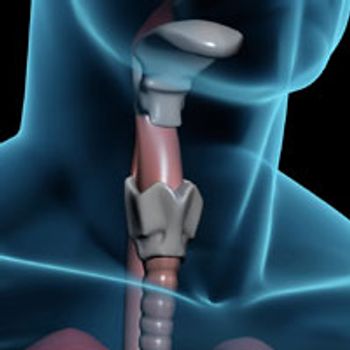
A large survey of endocrinologists found wide variation in management strategies for thyroid nodules that were frequently misaligned with current guidelines, particularly for biopsies by fine-needle aspiration.

Umamaheswar Duvvuri, MD, PhD, Assistant Professor of Otolaryngology (ENT) at the University of Pittsburgh Medical Center, talks about potential genetic signatures for locally advanced, well differentiated thyroid cancers.
Manisha Shah, MD, Professor of Oncology at Ohio State University Medical Center, College of Medicine discusses cabozantinib in patients with radioiodine- refractory differentiated thyroid cancer.
Advertisement
Advertisement
Trending on OncLive
1
FDA Approves Nogapendekin Alfa Inbakicept Plus BCG for High-Grade, Papillary-Only BCG-Unresponsive NMIBC
2
SurVaxM Cancer Vaccine Shows Clinically Meaningful OS Signal in Newly Diagnosed Glioblastoma
3
VS-7375 Elicits Responses in KRAS G12D–Mutated Pancreatic Cancer
4
FDA Accepts BLA Resubmission for Tabelecleucel in EBV+ Post-Transplant Lymphoproliferative Disease
5