



Head & Neck Cancers
Latest News
Advertisement
Latest Videos

































































Advertisement
More News

Approximately one-third of cases of oropharyngeal cancer carried antibodies to one of the driver proteins from HPV16, and those antibodies could be detected more than 10 years prior to the diagnosis of the cancer.

More is now known about the types of HPV that increase risk.
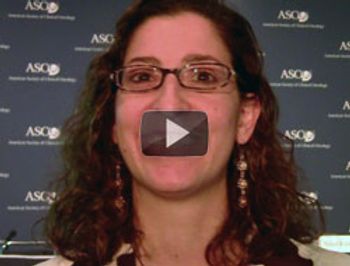
Gypsyamber D'Souza, PhD, MPH, MS, an associate professor of epidemiology at Johns Hopkins University, comments on screening for HPV-related cancers.

Over the past decade, it has become apparent that head and neck squamous cell carcinoma-including cancers of the mouth, throat, and larynx-is actually two separate diseases.










Andrew T. Parsa MD, PhD, from the University of California, San Francisco, describes the design of a trial analyzing prophage G-200 vaccine for recurrent glioblastoma multiforme.

Squamous cell carcinomas of the head and neck have different patterns of genetic alterations, some of which may be actionable or druggable with available agents or drugs in development.
Interim findings from a randomized, global, phase III study indicate that the multi-targeted drug sorafenib nearly doubled PFS for patients with differentiated thyroid cancer resistant to radioactive iodine therapy.

Marcia Brose, MD, PhD, from the Abramson Cancer Center at the University of Pennsylvania, discusses the phase III DECISION study that explored sorafenib in radioactive iodine-resistant differentiated thyroid cancer.

Patients with human papilloma virus–positive oropharyngeal cancer and their spouses may find some reassurance in a study that found that partners are no more likely to be infected by HPV than the general population.
Gypsyamber D‘Souza, PhD, MPH, MS, from Johns Hopkins University, discusses the prevalence of oral HPV infections in the spouses of patients with HPV-positive oropharyngeal cancer.

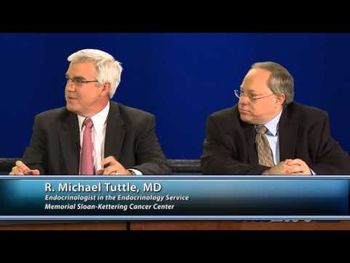
Eric J. Sherman, MD, Head and Neck Oncology Service, Memorial Sloan-Kettering Cancer Center, discusses a pilot study of selumetinib-enhanced radioiodine uptake in advanced thyroid cancer.

This article summarizes 4 abstracts that will be discussed at the 49th Annual ASCO Meeting, focused on the treatment of patients with head and neck cancer.
A new measure of tumor heterogeneity in patients with head and neck squamous cell carcinoma (HNSCC) was significantly associated with tumor progression and adverse treatment outcomes.
Advertisement
Advertisement
Trending on OncLive
1
FDA Approves Nogapendekin Alfa Inbakicept Plus BCG for High-Grade, Papillary-Only BCG-Unresponsive NMIBC
2
SurVaxM Cancer Vaccine Shows Clinically Meaningful OS Signal in Newly Diagnosed Glioblastoma
3
VS-7375 Elicits Responses in KRAS G12D–Mutated Pancreatic Cancer
4
FDA Accepts BLA Resubmission for Tabelecleucel in EBV+ Post-Transplant Lymphoproliferative Disease
5