
Hematologic Oncology
Latest News
Advertisement
Latest Videos
















































Advertisement
More News
Madhuri Vusirikala, MD, discusses the benefit of hyper-CVAD and ponatinib in patients with Philadelphia chromosome–positive ALL.
Caitlin Costello, MD, discusses pivotal research in the relapsed/refractory multiple myeloma setting.
The selective ROCK2 inhibitor KD025 induced clinical responses in approximately two-thirds of patients with chronic graft-versus-host disease, including complete responses in 3 patients.
Dimitrios Tzachanis, MD, PhD, discusses updates and remaining questions with CAR T-cell therapy.

Erin Reid, MD, discusses the treatment advances across lymphomas and the remaining questions that need to be answered with further research.
Anthony D. Sung, MD, discusses the findings from the phase II trial of pasireotide as a method to prevent gastrointestinal toxicity and acute graft-versus-host-disease in patients who undergo allogeneic hematopoietic stem cell transplant.
Narsoplimab (OMS721) is advancing through the therapy pipeline as a novel treatment option for patients with transplant-associated thrombotic microangiopathy.
An “off-the-shelf” Epstein Barr-virus–specific cytotoxic lymphocyte CAR product derived from cells harvested from third-party donors induced a 100% response rate in adult and pediatric patients with relapsed/refractory non-Hodgkin lymphoma.
Sergio A. Giralt, MD, discusses the diagnostic challenges of transplant-associated thrombotic microangiopathy.
Iodine (131I) apamistamab (Iomab-B) conditioning induced a complete remission in 84% (31/38) of patients with active acute myeloid leukemia, who were then able to receive allogeneic hematopoietic stem cell transplant, according to preliminary results from the phase III SIERRA trial.
Aaron Goodman, MD, discusses recent changes to the frontline treatment of patients with peripheral T-cell lymphoma and the challenges of targeting T-cell lymphoma.
Christina Tan, MD, MPH, discusses the potential impact of the novel coronavirus on patients with cancer.
Benjamin Heyman, MD, discusses frontline treatment options for patients with follicular lymphoma.

Ruxolitinib is an effective and well-tolerated treatment in the refractory setting for patients with chronic graft-versus-host disease, regardless of age.
Outpatient administration of CAR T-Cell therapy is safe and effective, according to an analysis of 3 studies of lisocabtagene maraleucel in patients with relapsed/refractory large B-cell lymphoma.
Diego Villa, MD, MPH, discusses the benefit of bendamustine and rituximab versus R-CHOP in transplant-eligible and -ineligible patients with mantle cell lymphoma.
Joseph Mikhael, MD, discusses isatuximab in the context of recent, promising data from the ICARIA-MM trial in relapsed/ refractory multiple myeloma.

The FDA has granted a priority review designation to a supplemental new drug application for selinexor as a treatment for adult patients with relapsed/refractory diffuse large B-cell lymphoma, not otherwise specified, who have received ≥2 prior therapies.

The FDA has issued a complete response letter to 6 supplemental biologics license applications that would have updated the dosing schedule for pembrolizumab to include an every-6-weeks option at 400 mg over 30-minute infusions across multiple indications.
Marcelo Pasquini, MD, discusses the similarities between real-world experience with tisagenlecleucel and in the ELIANA and JULIET trials.
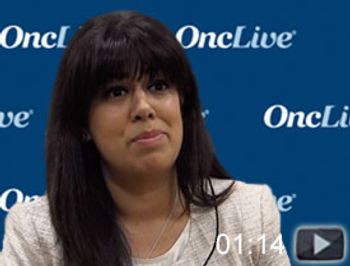
Prapti Patel, MD, discusses the role of gilteritinib in patients with FLT3-mutated acute myeloid leukemia.
The FDA has granted a priority review designation to a supplemental new drug application for tazemetostat for the treatment of patients with relapsed/refractory follicular lymphoma who have received at least 2 prior lines of systemic therapy.
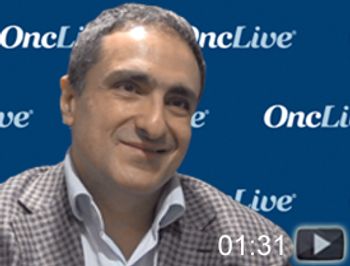
Charalambos (Babis) Andreadis, MD, MSCE, discusses the utility of antibody-drugs conjugates in diffuse large B-cell lymphoma.
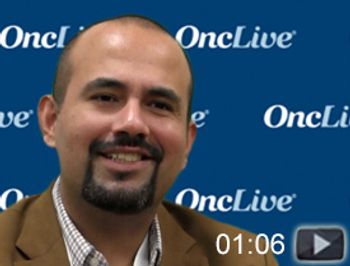
Syed Rizvi, MD, an assistant professor in the Department of Internal Medicine at UT Southwestern Medical Center, discusses treatment considerations in stage III/IV Hodgkin lymphoma.
Madhuri Vusirikala, MD, discusses the role of transplant in acute lymphoblastic leukemia.
Advertisement
Advertisement
Trending on OncLive
1
FDA Approves Zidesamtinib in Pretreated ROS1+ NSCLC
2
Dr Patel on the Unmet Need in EGFR+ Transformed Small Cell Lung Cancer
3
Dr Galsky on Systemic Therapy Advances in Muscle-Invasive Bladder Cancer
4
Dr Cooper on Biomarker Selection for DLL3-Targeted Therapies in ES-SCLC
5