







Immuno-Oncology
Latest News
Advertisement
Latest Videos



CME Content

































Advertisement
More News

The addition of the individualized neoantigen specific immunotherapy RO7198457 to atezolizumab induced neoantigen-specific T-cell responses, and was found to be well tolerated in patients with advanced solid malignancies.

The combination of atezolizumab and nab-paclitaxel, followed by doxorubicin and cyclophosphamide, demonstrated a statistically significant and clinically meaningful improvement in pathological complete response compared with placebo plus chemotherapy as a neoadjuvant treatment for patients with early triple-negative breast cancer, regardless of PD-L1 expression.

Shilpa Gupta, MD, discusses the potential utility of neoadjuvant versus adjuvant immunotherapy in urothelial carcinoma.

Andrew Coveler, MD, discusses the investigational CD40-directed monoclonal antibody SEA-CD40 in combination with gemcitabine, nab-paclitaxel, and pembrolizumab in patients with metastatic pancreatic ductal adenocarcinoma.

Jamie E. Chaft, MD, discusses considerations for restarting immunotherapy in patients with lung cancer.
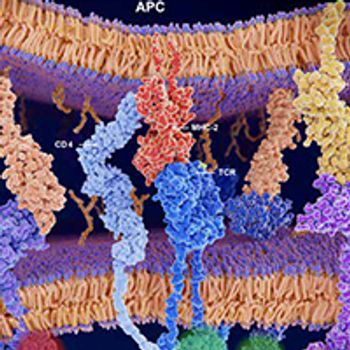
Over the past decade, immunotherapy has established itself as one of the pillars of cancer treatment, thanks in large part to the success of monoclonal antibodies that target the immune checkpoint protein PD-1 or its main ligand, PD-L1.
Rogerio C. Lilenbaum, MD, discusses the promising future direction of immunotherapy in patients with advanced lung cancer.

Investigators are testing whether the addition of inhibitors targeting the PD-1 and IDO immune pathways to standard chemotherapy in the neoadjuvant setting will offer superior outcomes for patients with muscle-invasive bladder cancer.

Alexandra Drakaki, MD, discusses the ongoing research efforts being made in urothelial cancer, unmet needs and challenges faced in the space, and work that is generating further interest in the field.

Jüergen Wolf, MD, discusses data the phase 2 GEOMETRY mono-1 trial with capmatinib (Tabrecta) in patients with METex14-mutated or high MET amplified advanced non–small cell lung cancer.

MGD013, an investigational DART protein targeting PD-1 and LAG-3, demonstrated encouraging monotherapy activity as well as in combination with margetuximab in multiple tumor types.

Lyudmila A. Bazhenova, MD, discusses ongoing clinical trials in non–small cell lung cancer that are investigating the utility of immunotherapy.

Joshua Brody, MD, discusses addressing required resistance to immunotherapy in non-Hodgkin lymphoma.

Gregory A. Otterson, MD, discusses data examining immunotherapy alone versus in combination in non–small cell lung cancer.

The FDA has approved nivolumab combined with ipilimumab and chemotherapy for use as a frontline treatment for patients with metastatic or recurrent non–small cell lung cancer.
Gilberto de Lima Lopes, MD, discusses the appropriate duration of immunotherapy in lung cancer, treatment-related adverse events, and remaining challenges faced in the space.

The UK's National Institute for Health and Care Excellence has recommended the combination of atezolizumab and nab-paclitaxel as a treatment for patients with unresectable, locally advanced, or metastatic triple-negative breast cancer whose tumors express PD-L1 at a level of 1% or more and have not had prior chemotherapy for metastatic disease.

Lajos Pusztai, MD, DPhil, discusses the results from the I-SPY 2 trial, as well as the clinical implications of the findings.
Mario Sznol, MD, discusses the use of immunotherapy in melanoma.

Mario Sznol, MD, discusses the current immunotherapy paradigm in melanoma and promising agents that are in development.
Mario Sznol, MD, discusses the current immunotherapy paradigm in melanoma and promising agents that are in development.
Peter Voorhees, MD, discusses the benefit of monoclonal antibodies in multiple myeloma.

Lyudmila A. Bazhenova, MD, discusses the PACIFIC study with durvalumab in stage III non–small-cell lung cancer.

Pembrolizumab combined with trastuzumab and chemotherapy demonstrated promising clinical activity in patients with HER2-positive metastatic esophagogastric cancer.
Lyudmila A. Bazhenova, MD, discusses the PACIFIC study with durvalumab in stage III non–small-cell lung cancer.
Advertisement
Advertisement
Trending on OncLive
1
Single-Center, Retrospective Data Show Low Rate of Lifileucel Infusion Following Referral in Advanced Melanoma
2
Real-World Data Support Clinical Benefit With Lifileucel in Previously Treated Advanced Melanoma
3
Long-Term Cilta-Cel Data Show Low Rates of PFS Events in Standard-Risk R/R Myeloma
4
Dr Riedell on the Long-Term Efficacy of Tisa-Cel in R/R Follicular Lymphoma
5