


Lung Cancer
Latest News
Advertisement
Latest Videos




































































Advertisement
More News
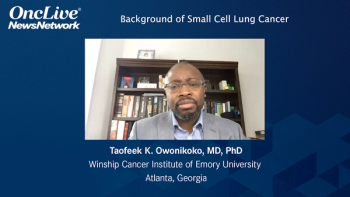

Renata Ferrarotto, MD, discusses the mechanism of action of trilaciclib in extensive-stage small cell lung cancer.

Renata Ferrarotto, MD, discusses trilaciclib’s unique mechanism of action in small cell lung cancer and the data that led to its FDA designation.
December 8, 2020 - The FDA has granted a breakthrough therapy designation to sotorasib for use as a potential treatment in patients with KRAS G12C–mutated locally advanced or metastatic non–small cell lung cancer.

Tony S. K. Mok, MD, BMSc, FRCPC, FASCO, discusses the importance of improving cancer research through collaboration as a Giant of Cancer Care®.

December 3, 2020 - Lurbinectedin plus doxorubicin failed to significantly improve overall survival versus physician’s choice of topotecan or cyclophosphamide/doxorubicin/vincristine in patients with small cell lung cancer who progressed after 1 previous platinum-containing line of treatment, missing the primary end point of the phase 3 ATLANTIS trial.

December 3, 2020 — A biologics license application has been submitted to the FDA for the EGFR-MET bispecific antibody amivantamab for the treatment of patients with metastatic non–small cell lung cancer with EGFR exon 20 insertion mutations who have progressed on or following a platinum-based chemotherapy.
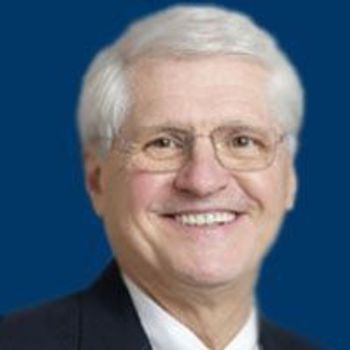
Mark G. Kris, MD, discusses the strengths of this year’s New York Lung Cancers Symposium, the advances that have been made over the past year, and potential routes forward in advancing the field of lung cancer.

Vignesh Narayanan, MD, the role of chemoimmunotherapy and how it has truly changed the game in the treatment of patients with lung cancer.
December 1, 2020 — The FDA has granted a fast track designation to irinotecan liposome injection as second-line monotherapy option for patients with small cell lung cancer whose disease progressed following a platinum-based chemotherapy regimen.

November 30, 2020 - The European Medicines Agency has validated an application to review tepotinib for the treatment of adult patients with advanced non–small cell lung cancer that harbor MET exon 14 skipping alterations.

Joshua Reuss, MD, discusses the lung cancer armamentarium, the role of immunotherapy combinations, and the significance of biomarkers.

Data from completed studies evaluating immunotherapy in lung cancer alone or in combination with chemotherapy show that a breakdown of populations by PD-L1 status and additional considerations such as toxicity profiles should guide treatment decisions.

November 24, 2020 - Until now, the field of cell-based immunotherapy has been dominated by chimeric antigen receptor (CAR) T cells, with groundbreaking FDA approvals for 3 drugs across several types of hematologic malignancies. In solid tumors, however, CAR T-cell therapies have yet to gain ground.

Jamie E. Chaft, MD, discusses the rationale behind the OPAL trial in EGFR-mutant non–small cell lung cancer.

In our exclusive interview, Dr. Oxnard explained how precision medicine has affected the treatment landscape of lung cancer, discussed the current capabilities of liquid biopsy, and forecasted the future of precision oncology in the field.

November 21, 2020 - The addition of sugemalimab to chemotherapy demonstrated a statistically significant and clinically meaningful progression-free survival benefit in the frontline treatment of patients with metastatic non–small cell lung cancer versus placebo plus chemotherapy.

Maurice Perol, MD, discusses combination regimens comprised of chemotherapy and EGFR TKIs in the treatment of patients with EGFR-mutated advanced non–small cell lung cancer, as investigated in the OPAL trial presented during the ESMO Asia Virtual Congress 2020.

Jamie E. Chaft, MD, a thoracic medical oncologist at Memorial Sloan Kettering Cancer Center, discusses the next steps of osimertinib research in EGFR-mutant non–small cell lung cancer.

Masahiro Tsuboi, MD, a surgeon at the National Cancer Center Hospital East in Japan, discusses findings from the phase 3 ADAURA trial in EGFR-mutant non–small cell lung cancer.

November 20, 2020 - Osimertinib in combination with platinum plus pemetrexed was well tolerated in patients with previously untreated EGFR-mutated advanced non–small cell lung cancer.

November 20, 2020 - Exploratory subgroup analysis of patients with extensive-stage small-cell lung cancer who derived a progression-free survival benefit with durvalumab plus platinum-based chemotherapy lasting longer than 12 months in the CASPIAN trial did not reveal any clinical characteristics that could serve as predictive factors for benefit with the monoclonal antibody.

November 20, 2020 - The FDA has approved durvalumab for an additional dosing option, a fixed dose of 1500 mg every 4 weeks, in the approved indications of unresectable stage III non-small cell lung cancer after chemoradiation and previously treated advanced bladder cancer.

Kristen A. Marrone, MD, discusses research efforts with osimertinib in EGFR-mutated lung cancer, overcoming resistance to the agent, and optimizing sequential molecular testing.

November 19, 2020 - Lorlatinib has been found to significantly prolong progression-free survival, elicit a higher overall and intracranial response, and improve quality of life compared with crizotinib in treatment-naïve patients with advanced ALK-positive non–small cell lung cancer.
Advertisement
Advertisement
Trending on OncLive
1
Five Under 5: Top Oncology Videos for the Week of 10/5/2026
2
Guardant360 CDx Receives European Approval as Companion Diagnostic for Camizestrant in ESR1-Mutated Advanced Breast Cancer
3
GI Cancer Monthly Rewind: Key News and Expert Insights You May Have Missed in September 2026
4
Armenia Grants First Marketing Authorizations to Botensilimab Plus Balstilimab in Previously Treated MSS mCRC
5