


























































William G. Blum, MD, discusses the introduction of novel agents into acute myeloid leukemia treatment and how this is impacting the role of molecular testing for patients.
William G. Blum, MD, discusses the introduction of novel agents into acute myeloid leukemia treatment and how this is impacting the role of molecular testing for patients.

An application has been submitted to the FDA for selinexor for the treatment of patients with relapsed/refractory diffuse large B-Cell lymphoma who have received at least 2 prior multiagent therapies and who are ineligible for stem cell transplantation, including CAR T-cell therapy.
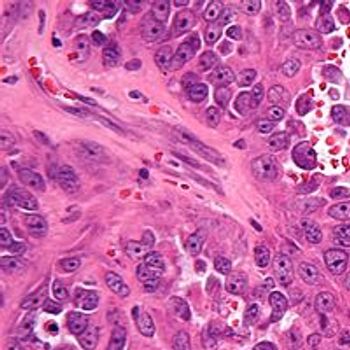
The FDA has granted a Regenerative Medicine Advanced Therapy designation to ADP-A2M4 (MAGE-A4) as a treatment for patients with synovial sarcoma.
The FDA has granted fast track designation to the potent reversible LSD1 inhibitor SP-2577 (seclidemstat) for the treatment of relapsed/refractory patients with Ewing sarcoma.
Michael Wang, MD, discusses the ZUMA-2 trial and the potential impact of CAR T-cell therapy on the treatment paradigm in mantle cell lymphoma.
Julie R. Gralow, MD, discusses the emergence of biosimilars in the United States and globally.
Induction therapy with R-CHOP followed by maintenance rituximab continued to show improvements in survival and responses compared with R-CHOP and interferon-alpha maintenance in older patients with mantle cell lymphoma.
A new drug application has been submitted to the FDA for tucatinib for use in combination with trastuzumab and capecitabine for the treatment of patients with unresectable locally advanced or metastatic HER2-positive breast cancer.
Minimal residual disease has become an important investigational prognostic marker and risk stratification tool in acute lymphoblastic leukemia.

Ajay K. Nooka, MD, MPH, FACP, discusses the shift in induction regimens in multiple myeloma and the impact of daratumumab (Darzalex) on the space.
Faculty from Memorial Sloan Kettering Cancer Center shed light on some of the intriguing research in hematologic cancer being conducted at their institution.
Japan’s Pharmaceuticals and Medical Devices Agency has approved the combination of pembrolizumab and axitinib for the first-line treatment of patients with radically unresectable or metastatic renal cell carcinoma.
The FDA has granted an accelerated approval to fam-trastuzumab deruxtecan-nxki (Enhertu) for the treatment of adult patients with unresectable or metastatic HER2-positive breast cancer who have received ≥2 prior anti–HER2-based regimens in the metastatic setting.
Brian A. Van Tine, MD, PhD, discusses the results of a phase I study looking at the effects of ADP-A2M4 in patients with synovial sarcoma.
Japan's Pharmaceuticals and Medical Devices Agency has granted approval to frontline pembrolizumab as monotherapy and in combination with chemotherapy for the treatment of patients with recurrent or distant metastatic head and neck cancer.
A biologics license application has been submitted to the FDA for margetuximab for use in combination with chemotherapy as a treatment for patients with metastatic HER2-positive breast cancer.
A biologics license application has been submitted to the FDA for the rituximab biosimilar ABP 798.
Karl M. Kilgore, PhD, discusses how results of real-world analysis may impact the utilization of CAR T-cell therapy for older patients with relapsed/refractory diffuse large B-cell lymphoma.
The European Commission has approved ado-trastuzumab emtansine for the adjuvant treatment of adult patients with HER2-positive early breast cancer who have residual invasive disease (breast and/or lymph nodes) following neoadjuvant taxane-based chemotherapy and HER2-targeted therapy.
Everett E. Vokes, MD, FASCO, who is a Giants of Cancer Care® recipient for Head and Neck Cancer, has been named the next president of ASCO for the 2021 to 2022 term.
The FDA has granted a priority review designation to a new drug application for UGN-101 for the treatment of patients with low-grade, upper tract urothelial cancer.
A new drug application has been submitted to the FDA for tazemetostat as a treatment for patients with relapsed/refractory follicular lymphoma, with or without EZH2 activating mutations, who have received ≥2 prior lines of systemic therapy.
The FDA has approved enfortumab vedotin-ejfv for the treatment of adult patients with locally advanced or metastatic urothelial cancer who have received prior treatment with a PD-1/PD-L1 inhibitor and platinum-containing chemotherapy.
Bristol-Myers Squibb has submitted a biologics license application to the FDA seeking approval of the anti-CD19 CAR T-cell therapy lisocabtagene maraleucel for the treatment of adult patients with relapsed/refractory large B-cell lymphoma after at least 2 prior therapies.

The FDA has granted a priority review designation to a supplemental new drug application for the combination of encorafenib and cetuximab as a treatment for patients with advanced BRAF V600E­–mutant metastatic colorectal cancer following up to 2 prior lines of therapy.