






Ovarian Cancer
Latest News
Advertisement
Latest Videos


































































Advertisement
More News

Olaparib plus cediranib failed to improve PFS and OS vs chemotherapy in patients with platinum-resistant or -refractory epithelial ovarian cancer.

First-line niraparib maintenance was not associated with worsened health-related quality of life outcomes vs placebo in advanced ovarian cancer.

PARP inhibitors have shown promise in ovarian cancer treatment, but certain subgroups of patients have few effective options following disease progression.
Avutometinib alone or in combination with defactinib has received an orphan drug from the FDA for recurrent low-grade serous ovarian cancer.

HIPEC was not associated with additional complications or worse survival in patients with FIGO stage IV ovarian cancer vs those with stage III disease.

Susan C. Modesitt, MD, FACOG, FACS, discusses the role of PARP inhibitors in the treatment of patients with ovarian cancer.

Robert DeBernardo, MD, discusses a case study seen in a patient with ovarian cancer.

Northwestern Medicine scientists have discovered the Achilles heel of chemotherapy-resistant ovarian cancer—its hunger for cholesterol.

Robert DeBernardo, MD, discusses the use of maintenance therapy in the second- and later-line settings for patients with ovarian cancer.

Susan Marie Lang, MD, discusses the incidence of ocular toxicity following treatment with mirvetuximab soravtansine in ovarian cancer.

Trabectedin Monotherapy Does Not Improve OS vs Chemotherapy in BRCA-Mutated Recurrent Ovarian Cancer
Trabectedin did not offer a survival benefit vs chemotherapy in recurrent ovarian cancer with BRCA-mutated and/or BRCAness phenotype.

Hyperthermic intraperitoneal chemotherapy plus interval cytoreductive surgery improved progression-free survival in stage III epithelial ovarian cancer.

Gabriella Smith, MD, discussed the predictive value of CA-125 KELIM score for survival outcomes with HIPEC during surgery in epithelial ovarian cancer.
FDA grants fast-track status to BNT325/DB-1305 for patients with platinum-resistant ovarian epithelial, fallopian tube, or primary peritoneal cancer.

Sarah Crafton, MD, discusses the potential future of antibody-drug conjugates in patients with ovarian cancer.

Robert DeBernardo, MD, discusses the current role of PARP inhibitors in the frontline treatment landscape in ovarian cancer.

Gabriella Smith, MD, discusses the potential impact of CA-125 KELIM score for patients with epithelial ovarian cancer undergoing HIPEC during surgery.

Susan Marie Lang, MD, discusses real-world data on the incidence of ocular toxicities in patients with ovarian cancer receiving mirvetuximab soravtansine.

Sarah Crafton, MD, discusses the ongoing development of agents targeting key biomarkers in ovarian cancer, such as FRα and HER2; expands on the integration of mirvetuximab soravtansine into clinical practice and its investigation in earlier lines; and emphasizes the importance of continued patient enrollment onto ongoing or planned ADC trials in ovarian cancer.
The FDA has granted fast-track status to RC88 for use in patients with platinum-resistant recurrent epithelial ovarian cancer.

The FDA has announced that it had accepted the new drug application for SH-105 for the treatment of patients with breast and ovarian cancer.
The FDA has granted fast track designation to rinatabart sesutecan for the treatment of patients with FRα-expressing high-grade serous or endometrioid platinum-resistant ovarian cancer.
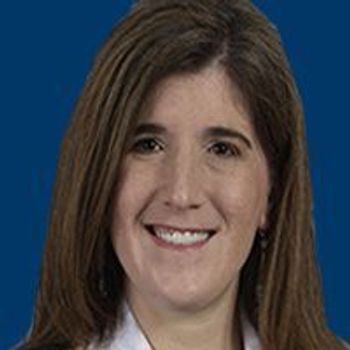
Kathleen N. Moore, MD, MS, expands on the importance of continuing to investigate PARP inhibitors in ovarian cancer and highlights key updates to have come out of the 2023 ESMO Congress

The FDA has granted priority review to the supplemental biologics license application seeking the conversion of the accelerated approval of mirvetuximab soravtansine-gynx in patients with FRα-positive, platinum-resistant epithelial ovarian, fallopian tube, or primary peritoneal cancer who previously received 1 to 3 lines of systemic treatment to full approval.
The FDA granted breakthrough device designation to the ACR-368 OncoSignature assay for the identification of patients with ovarian cancer who may derive benefit from the CHK1/2 inhibitor ACR-368.
Advertisement
Advertisement
Trending on OncLive
1
Dr Cercek on the FDA Approval of Dostarlimab for dMMR/MSI-H Locally Advanced Rectal Cancer
2
Vilamakitug Meets OS Threshold in Phase 1/2 Refractory mCRC Trial
3
Weigh Benefit Against Burden: Defining Lurbinectedin’s Role in a Shifting Small Cell Lung Cancer Landscape
4
Dr Warren on the Goal of the 4WARD Trial Evaluating Mavorixafor in Chronic Neutropenia
5