



Ovarian Cancer
Latest News
Advertisement
Latest Videos




























































Advertisement
More News

Sarah B. Gitto, PhD, discusses the process of investigating the B7-H4 as a viable target for drug development in treatment-resistant ovarian cancer.
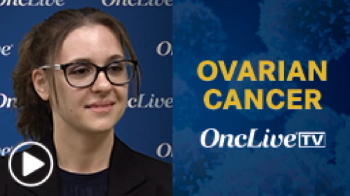
Cassandra A. Hathaway, MD, discusses the rationale for investigating the association between distress, such as depression, and the tumor immune microenvironment in patients with ovarian cancer.

Ursula A. Matulonis highlights previous data from the phase 3 ENGOT-OV16/NOVA trial initial readout and subsequent preplanned overall survival analysis, discusses new findings from the final analysis, and emphasizes how these data clarify some of the study’s limitations and reinforce the importance of adhering to the adjusted FDA label for niraparib in recurrent ovarian cancer.
Brian M. Slomovitz, MD, discusses key efficacy and safety data seen with ribociclib and letrozole in the GOG 3026 trial and planned efforts to identify associated biomarkers and pursue FDA approval for the combination in advanced, recurrent low-grade serous ovarian cancer.
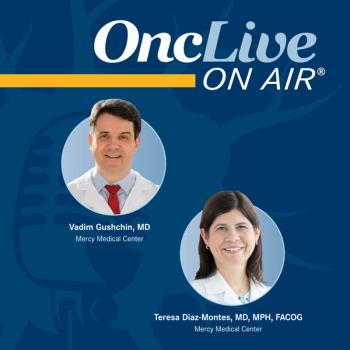
Drs Gushchin and Diaz-Montes discuss findings from the HOT trial evaluating health-related quality of life outcomes after cytoreductive surgery and hyperthermic intraperitoneal chemotherapy in patients with primary ovarian cancer.

Ayesha Alvero, MD, MSc, discusses findings from a preclinical study investigating the antitumor effects and recurrence prevention abilities of a virus-like vesicle thought to establish immunological memory in mouse models with ovarian cancer.

Jung-Yun Lee, MD, PhD, discusses the TRU-D trial within the context of prior negative trials to emphasize the need for more effective therapies in advanced-stage ovarian cancer, highlights key findings from TRU-D, and elaborates on future steps for this research.

Dr Fashemi on the Effect of Entinostat on Olaparib Responsiveness in Mouse HRP Ovarian Cancer Models
Bisiayo Fashemi, PhD, discusses how the addition of entinostat to olaparib could help combat PARP inhibitor-resistance in homologous recombination proficient ovarian cancer, as well as the clinical significance of utilizing mouse organoid models to investigate such strategies.

Maintenance therapy with senaparib improved progression-free survival vs placebo for patients with stage III/IV ovarian carcinoma, fallopian tube cancer, or primary peritoneal cancer who achieved a complete or partial response to first-line platinum-based chemotherapy, meeting the primary end point of the phase 3 FLAMES trial.

Oliver Dorigo, MD, PhD, explains how MVP-S leverages the DPX platform to produce persistent anti-survivin immune infiltration, highlights the antitumor activity and safety observed with the combination when given to patients with recurrent ovarian cancer, and describes additional research efforts underway.
The use of next-generation sequencing demonstrated that the most prevalent genomic alterations in patients with endometrioid ovarian carcinoma include ARID1A, PIK3CA, PTEN, CTNNB1, KRAS, and P53.
Robert L. Coleman, MD, FACOG, FACS, discusses a subgroup analysis of the SORAYA trial, which was presented during the 2023 Society of Gynecologic Oncology Annual Meeting on Women’s Cancer, and where the field is headed in attempt to address unmet needs for this patient population.

Dr Zeybek on the Investigation of Neoadjuvant Olaparib in Newly Diagnosed BRCA-Mutant Ovarian Cancer
Burak Zeybek, MD, discusses key results and clinical implications from the phase 1 NOW trial investigating neoadjuvant olaparib in patients with newly diagnosed, BRCA-mutant ovarian cancer.

Induction therapy with durvalumab plus chemotherapy and bevacizumab, followed by maintenance with olaparib plus durvalumab and bevacizumab, elicited a statistically significant and clinically meaningful improvement in progression-free survival compared with chemotherapy plus bevacizumab in patients with newly diagnosed advanced high-grade epithelial ovarian cancer who did not harbor BRCA mutations.
Ryan Kahn, MD, MHS, discusses the investigation of Newcastle disease virus encoded with interleukin 12 in ovarian cancer.

Liat Hogen, MD, FRCSC, discusses the survival outcomes achieved with interval cytoreductive surgery following neoadjuvant chemotherapy in a study of patients with initial unresectable stage IV ovarian cancer.

Beryl Manning-Geist, MD, discusses findings from a study evaluating the effects of primary treatment modality on secondary cytoreduction outcomes in patients with high-grade ovarian cancer.
Jung-Yun Lee, MD, PhD, discusses primary efficacy and safety findings from the phase 2 KGOG3046/TRU-D trial in patients with newly diagnosed ovarian cancer.
Ursula A. Matulonis, MD, discusses common toxicities associated with mirvetuximab soravtansine-gynx, and how to properly manage these treatment-related adverse effects for patients with folate receptor alpha-high ovarian cancer.

Cara A. Mathews, MD, discusses 7-year overall survival data from the phase 3 SOLO-1 trial in patients with ovarian cancer.
Dimitrios Nasioudis, MD, discusses how the use of next-generation sequencing can help identify the unique molecular profile of endometroid ovarian cancer.
Lindsey K. Buckingham, MD, discusses an investigation into the use of patient-reported outcomes from the cancer-specific Geriatric Assessment (GA) to predict frailty in women with ovarian cancer, as well as planning the next steps for this research in other gynecologic cancers.

Neoadjuvant treatment with olaparib prior to surgical resection and adjuvant chemotherapy was well tolerated and led to a 100% optimal resection rate in patients with newly diagnosed, BRCA-mutant ovarian, primary peritoneal, or fallopian tube cancer.
Bruno B. Bockorny, MD, discusses findings from a phase 1a/b trial with the combination of botensilimab and balstilimab in patients with recurrent platinum-refractory or platinum-resistant ovarian cancer.

Oliver Dorigo, MD, PhD, discusses the clinical efficacy of maveropepimut-S in patients with recurrent ovarian cancer.
Advertisement
Advertisement
Trending on OncLive
1
Dr Cercek on the FDA Approval of Dostarlimab for dMMR/MSI-H Locally Advanced Rectal Cancer
2
Vilamakitug Meets OS Threshold in Phase 1/2 Refractory mCRC Trial
3
Weigh Benefit Against Burden: Defining Lurbinectedin’s Role in a Shifting Small Cell Lung Cancer Landscape
4
Dr Warren on the Goal of the 4WARD Trial Evaluating Mavorixafor in Chronic Neutropenia
5