


Ovarian Cancer
Latest News
Advertisement
Latest Videos































































Advertisement
More News

At the request of the FDA, GlaxoSmithKline plc will restrict the second-line maintenance indication for niraparib to only the population of patients with recurrent ovarian cancer whose tumors harbor deleterious or suspected deleterious germline BRCA mutations.

A core component of any type of therapeutic research is to enhance clinical benefit.

The benefit of PARP maintenance therapy for patients with advanced ovarian cancer differs depending on a number of factors, including the homologous recombination and BRCA mutation status of the tumor.
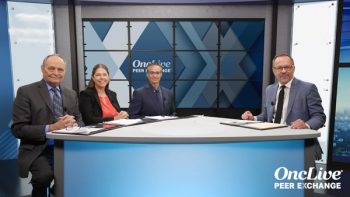
A key opinion leader reviews data on novel investigational agents for recurrent ovarian cancer.
Drs Coleman and Westin continue the discussion of antibody-drug conjugates for treatment of ovarian cancer.
Kathleen N. Moore, MD, MS, discusses the clinical implications of the potential FDA approval of mirvetuximab soravtansine, observations from other antibody-drug conjugates under investigation in clinical trials, and the rationale of examining PARP inhibitor–based combinations in ovarian cancer.
Dr Michael Birrer highlights updated data on antibody-drug conjugates in ovarian cancer treatment.
Dr Shannon Westin shares if and when she could justify withholding a PARP inhibitor from a patient with HRD-positive ovarian cancer.

Bobbie J. Rimel, MD, discusses how PARP inhibitors are deployed across different treatment settings of ovarian cancer, the recent market withdrawal of PARP inhibitors in later-line indications, and ongoing research efforts at Cedars-Sinai Medical Center for patients with ovarian cancer.
Experts discuss the best approach to treating patients with ovarian cancer who are resistant to PARP inhibitors.
A look at the maintenance treatment strategies for advanced or metastatic ovarian cancer.
One of the more perplexing issues surrounding scientific questions is the extended time required to provide an answer. Even once a well-considered and vetted conclusion is obtained, an additional interval of time may be required to modify or reverse the answer because of new, relevant data.
Rodney Rocconi, MD, discusses the continued exploration of antibody-drug conjugates in patients with ovarian cancer, biomarkers and agents under investigation in the space, and the ongoing research being conducted at the O'Neal Comprehensive Cancer Center.

Paul A. DiSilvestro, MD, discusses the long-term survival benefit of olaparib maintenance in advanced BRCA-mutated ovarian cancer.
Paul A. DiSilvestro, MD, discussed the pivotal SOLO-1 trial of maintenance olaparib in patients with BRCA-mutated ovarian cancer, updated survival data with the agent in this population, and the next steps for future research.
Michael J. Birrer, MD, PhD, explains the reasoning for combining PARP inhibitors with immunotherapy in ovarian cancer treatment, highlighting ongoing trials.
Robert L. Coleman, MD, FACOG, FACS, describes data updates from the PRIMA trial investigating PARP inhibition in HRD-negative ovarian cancer populations.
Ubamatamab monotherapy produced early clinical activity and an acceptable risk/benefit profile in heavily pretreated patients with ovarian cancer.

Beth Y. Karlan, MD, discusses the current landscape of research investigating the efficacy of PARP inhibitor combination therapies for the treatment of patients with ovarian cancer.
Dr Michael Birrer reviews data from the PAOLA-1 trial investigating bevacizumab combination therapy for frontline maintenance therapy in advanced ovarian cancer.
Bradley J. Monk, MD, FACOG, FACS, generates a discussion on the use of PARP inhibitors in ovarian cancer treatment.
Treatment with mirvetuximab soravtansine elicited a statistically significant benefit vs investigator’s choice of chemotherapy for the OV28 abdominal/gastrointestinal symptom subscale in patients with folate receptor alpha–positive, advanced ovarian cancer.

González-Martín discusses the updated long-term efficacy and safety data from the PRIMA study, the importance of utilizing PARP inhibitors in patients with homologous recombination–deficient tumors, and the benefit observed with niraparib in those with homologous recombination–proficient tumors.

Antonio Gonzalez-Martin, MD, PhD, discusses new long-term progression-free survival data from the phase 3 PRIMA trial in advanced ovarian cancer.
Shannon N. Westin, MD, MPH, FACOG, explains the study design and outcomes of the SOLO-3 trial.
Advertisement
Advertisement
Trending on OncLive
1
Dr Cercek on the FDA Approval of Dostarlimab for dMMR/MSI-H Locally Advanced Rectal Cancer
2
Vilamakitug Meets OS Threshold in Phase 1/2 Refractory mCRC Trial
3
Weigh Benefit Against Burden: Defining Lurbinectedin’s Role in a Shifting Small Cell Lung Cancer Landscape
4
Dr Warren on the Goal of the 4WARD Trial Evaluating Mavorixafor in Chronic Neutropenia
5