


Ovarian Cancer
Latest News

July 20th 2023
By Chris Ryan
Treatment with the combination of ENB-003 and pembrolizumab was well tolerated and produced preliminary signs of clinical activity in patients with platinum-refractory or -resistant, microsatellite stable ovarian cancer, and those with other advanced refractory solid tumors.
Advertisement
Latest Videos

































































Advertisement
More News

Ovarian cancer experts review clinical trial data on the efficacy of later-line therapies in advanced ovarian cancer.

Michael J. Birrer, MD, PhD, highlights the effect of improved molecular characterization in endometrial cancer, the clinical significance of the KEYNOTE-775 trial, and recent changes in the frontline treatment landscape in advanced endometrial cancer.

Heather R. Williams, MD, discusses findings from the phase 3 PRIMA trial in patients with ovarian cancer.
A comprehensive overview of recent clinical trial data on PARP inhibitors in the first-line maintenance setting in ovarian cancer presented at ASCO 2023.
An expert panel highlights current unmet needs in the maintenance setting for ovarian cancer.
Experts on ovarian cancer discuss germline and somatic testing practices and provide clinical insights on factors that influence treatment decisions.
A panel of expert gynecologic oncologists introduce themselves and review frontline maintenance treatment options in ovarian cancer.

Maurie Markman, MD, discusses changes in cancer management as seen in ovarian cancer.

Mary “Nora” Disis, MD, discusses the results of a phase 1/1b study of PRGN-3005 autologous UltraCAR T cells in patients with advanced stage platinum-resistant ovarian cancer.
A survey conducted by the National Comprehensive Cancer Network Best Practices Committee found that 93% of United States cancer centers polled in the report are experiencing a shortage of carboplatin, and 70% currently have a shortage of cisplatin.

Treatment with avutometinib plus defactinib elicited high responses among patients with recurrent low grade serous ovarian cancer compared with avutometinib monotherapy, supporting the use of the combination in this patient population regardless of KRAS status, according to data from the RAMP 201 trial.
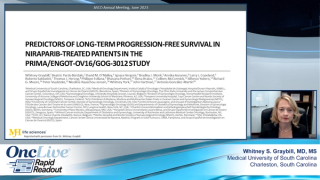
The use of maintenance niraparib enhanced antitumor activity and led to a clinically meaningful increase in progression-free survival vs placebo for patients with newly diagnosed advanced ovarian cancer who displayed measurable residual disease after first-line platinum-based chemotherapy, according to findings from a post hoc subgroup analysis of the phase 3 PRIME study.

Mirvetuximab soravtansine-gynx demonstrated a 35% reduction in the risk of disease progression or death compared with investigator’s choice of chemotherapy in patients with folate receptor alpha-high, platinum-resistant ovarian cancer.

The addition of durvalumab to standard upfront therapy with chemotherapy and bevacizumab followed by maintenance bevacizumab, durvalumab, and olaparib led to a statistically significant improvement in progression-free survival compared with chemotherapy and bevacizumab alone in patients with newly diagnosed, advanced ovarian cancer without a BRCA1/2 mutation.
Whitfield B. Growdon, MD, shares the potential implications of first-line PARP maintenance in newly diagnosed ovarian cancer, the importance of treating patients with effective therapies as early as possible, and where combination regimens could fit into the treatment paradigm going forward.
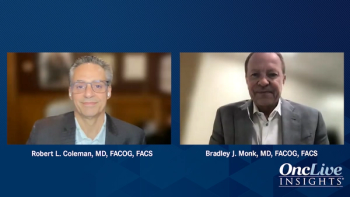
Comprehensive insights on unmet needs, ongoing research, and the future of advanced ovarian cancer treatment.
Expert oncologists review the current PARP inhibitor treatment indications for patients with advanced ovarian cancer and discuss how to best manage patients who have been impacted by the recent updates to the PARP inhibitors.
Drs Coleman and Monk discuss what led to the recent withdrawal of several indications for PARP inhibitors in the treatment of advanced ovarian cancer.
Expert oncologists give an overview of PARP inhibitors available for the treatment of patients with advanced ovarian cancer and review adverse events seen with each agent.
Experts on advanced ovarian cancer give detailed insights on the role of biomarker testing and identify important biomarkers.
Robert L Coleman, MD, FACOG, FACS, and Bradley J Monk, MD, FACOG, FACS, provide an overview of advanced ovarian cancer and discuss its prevalence and diagnosis process.
Whitfield B. Growdon, MD, discusses the role PARP inhibitors have played in ovarian cancer since their introduction to the field, the updated clinical trial data that contributed to the indication withdrawals for these agents, and where future research in this area may be headed.

Joshua G. Cohen, MD, FACOG, FACS, discusses key trials supporting the use of PARP inhibitor maintenance therapy in upfront setting in ovarian cancer.

Patients with low-grade serous ovarian carcinoma historically have demonstrated a benefit with hormonal maintenance therapy following cytoreductive surgery and platinum-based chemotherapy.

The FDA has granted fast track designations to ACR-368 monotherapy for the treatment of patients with platinum-resistant ovarian cancer and endometrial cancer who are positive for predicted sensitivity to the agent using Acrivon Therapeutics’ OncoSignature® test.
Advertisement
Advertisement
Trending on OncLive
1
Dr Cercek on the FDA Approval of Dostarlimab for dMMR/MSI-H Locally Advanced Rectal Cancer
2
Vilamakitug Meets OS Threshold in Phase 1/2 Refractory mCRC Trial
3
Weigh Benefit Against Burden: Defining Lurbinectedin’s Role in a Shifting Small Cell Lung Cancer Landscape
4
Dr Warren on the Goal of the 4WARD Trial Evaluating Mavorixafor in Chronic Neutropenia
5