






Ovarian Cancer
Latest News
Advertisement
Latest Videos




































































Advertisement
More News

The FDA has granted priority review to the new drug application for the novel compound pafolacianine sodium injection for use in the identification of ovarian cancer during surgery.

Thomas C. Krivak, MD, discusses the importance of germline genetic testing in ovarian cancer.

Robert Wenham, MD, MS, FACOG, FACS, discusses novel immunotherapy combinations for the treatment of patients with ovarian cancer.
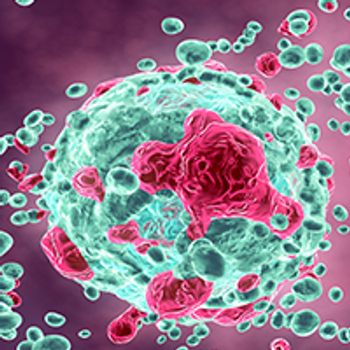
February 24, 2021 - An independent data safety monitoring committee has not observed any safety issues with the phase 3 OVAL trial examining VB-111 in patients with platinum-resistant ovarian cancer, and as such, has recommended that the trial continue as planned.

February 23, 2021 - The first patient in a first-in-human phase 1 study has been dosed with DS-6000, a novel CDH6-directed antibody-drug conjugate.

February 22, 2021 - The FDA has granted a fast track designation to the DNA-mediated interleukin-12 immunotherapy GEN-1 for use in the treatment of patients with advanced ovarian cancer.

February 16, 2021 - Only 34.3% of 14,689 patients with ovarian cancer received germline genetic testing between 2013 and 2019, revealing persistent underuse of testing among this population.

Jing-Yi Chern, MD, ScM, discusses efforts being made to combine PARP inhibitors with chemotherapy and immunotherapy in patients with recurrent ovarian cancer.

Jubilee Brown, MD, discusses future directions for surgery in ovarian cancer.

Joshua G. Cohen, MD, FACOG, FACS, discusses the efficacy of PARP inhibitors in patients with ovarian cancer.

Maurie Markman, MD, discusses the need for comparative clinical trials with PARP inhibitors in ovarian cancer.

Although recent benefits do not pertain to all cancers and “cure” remains a relatively uncommon event, oncologists have an increasing number of molecularly targeted and immunotherapeutic strategies to employ based on objectively meaningful clinical trial outcomes.

Brittany F. Lees, MD, discusses the utility of genetic and genomic testing in ovarian cancer.

Gottfried E. Konecny, MD, discusses the impact of maintenance PARP inhibitors on survival in patients with ovarian cancer.
Mae Zakhour, MD, discusses clinical trials that evaluated frontline maintenance PARP inhibitors in patients with ovarian cancer.

R. Wendel Naumann, MD, discusses the significance of the phase 1/2 TOPACIO trial in ovarian cancer.

Allison M. Puechl, MD, discusses choosing between PARP inhibitors in ovarian cancer.
Joshua G. Cohen, MD, FACOG, FACS, discusses the efficacy of PARP inhibitors in ovarian cancer, remaining questions regarding repeat inhibition and treatment duration, and the potential for combinations.
Erin K. Crane, MD, MPH, discusses the benefit of maintenance PARP inhibitors in ovarian cancer.

Jubilee Brown, MD, discusses the utility of minimally invasive surgery in ovarian cancer.

January 6, 2021 — The oral small molecule inhibitor VS-6766, developed by Verastem Oncology, is now under investigation alone and in combination with the FAK inhibitor defactinib in a recently initiated, registration-directed, phase 2 trial in patients with recurrent low-grade serous ovarian cancer.

January 5, 2020 - Boehringer Ingelheim will add to its cancer cell-directed therapies portfolio with the acquisition of NBE-Therapeutics, the developer of NBE-002, an anti-ROR1 antibody-drug conjugate.

December 21, 2020 - Rucaparib was found to result in a statistically significant improvement in progression-free survival compared with chemotherapy in patients with BRCA-mutant ovarian cancer who had previously received 2 or more lines of chemotherapy.

Allison M. Puechl, MD, discusses the role of second-line maintenance therapy in patients with recurrent ovarian cancer and considerations that may limit the accessibility of PARP inhibitors in this space.

Following the results of the SOLO-1 trial, maintenance PARP inhibitors have become the standard of care for patients with BRCA-mutated ovarian cancer but overall survival data are needed to confirm their potentially curative benefit.
Advertisement
Advertisement
Trending on OncLive
1
Dr Cercek on the FDA Approval of Dostarlimab for dMMR/MSI-H Locally Advanced Rectal Cancer
2
Weigh Benefit Against Burden: Defining Lurbinectedin’s Role in a Shifting Small Cell Lung Cancer Landscape
3
Vilamakitug Meets OS Threshold in Phase 1/2 Refractory mCRC Trial
4
Dr Warren on the Goal of the 4WARD Trial Evaluating Mavorixafor in Chronic Neutropenia
5