

Ovarian Cancer
Latest News
Advertisement
Latest Videos

































































Advertisement
More News
Joyce F. Liu, MD, MPH, discusses the results of cediranib in combination with olaparib in a phase 3 trial in patients with recurrent platinum-sensitive ovarian cancer.
Ursula A. Matulonis, MD, discusses the potential role of combined positive score as a biomarker in advanced recurrent ovarian cancer.
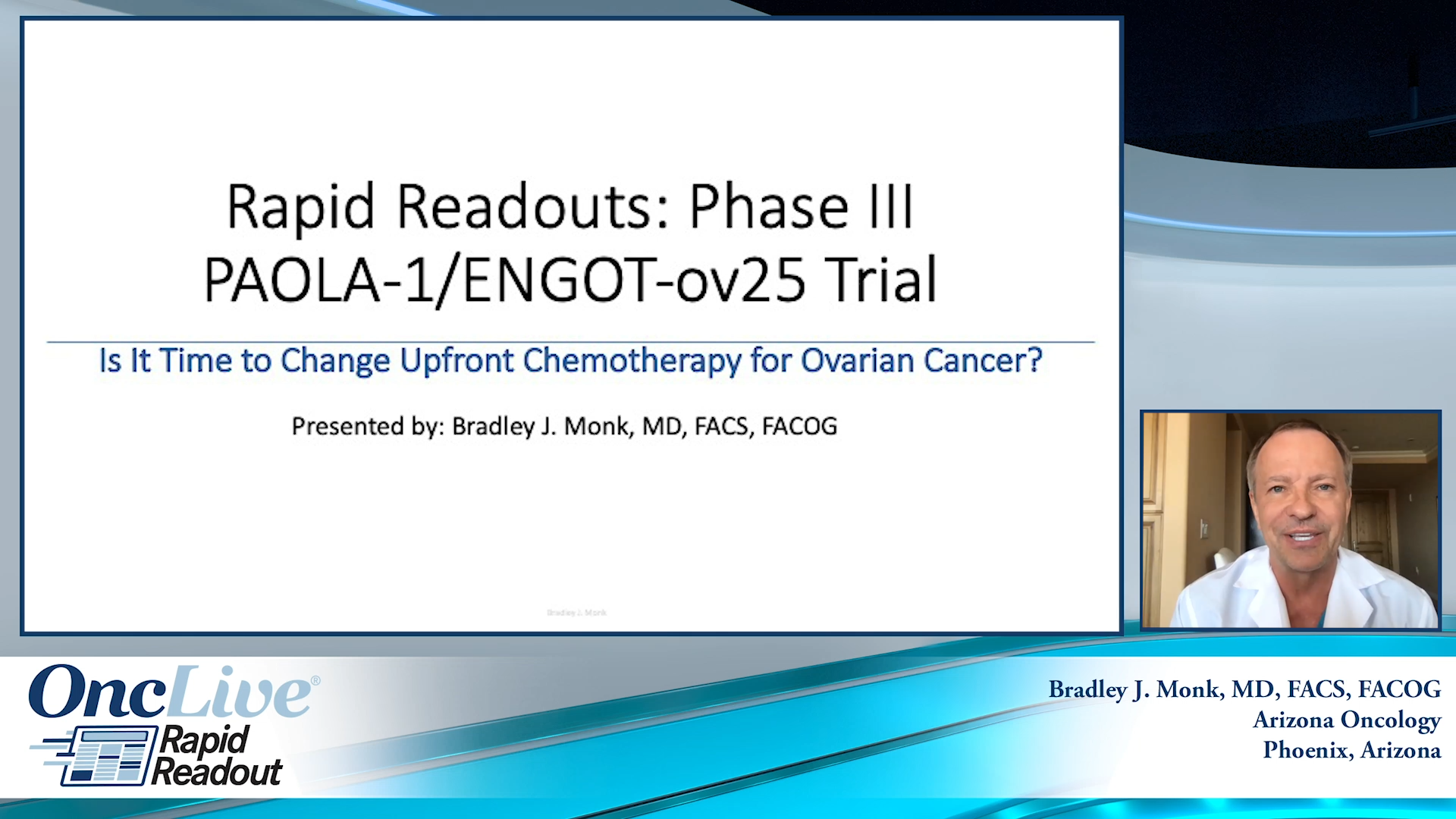
In our exclusive interview, Bradley J. Monk, MD, FACS, FACOG, and Maurie Markman, MD, discuss the rationale behind maintenance therapy, pivotal PARP inhibitor trials in the frontline setting, and the importance of shared-decision making.
Mansoor Raza Mirza, MD, discusses the final survival analysis of the phase 3 NSGO-AVANOVA2/ENGOT-OV24 trial in recurrent, platinum-sensitive ovarian cancer.
Mansoor Raza Mirza, MD, discusses the evolving treatment landscape in recurrent ovarian cancer.
Kathleen Moore, MD, discusses the current prevalence of ovarian cancer.
Konstantin Zakashansky, MD, discusses data with olaparib in advanced, recurrent, platinum-sensitive, BRCA-mutated ovarian cancer.
The pivotal phase 3 ATHENA trial, which will examine the safety and efficacy of rucaparib in combination with nivolumab as maintenance treatment following response to front-line platinum-based chemotherapy in patients with advanced epithelial ovarian, fallopian tube, or primary peritoneal cancer, has completed target enrollment.
Rebecca C. Arend, MD, discusses the unmet needs in of patients with platinum-resistant ovarian cancer.
David O'Malley, MD, discusses the activity of the investigational antibody-drug conjugate mirvetuximab soravtansine in ovarian cancer.
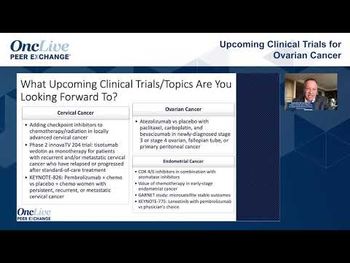
Upcoming Clinical Trials for Ovarian Cancer
ByBradley J. Monk, MD, FACOG, FACS, Creighton University School of Medicine at St. Joseph's Hospital and Arizona Oncology,Michael J. Birrer, MD, PhD, University of Arkansas Medical Center,Matthew Powell, MD, Washington University School of Medicine,Leslie Randall, MD, FACOG, VCU Health,Shannon N. Westin, MD, MPH, FACOG
Emerging Therapies in Recurrent Ovarian Cancer
ByBradley J. Monk, MD, FACOG, FACS, Creighton University School of Medicine at St. Joseph's Hospital and Arizona Oncology,Michael J. Birrer, MD, PhD, University of Arkansas Medical Center,Matthew Powell, MD, Washington University School of Medicine,Leslie Randall, MD, FACOG, VCU Health,Shannon N. Westin, MD, MPH, FACOG
Antibody Drug Conjugates for Ovarian Cancer
ByBradley J. Monk, MD, FACOG, FACS, Creighton University School of Medicine at St. Joseph's Hospital and Arizona Oncology,Michael J. Birrer, MD, PhD, University of Arkansas Medical Center,Matthew Powell, MD, Washington University School of Medicine,Leslie Randall, MD, FACOG, VCU Health,Shannon N. Westin, MD, MPH, FACOG
Neoadjuvant Therapy Versus Surgery for Ovarian Cancer
ByBradley J. Monk, MD, FACOG, FACS, Creighton University School of Medicine at St. Joseph's Hospital and Arizona Oncology,Michael J. Birrer, MD, PhD, University of Arkansas Medical Center,Matthew Powell, MD, Washington University School of Medicine,Leslie Randall, MD, FACOG, VCU Health,Shannon N. Westin, MD, MPH, FACOG
New Data for Secondary Surgery in Ovarian Cancer
ByBradley J. Monk, MD, FACOG, FACS, Creighton University School of Medicine at St. Joseph's Hospital and Arizona Oncology,Michael J. Birrer, MD, PhD, University of Arkansas Medical Center,Matthew Powell, MD, Washington University School of Medicine,Leslie Randall, MD, FACOG, VCU Health,Shannon N. Westin, MD, MPH, FACOG
PARP Inhibitors in Recurrent Ovarian Cancer
ByBradley J. Monk, MD, FACOG, FACS, Creighton University School of Medicine at St. Joseph's Hospital and Arizona Oncology,Michael J. Birrer, MD, PhD, University of Arkansas Medical Center,Matthew Powell, MD, Washington University School of Medicine,Leslie Randall, MD, FACOG, VCU Health,Shannon N. Westin, MD, MPH, FACOG
Expert Approaches for Treating Recurrent Ovarian Cancer
ByBradley J. Monk, MD, FACOG, FACS, Creighton University School of Medicine at St. Joseph's Hospital and Arizona Oncology,Michael J. Birrer, MD, PhD, University of Arkansas Medical Center,Matthew Powell, MD, Washington University School of Medicine,Leslie Randall, MD, FACOG, VCU Health,Shannon N. Westin, MD, MPH, FACOG
Emerging Combinations in the Frontline Setting of Ovarian Cancer
ByBradley J. Monk, MD, FACOG, FACS, Creighton University School of Medicine at St. Joseph's Hospital and Arizona Oncology,Michael J. Birrer, MD, PhD, University of Arkansas Medical Center,Matthew Powell, MD, Washington University School of Medicine,Leslie Randall, MD, FACOG, VCU Health,Shannon N. Westin, MD, MPH, FACOG
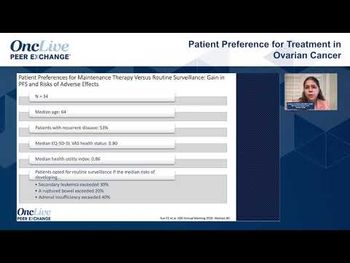
Patient Preference for Treatment in Ovarian Cancer
ByBradley J. Monk, MD, FACOG, FACS, Creighton University School of Medicine at St. Joseph's Hospital and Arizona Oncology,Michael J. Birrer, MD, PhD, University of Arkansas Medical Center,Matthew Powell, MD, Washington University School of Medicine,Leslie Randall, MD, FACOG, VCU Health,Shannon N. Westin, MD, MPH, FACOG
PAOLA-1 Study Surgical Subset for Ovarian Cancer
ByBradley J. Monk, MD, FACOG, FACS, Creighton University School of Medicine at St. Joseph's Hospital and Arizona Oncology,Michael J. Birrer, MD, PhD, University of Arkansas Medical Center,Matthew Powell, MD, Washington University School of Medicine,Leslie Randall, MD, FACOG, VCU Health,Shannon N. Westin, MD, MPH, FACOG
NCCN Guidelines and FDA Approvals for Treating Ovarian Cancer
ByBradley J. Monk, MD, FACOG, FACS, Creighton University School of Medicine at St. Joseph's Hospital and Arizona Oncology,Michael J. Birrer, MD, PhD, University of Arkansas Medical Center,Matthew Powell, MD, Washington University School of Medicine,Leslie Randall, MD, FACOG, VCU Health,Shannon N. Westin, MD, MPH, FACOG
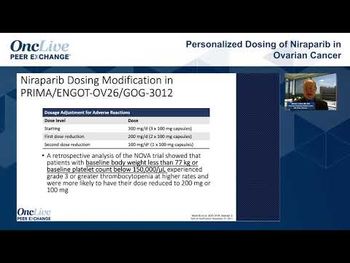
Personalized Dosing of Niraparib in Ovarian Cancer
ByBradley J. Monk, MD, FACOG, FACS, Creighton University School of Medicine at St. Joseph's Hospital and Arizona Oncology,Michael J. Birrer, MD, PhD, University of Arkansas Medical Center,Matthew Powell, MD, Washington University School of Medicine,Leslie Randall, MD, FACOG, VCU Health,Shannon N. Westin, MD, MPH, FACOG
Treating Homologous Recombination Proficient Ovarian Cancer
ByBradley J. Monk, MD, FACOG, FACS, Creighton University School of Medicine at St. Joseph's Hospital and Arizona Oncology,Michael J. Birrer, MD, PhD, University of Arkansas Medical Center,Matthew Powell, MD, Washington University School of Medicine,Leslie Randall, MD, FACOG, VCU Health,Shannon N. Westin, MD, MPH, FACOG
Treating BRCA+ Ovarian Cancer
ByBradley J. Monk, MD, FACOG, FACS, Creighton University School of Medicine at St. Joseph's Hospital and Arizona Oncology,Michael J. Birrer, MD, PhD, University of Arkansas Medical Center,Matthew Powell, MD, Washington University School of Medicine,Leslie Randall, MD, FACOG, VCU Health,Shannon N. Westin, MD, MPH, FACOG
Need for Frontline Comparison Trials in Ovarian Cancer
ByBradley J. Monk, MD, FACOG, FACS, Creighton University School of Medicine at St. Joseph's Hospital and Arizona Oncology,Michael J. Birrer, MD, PhD, University of Arkansas Medical Center,Matthew Powell, MD, Washington University School of Medicine,Leslie Randall, MD, FACOG, VCU Health,Shannon N. Westin, MD, MPH, FACOG
Advertisement
Advertisement
Trending on OncLive
1
Dr Cercek on the FDA Approval of Dostarlimab for dMMR/MSI-H Locally Advanced Rectal Cancer
2
Weigh Benefit Against Burden: Defining Lurbinectedin’s Role in a Shifting Small Cell Lung Cancer Landscape
3
Vilamakitug Meets OS Threshold in Phase 1/2 Refractory mCRC Trial
4
Dr Warren on the Goal of the 4WARD Trial Evaluating Mavorixafor in Chronic Neutropenia
5