



Ovarian Cancer
Latest News
Maintenance Niraparib, Given at Individualized Starting Dose, Improves PFS in Chinese Patients With Ovarian Cancer
By Gina Mauro
Advertisement
Latest Videos































































Advertisement
More News
Maurie Markman, MD, discusses the utility of PARP inhibitors in ovarian cancer.

The European Union has approved olaparib in combination with bevacizumab for use as a first-line maintenance treatment in patients with homologous recombination deficient–positive advanced ovarian cancer.
Gottfried E. Konecny, MD, discusses potential strategies to overcome PARP resistance, future combinations with PARP inhibitors, and other unmet needs in ovarian cancer.
Mae Zakhour, MD, discusses the rise of PARP inhibitors as frontline maintenance therapy in advanced ovarian cancer and the key data that supported these regulatory decisions.

Susana Banerjee, MBBS, MA, PhD, FRCP, discusses the significance of the landmark SOLO-1 analysis and outlined the next steps for research with regard to PARP inhibition in ovarian cancer.
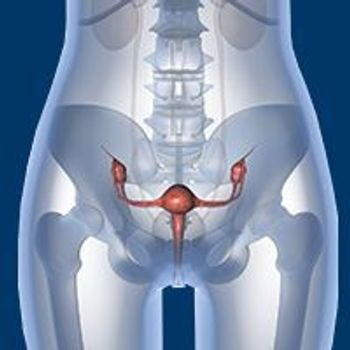
The European Commission has approved niraparib for use as a frontline monotherapy maintenance option in adult patients with advanced epithelial, high-grade ovarian, fallopian tube, or primary peritoneal cancer who are in complete or partial response after platinum-based chemotherapy.

Zarnie Lwin, MBBS, FRACP, discusses the design of the phase 2 LEAP-005 trial in previously treated patients with advanced solid tumors.

Amanda L. Jackson, MD, discusses choosing between VEGF inhibitors and PARP inhibitors in the treatment of patients with recurrent platinum-sensitive ovarian cancer.

Sofia D. Merajver, MD, PhD, discusses the importance of germline testing in patients with breast and ovarian cancer along with how this testing is being used to personalize treatment.

Caroline Billingsley, MD, spoke to established and emerging treatment modalities in ovarian cancer and the successes and pitfalls of key clinical trials of antibody-drug conjugates and immunotherapy in this space.
Amanda L. Jackson, MD, , discusses the role of PARP inhibitors in the maintenance treatment of patients with recurrent platinum-sensitive ovarian cancer.
Thomas Herzog, MD, discusses the data that have cast PARP inhibitors into the forefront of treatment in the up-front management of patients with advanced ovarian cancer.

Michael Guy, MD, discusses pivotal trials that have helped to define the role of secondary cytoreductive surgery in recurrent ovarian cancer.
The addition of atezolizumab to a backbone comprised of bevacizumab and chemotherapy failed to significantly improve progression-free survival in patients with newly diagnosed stage III/IV ovarian cancer.
The European Medicines Agency’s Committee for Medicinal Products for Human Use has adopted a positive opinion for olaparib as maintenance treatment in adult patients with advanced, high-grade epithelial ovarian, fallopian tube, or primary peritoneal cancer who are in response after first-line platinum-based chemotherapy plus bevacizumab and whose disease has homologous recombination deficiency positivity defined by either a BRCA1/2 mutation and/or genomic instability.

Weekly dose-dense chemotherapy is not superior to standard 3 weekly chemotherapy for patients with epithelial ovarian cancer when it comes to progression-free survival and overall survival, though the regimen is safe and effective.

Bhavana Pothuri, MD, discusses patient-reported outcomes with niraparib in advanced ovarian cancer.

Kala Visvanathan, MD, MBBS, MHS, discusses the rationale for evaluating lipophilic statins in epithelial ovarian cancer.

In our exclusive interview, Thomas Herzog, MD, and Kathleen Moore, MD, reviewed the topline results of the 4 positive PARP inhibitor trials in the frontline maintenance setting and provided perspective on the potential applications of these data to clinical practice.
PARP inhibitors have fundamentally changed our therapeutic algorithms in ovarian cancer, even as their use continues to evolve.
David O'Malley, MD, discusses the adverse effects associated with mirvetuximab soravtansine in ovarian cancer.
In our exclusive interview, Robert L. Coleman, MD, FACOG, FACS and Brian M. Slomovitz, MD, discussed the benefits and limitations of PARP inhibition in all-comers with newly diagnosed advanced ovarian cancer and pivotal PARP inhibitor trials in the frontline setting.
Kathleen Moore, MD, discusses the anticipated impact of the phase 3 MIRASOL trial with mirvetuximab soravtansine in patients with platinum-resistant, high-grade epithelial ovarian, primary peritoneal, or fallopian tube cancer with a high folate receptor alpha expression.

Lucy Gilbert, MD, MSc, discusses the rationale for evaluating mirvetuximab soravtansine in combination with bevacizumab in patients with platinum-agnostic ovarian cancer.
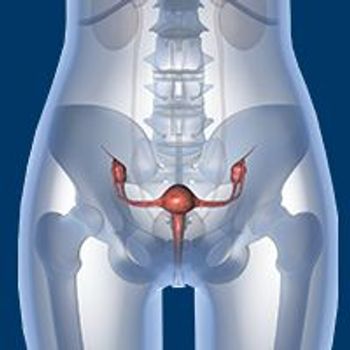
The majority of women at a high risk of developing ovarian cancer reported having a favorable attitude toward adopting a two-step risk-reducing early salpingectomy and delayed oophorectomy instead of a risk-reducing salpingo-oophorectomy.
Advertisement
Advertisement
Trending on OncLive
1
Dr Cercek on the FDA Approval of Dostarlimab for dMMR/MSI-H Locally Advanced Rectal Cancer
2
Weigh Benefit Against Burden: Defining Lurbinectedin’s Role in a Shifting Small Cell Lung Cancer Landscape
3
Vilamakitug Meets OS Threshold in Phase 1/2 Refractory mCRC Trial
4
Dr Warren on the Goal of the 4WARD Trial Evaluating Mavorixafor in Chronic Neutropenia
5