




Prostate Cancer
Latest News
Advertisement
Latest Videos





















































Advertisement
More News
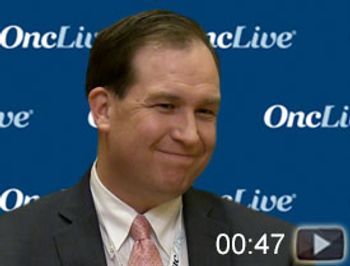
Scott Samuelson, MD, medical oncologist at Utah Cancer Specialists, discusses the comorbidities that may affect treatment decisions for patients with metastatic prostate cancer.
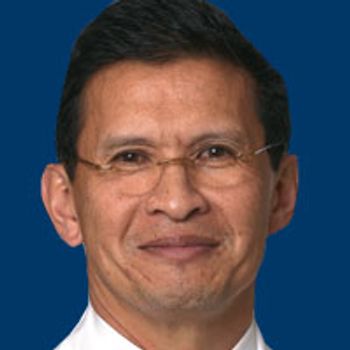
Raoul S. Concepcion, MD, FACS, discusses how to sort through the massive amount of data in the urology space, gain a basic understanding of its significance, and determine its clinical utility.

Evan Y. Yu, MD, professor, Department of Medicine, Division of Oncology, University of Washington, Seattle Cancer Care Alliance, discusses the future of castration-sensitive prostate cancer.
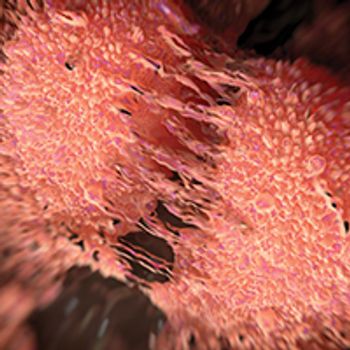
Use of androgen deprivation therapy in combination with docetaxel or abiraterone in newly diagnosed cases of metastatic noncastrate prostate cancer is recommended in recently updated ASCO guidelines.
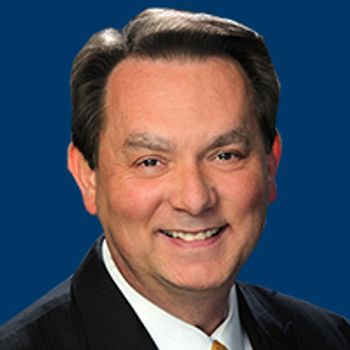
Providing comprehensive, compassionate, cost-effective care has been the guiding principle of Urology San Antonio. The practice manages over 200,000 visits and establishes relationships with more than 22,000 new patients each year.

Mehmood Hashmi, MD, discusses the newly defined landscape of nonmetastatic castration-resistant prostate cancer, the potential with immunotherapy, and emerging imaging modalities.
Maha Hussain, MD, FACP, FASCO, Genevieve Teuton Professor of Medicine, Deputy Director, Robert H. Lurie Comprehensive Cancer Center, Northwestern University Feinberg School of Medicine, discusses the treatment of patients with nonmetastatic castration-resistant prostate cancer.

Nicholas J. Vogelzang, MD, site research leader for Comprehensive Cancer Centers of Nevada, member of US Oncology Network, 2018 Giant of Cancer Care

Mehmood Hashmi, MD, assistant professor of medicine, University of Kansas Medical Center, discusses the use of immunotherapy in the treatment of patients with prostate cancer.
An assay for nuclear-localized androgen receptor splice variant 7 protein in circulating tumor cells identified patients with metastatic castration-resistant prostate cancer who had better outcomes from treatment with taxanes, and those who did better with androgen receptor-signaling inhibitors.

The FDA has approved enzalutamide for the treatment of patients with nonmetastatic castration-resistant prostate cancer.

Leonard Gomella, MD, professor, chair, Department of Urology, director, Sidney Kimmel Cancer Center Network, Thomas Jefferson University Hospital, discusses the FDA approval of enzalutamide (Xtandi) for the treatment of men with nonmetastatic castration-resistant prostate cancer.

Mehmood Hashmi, MD, assistant professor of medicine, University of Kansas Medical Center, discusses imaging modalities in prostate cancer.

Evan Ya-Wen Yu, MD, discusses the evolution of treatment for patients with castration-sensitive prostate cancer and how he decides between treatment with abiraterone and docetaxel for this population.
Mehmood Hashmi, MD, assistant professor of medicine, University of Kansas Medical Center, discusses the exciting abstracts in prostate cancer that were presented at the 2018 ASCO Annual Meeting.

Scott Samuelson, MD, discusses frontline treatment of patients with prostate cancer and subsequent sequencing.

Benjamin Maughan, MD, PharmD, instructor, Division of Medical Oncology, Huntsman Cancer Institute, discusses enzalutamide (Xtandi) plus radium-223 (Xofigo) in metastatic castration-resistant prostate cancer.

Andy Hahn, MD, discusses the ongoing debate between abiraterone and docetaxel and the optimal patient selection for each agent in patients with metastatic hormone-sensitive prostate cancer.

Several studies presented at this year’s American Urological Association meeting underscored the value of multiparametric magnetic resonance imaging in the diagnosis and management of prostate cancer.
Andy Hahn, MD, resident, University of Utah School of Medicine, discusses abiraterone acetate (Zytiga) versus docetaxel in the treatment of patients with prostate cancer.
Evan Y. Yu, MD, professor, Department of Medicine, Division of Oncology, University of Washington, Seattle Cancer Care Alliance, discusses treatment intensification in patients with metastatic castration-sensitive prostate cancer.

Cryoablation may help men whose prostate cancer recurs after radiation therapy avoid or delay retreatment with androgen deprivation therapy.

Veda Giri, MD, associate professor, Thomas Jefferson University Hospital, discusses genes that are associated with a risk of developing prostate cancer.
Patients younger than 65 years experienced net cancer costs that were higher for breast, colorectal, lung, and prostate cancer compared with patients who were 65 years and older.
Scott Samuelson, MD, medical oncologist, Utah Cancer Specialists, on frontline treatment of patients with prostate cancer and subsequent sequencing.
Advertisement
Advertisement
Trending on OncLive
1
Savolitinib Plus Osimertinib NDA Submitted to FDA for MET-Driven, EGFR-Mutated NSCLC After EGFR TKI
2
Daraxonrasib Approval Signals a New Era for RAS-Targeted Therapy in Pancreatic Cancer
3
Cilta-Cel Shows Long-Term Treatment-Free Remissions in Lenalidomide-Refractory Myeloma
4
Calculating the Real Cost of False Positive Findings in Cancer Screening
5