
Sarcomas
Latest News
Advertisement
Latest Videos






























































Advertisement
More News
Treatment with aldoxorubicin failed to improve progression-free survival compared with investigator's choice of therapy for patients with advanced soft tissue sarcoma.
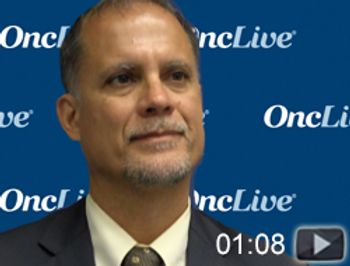
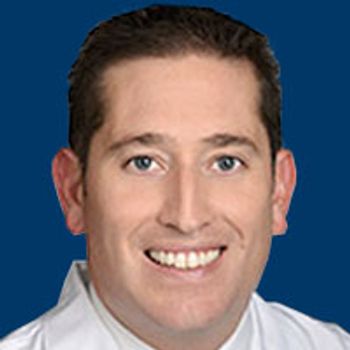
Noah Federman, MD, discusses challenges with treating pediatric patients and adolescent and young adults with sarcomas and ongoing efforts to overcome these obstacles.
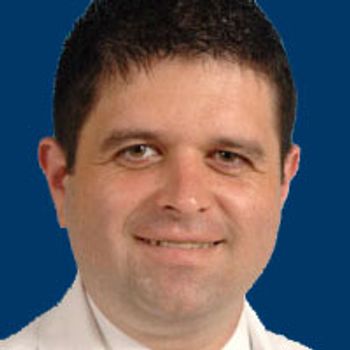
Brian A. Van Tine, MD, PhD, discusses ongoing research in sarcomas, as well as provides insight on the impact existing drugs are making on the treatment landscape and what community oncologists need to know about this ever-changing field.
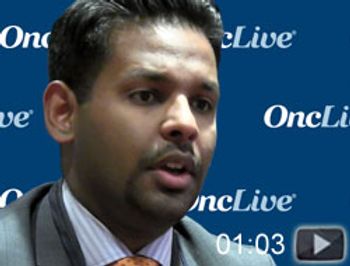
Tony Philip, MD, medical oncologist, Monter Cancer Center of the North Shore-LIJ Cancer Institute, assistant professor of Medicine, Hofstra-North Shore LIJ School of Medicine and NYIT College of Osteopathic Medicine, discusses treatment challenges for patients with soft tissue sarcoma.
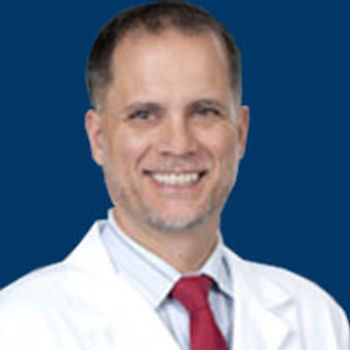
Jonathan C. Trent, MD, PhD, discusses notable findings in sarcomas that emerged at the 2016 ASCO Annual Meeting, as well as what lies ahead for the field of sarcomas.
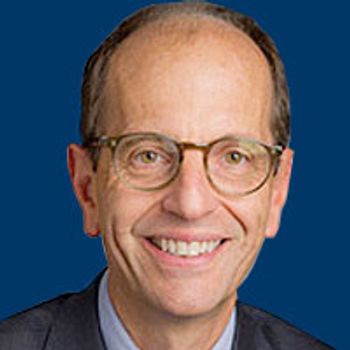
George D. Demetri, MD, discusses current trends in sarcoma care, how the field of sarcoma has paved the way for other tumor types, and emerging therapeutic advances in the field.
The European Commission has approved eribulin mesylate (Halaven) as a treatment for patients with advanced or unresectable liposarcoma following anthracycline-based chemotherapy.
Junji Matsui, PhD, senior director, Eisai, discusses a preclinical study of eribulin (Halaven) demonstrating anti-proliferative activity in select soft tissue sarcoma cell lines.
The FDA has granted the PDGFRα antagonist olaratumab a priority review for use in combination with doxorubicin for the treatment of patients with advanced soft tissue sarcoma who are not good candidates for radiotherapy or surgery.
George D. Demetri, MD, senior vice president for Experimental Therapeutics at the Dana-Farber Cancer Institute, professor of Medicine at Harvard Medical School, and co-director of the Ludwig Center at Harvard, discusses the evolving and advancing field of sarcoma.
Damon Reed, MD, discusses the challenges associated with treating rare sarcomas, the importance of collaboration, advancements in the field, and the potential for immunotherapy in the disease.
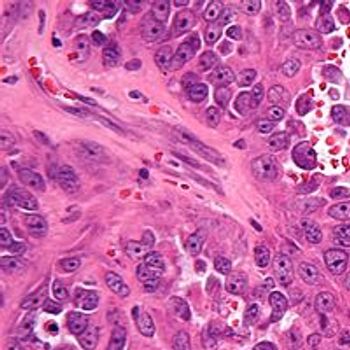
Eribulin mesylate (Halaven) has received a positive recommendation from the EMA’s Committee for Medicinal Products for Human Use as a treatment for patients with advanced or unresectable liposarcoma following prior treatment with an anthracycline-based chemotherapy.
H. Thomas Temple, MD, explains where he sees the future of sarcoma going and what diagnostic technologies and therapeutic advancements he is most excited about.
Martee L. Hensley, MD, discusses what lies ahead for the treatment paradigm of uterine leiomyosarcoma
George Demetri, MD, discusses the impact of the eribulin’s FDA approval, what oncologists can learn from studying liposarcoma, and the challenges that come with treating a rare disease.
Treatment with trabectedin significantly improved progression-free survival compared with dacarbazine in women with advanced uterine leiomyosarcoma, according to a subgroup analysis of the phase III SAR-3007 trial.
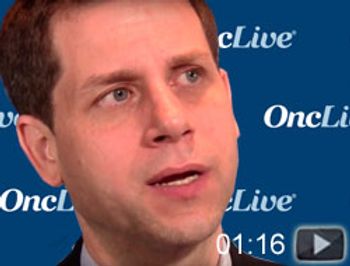
William D. Tap, MD, chief, Sarcoma Medical Oncology Service, Memorial Sloan Kettering Cancer Center, discusses the mechanism of action of olaratumumab as a treatment for patients with soft tissue sarcoma.
George D. Demetri, MD, whose teamwork approach has helped pave the way for new drugs for hard-to-treat sarcomas, was honored in the Gastrointestinal Cancer category with a 2014 Giants of Cancer Care® award, a program that the Intellisphere® Oncology Specialty Group launched to honor leaders in the field.
An affinity enhanced T-cell therapy has received an FDA breakthrough therapy designation for the treatment of patients with inoperable or metastatic pretreated synovial sarcoma who harbor HLA-A*201, HLA-A*205, or HLA-A*206 alleles and whose tumors express the NY-ESO-1 tumor antigen.
The FDA has approved eribulin mesylate as a treatment for patients with advanced or unresectable liposarcoma following prior treatment with an anthracycline-based chemotherapy.

Phase Ib/II research has shown promise for adoptive cellular therapy combined with ipilimumab in patients with advanced sarcomas.
Combining olaratumab with doxorubicin reduced the risk of death by 54% versus doxorubicin alone in patients with advanced soft tissue sarcoma.
Combining the investigational antibody TRC105 with Votrient showed promising antitumor activity in patients with soft tissue sarcoma.
Jonathan C. Trent, MD, associate director for Clinical Research, director of the Sarcoma Medical Research Program at the Sylvester Comprehensive Cancer Center at the University of Miami Miller School of Medicine, discusses sequencing trabectedin (Yondelis) for patients with soft tissue sarcoma.
Advertisement
Advertisement
Trending on OncLive
1
FDA Approves Nogapendekin Alfa Inbakicept Plus BCG for High-Grade, Papillary-Only BCG-Unresponsive NMIBC
2
SurVaxM Cancer Vaccine Shows Clinically Meaningful OS Signal in Newly Diagnosed Glioblastoma
3
VS-7375 Elicits Responses in KRAS G12D–Mutated Pancreatic Cancer
4
FDA Accepts BLA Resubmission for Tabelecleucel in EBV+ Post-Transplant Lymphoproliferative Disease
5