
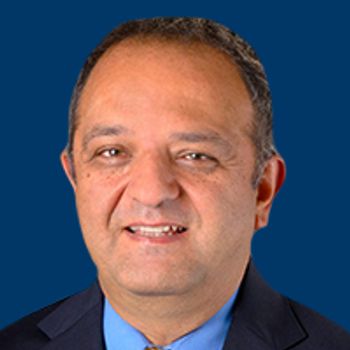
Findings showed that AMG 330 was safe and tolerable in treating patients with relapsed or refractory acute myeloid leukemia, with cytokine release syndrome as the most frequent and expected adverse event.
Findings showed that AMG 330 was safe and tolerable in treating patients with relapsed or refractory acute myeloid leukemia, with cytokine release syndrome as the most frequent and expected adverse event.

Findings from a 5-year analysis of the phase 3 COMBI-AD trial validated the long-term benefit of adjuvant dabrafenib and trametinib in patients with resected, stage III BRAF V600E/K-mutant melanoma.

Treatment with pembrolizumab improved progression-free survival after subsequent therapy for patients with PD-L1–positive, relapsed/refractory head and neck squamous cell carcinoma.

AMG 510, a novel KRAS G12C inhibitor, demonstrated early evidence of a consistent safety profile and anticancer activity across a range of advanced KRAS G12C-mutant solid tumors other than non–small cell lung cancer and colorectal cancer.

Clinical outcomes in patients with recurrent ovarian cancer who were treated with niraparib plus bevacizumab were significantly improved when compared with niraparib alone.

Relugolix (Relumina) demonstrated superiority over leuprolide (Lupron) in sustained testosterone (T)-suppression through 48 weeks in patients with advanced prostate cancer.

Treatment with pembrolizumab induced a 4.9-month progression-free survival benefit over brentuximab vedotin in patients with relapsed/refractory classical Hodgkin lymphoma.

Mirvetuximab soravtansine in combination with bevacizumab to treat patients with platinum-agnostic ovarian cancer demonstrated encouraging overall response rates regardless of platinum status with a favorable tolerability profile.

The allogeneic CAR-T cell therapy ALLO-501, paired with the monoclonal antibody ALLO-647, demonstrated clinical responses and manageable toxicity in patients with pretreated large B-cell and follicular lymphomas.

Idecabtagene vicleucel induced a response in nearly three-fourths of patients with heavily pretreated relapsed/refractory multiple myeloma, according to topline findings from the pivotal phase 2 KarMMA trial.

Scott Kopetz, MD, PhD, FACP, discusses the updated survival data from the BEACON CRC study in BRAF V600E–mutated metastatic colorectal cancer.

Nancy U. Lin, MD, discusses updated findings from the phase 2 HER2CLIMB study in patients with HER2-positive metastatic breast cancer with brain metastases.

Pembrolizumab in combination with several chemotherapy partners led to a statistically significant and clinically meaningful improvement in progression-free survival compared with chemotherapy alone as a first-line treatment for patients with locally recurrent, inoperable, or metastatic triple-negative breast cancer whose tumors expressed PD-L1.

Patients with previously treated HER2-positive metastatic breast cancer and brain metastases achieved significant intracranial responses with a combination of tucatinib plus trastuzumab and capecitabine, according to findings from a subset of patients in the HER2CLIMB trial.

Results from the CheckMate 9LA suggested that frontline treatment with nivolumab plus ipilimumab combined with 2 cycles of platinum-doublet chemotherapy in patients with metastatic or recurrent non-small cell lung cancer should be considered a new option for this population.

Joyce F. Liu, MD, MPH, discusses findings from a phase 2 study with the Wee1 inhibitor adavosertib in patients with recurrent uterine serous carcinoma.

John Kuruvilla, MD, FRCPC, discusses findings from the phase 3 KEYNOTE-204 trial in Hodgkin lymphoma.

Jesus Berdeja, MD, discusses updated results from the ongoing phase 1b/2 CARTITUDE-1 trial (NCT03548207) in multiple myeloma.

Modest survival benefits were observed in patients with extensive-stage small cell lung cancer who received the combination of pembrolizumab and etoposide plus platinum compared with patients who received EP and placebo.

When added to bortezomib and dexamethasone in patients with multiple myeloma, selinexor, an inhibitor of XPO1-mediated nuclear export, improves progression-free survival and overall response rate and reduces the incidence of peripheral neuropathy.

A phase III study using cediranib and olaparib to treat recurrent platinum-sensitive ovarian cancer did not meet its primary endpoint of progression-free survival but did produce comparable activity to standard of care platinum-based chemotherapy treatment.

Following at least 3 years of follow-up, patients with advanced non-small cell lung cancer and tumor PD-L1 expression ≥ 1% or < 1% experienced durable and long-term efficacy benefits from frontline treatment with nivolumab plus ipilimumab, compared with chemotherapy.

Over half of patients with PIK3CA-positive, HR-positive/HER2-negative advanced breast cancer who had prior treatment with a CDK4/6 inhibitor plus an aromatase inhibitor were alive without disease progression 6 months after starting treatment with alpelisib plus fulvestrant.

The chimeric antigen receptor T-cell therapy, JNJ-4528, continued to demonstrate deep and durable responses in heavily pretreated patients with relapsed/refractory multiple myeloma, according to updated findings from the phase 1b/2 CARTITUDE-1 (NCT03548207) trial.

Belantamab mafodotin in combination with bortezomib (Velcade) and dexamethasone (B-Vd) demonstrated a high rate of clinical benefit and an acceptable safety profile in patients with relapsed or refractory multiple myeloma.

Fam-trastuzumab deruxtecan-nxki demonstrated favorable clinical activity with a high objective response rate and durable responses in patients with HER2-mutated non–small cell lung cancer.

Single agent belantamab mafodotin sustained clinically meaningful deep responses and was well tolerated in patients with heavily pretreated relapsed or refractory multiple myeloma.

Results from the TheraP trial found that in men with metastatic castration resistant prostate cancer who progressed after treatment with docetaxel, 177Lu-PSMA-617 was more active than cabazitaxel.

Zanubrutinib demonstrated a higher complete response or very good partial response rate compared with ibrutinib in patients with Waldenström macroglobulinemia, although the findings were not found to be statistically significant.
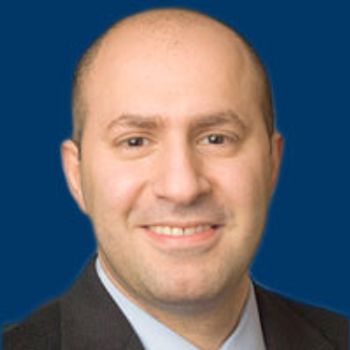
Savolitinib showed encouraging efficacy data and an improved safety profile versus sunitinib as a treatment for patients with MET-driven papillary renal cell carcinoma.