

Treatment with talazoparib did not demonstrate a statistically significant overall survival benefit in patients with BRCA1/2-mutated metastatic HER2-negative breast cancer.
Treatment with talazoparib did not demonstrate a statistically significant overall survival benefit in patients with BRCA1/2-mutated metastatic HER2-negative breast cancer.

Treatment with atezolizumab in combination with vemurafenib and cobimetinib was found to significantly improve progression-free survival and produce durable responses versus vemurafenib and cobimetinib alone in treatment-naïve patients with BRAF V600–mutant advanced melanoma.

Michael J. Thirman, MD, discusses the clinical rationale for using the investigational agent SNDX-5613 to treat a subtype of acute myeloid leukemia and acute lymphoblastic leukemia.

Andrea Wang-Gillam, MD, PhD, discusses the results of a phase 1 study with defactinib in patients with pancreatic ductal adenocarcinoma.

Continuous dosing with dabrafenib and trametinib improved progression-free survival compared with intermittent dosing in patients with BRAF mutation–positive advanced melanoma.

The success of frontline maintenance niraparib in the phase III PRIMA trial extends to meeting biomarker-defined and other secondary endpoints and showing positive patient-reported outcomes.

The addition of trastuzumab to carboplatin and paclitaxel resulted in a significant survival benefit in women with advanced or recurrent, HER2-positive uterine serous carcinoma, with the greatest benefit observed in those with stage III/IV disease who received the regimen up front.

David O'Malley, MD, discusses the increased benefit of rucaparib maintenance in patients with ovarian cancer who express RAD51C/D mutations.

Elizabeth M. Swisher, MD, discusses the implications of the phase III VELIA/GOG-3005 trial in ovarian cancer.

David O’Malley, MD, discusses the rationale to evaluate the clinical benefit of rucaparib maintenance treatment following disease progression in a subgroup of patients with ovarian cancer whose disease is associated with a mutation in a non-BRCA homologous recombination gene in the phase III ARIEL3 trial in ovarian cancer.

Amanda Nickles Fader, MD, discusses findings from a randomized phase II trial examining the efficacy of adding trastuzumab to carboplatin/paclitaxel in patients with advanced or recurrent uterine serous carcinomas that overexpress HER2/neu.

The combination of olaparib and bevacizumab was found to improve progression-free survival outcomes versus bevacizumab alone as a frontline maintenance treatment in patients with newly diagnosed advanced high-grade serous ovarian cancer, regardless of the timing of surgery or residual disease status after surgery.
The combination of niraparib and bevacizumab as a frontline maintenance therapy was found to have impressive clinical activity in patients with advanced ovarian cancer who had a complete or partial response to frontline platinum-based chemotherapy plus bevacizumab.
Trametinib monotherapy has emerged as a new treatment option for women with recurrent low-grade serous ovarian cancers based on improvements in survival outcomes and response rates demonstrated in a phase II/III study.
Adding veliparib to frontline induction chemotherapy increased complete and CA-125 responses compared with chemotherapy alone in patients with high-grade serous ovarian cancer, according to an exploratory analysis of the phase III VELIA trial.

Dana Chase, MD, discusses niraparib as frontline maintenance therapy in ovarian cancer.

Rucaparib was associated with superior outcomes among women with ovarian cancer harboring a non-BRCA homologous recombination repair gene mutation compared with placebo, according to an analysis of specimens collected in the phase III ARIEL3 trial (NCT01968213).

The anti-DLL4/VEGF bispecific antibody navicixizumab showed promising clinical activity when used in combination with paclitaxel in heavily pretreated patients with platinum-resistant ovarian cancer.
Frontline maintenance treatment with Vigil immunotherapy demonstrated an improvement in relapse-free survival compared with placebo in patients with stage III/IV ovarian cancer, especially in those with BRCA1/2 wild-type disease.

Elizabeth M. Swisher, MD, discusses how the phase III VELIA/GOG-3005 trial compares with other trials examining up-front maintenance therapy in ovarian cancer.
Veliparib plus chemotherapy extended progression-free survival for BRCA wild-type patients with high-grade serous carcinoma.

Manish A. Shah, MD, discusses the role of immunotherapy in gastroesophageal cancer.

Michael A. Choti, MD, discusses the benefit of neoadjuvant chemotherapy in pancreatic cancer.

John L. Marshall, MD, discusses the challenges in the colorectal cancer field.

In metastatic renal cell carcinoma, the use of frontline combination immunotherapy regimens has led to significant survival benefits for patients, and efforts are now being focused on exploring novel options for those who become refractory to this approach.

Leonard G. Gomella, MD, professor, chair, Department of Urology, and director, Sidney Kimmel Cancer Center Network, Thomas Jefferson University Hospital, discusses the state of genetic testing in prostate cancer.
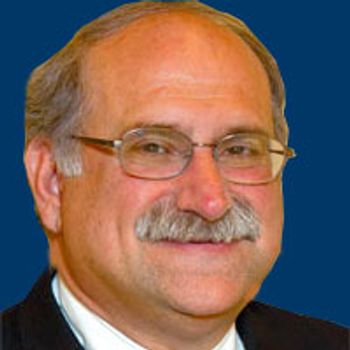
Leonard G. Gomella, MD, discusses the state of genetic testing in prostate cancer, shares his recommendations for screening, and provides perspective on where the field is headed.

Daniel P. Petrylak, MD, discusses available treatment options in metastatic bladder cancer.

In metastatic urothelial cancer, the portfolio of immunologic therapies is robust, but the treatment paradigm for these agents requires refinement.

What may have worked before to mitigate burnout may no longer work now because we change, and so do our work environments.