
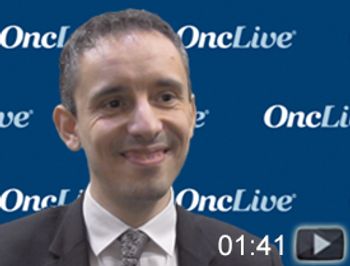
David J. Pinato, MD, PhD, discusses the lack of biomarkers in hepatocellular carcinoma.
David J. Pinato, MD, PhD, discusses the lack of biomarkers in hepatocellular carcinoma.
Richard S. Finn, MD, reflects on data from the phase III REFLECT, RESORCE, CELESTIAL, and REACH-2 trials in hepatocellular carcinoma.
At the 24th Annual International Congress on Hematologic Malignancies®, Sonali M. Smith, MD, detailed the critical clinical trial findings currently informing treatment selection in the frontline indolent non-Hodgkin lymphoma paradigm.
David J. Pinato, MD, PhD, highlights the clinical and biological challenges in identifying biomarkers in hepatocellular carcinoma, and the potential introduction of biomarkers in the future.
A number of therapeutic options have become available in the frontline setting for patients with chronic lymphocytic leukemia, most recently the second-generation BTK inhibitor acalabrutinib.
Sonali M. Smith, MD, discusses the prognosis of patients with indolent non-Hodgkin lymphomas.
With the main toxicities associated with CAR T-cell therapy being cytokine release syndrome and neurotoxicity, a multidisciplinary approach is vital to providing inclusive care to patients receiving this type of treatment.
Jorge E. Cortes, MD, shares his experience with tyrosine kinase inhibitors as treatment of patients with chronic myeloid leukemia.
Neehar Parikh, MD, discusses the importance of multidisciplinary care in the treatment of patients with hepatocellular carcinoma.
Ghassan K. Abou-Alfa, MD, discusses ways to optimize treatment selection for patients with hepatocellular carcinoma.
Findings from the phase III IMbrave 150 trial represented the first time a treatment outperformed sorafenib for overall survival and progression-free survival in patients with unresectable hepatocellular carcinoma (HCC), and the HCC world was understandably excited, said Ghassan K. Abou-Alfa, MD.
Newly approved and investigational agents are joining ruxolitinib for the treatment of myelofibrosis and may provide options for patients who progress or become intolerant to frontline JAK inhibitors.
Sagar Lonial, MD, FACP, discusses how the treatment landscape has evolved for patients with smoldering multiple myeloma.
Jae H. Park, MD, discusses the challenges in using CAR T-cell therapy in adult patients with acute lymphoblastic leukemia, and also highlights the potential role for off-the-shelf CAR T cells.
Despite advances made in the treatment of patients with diffuse large B-cell lymphoma, investigators are on a quest to move more novel agents through the pipeline, says Craig Moskowitz, MD, in a presentation during the 24th Annual International Congress on Hematologic Malignancies®: Focus on Leukemias, Lymphomas, and Myeloma.
Prasad S. Adusumilli, MD, FACS, discusses the current role of chimeric antigen receptor T-cell therapy as treatment of patients with solid tumors and how this is evolving compared to CAR T cells in hematologic malignancies.
Joshua Brody, MD, discusses the development of in situ vaccinations, a vaccine that is created at the tumor site in patients with cancer.
Anthony D. Sung, MD, discusses the findings from the phase II trial of pasireotide as a method to prevent gastrointestinal toxicity and acute graft-versus-host-disease in patients who undergo allogeneic hematopoietic stem cell transplant.
David G. Maloney, MD, PhD, discusses the value of chimeric antigen receptor T-cell therapy in patients with relapsed/refractory aggressive lymphomas.
Narsoplimab (OMS721) is advancing through the therapy pipeline as a novel treatment option for patients with transplant-associated thrombotic microangiopathy.
David Miklos, MD, discusses the results from the ZUMA-2 trial evaluating KTE-X19 in patients with relapsed/refractory mantle cell lymphoma.
Christopher E. Dandoy, MD, MSc, shares advice for how to overcome the challenges in managing transplanted-associated thrombotic microangiopathy. The primary challenges are diagnosing and identifying TA-TMA in patients.
An “off-the-shelf” Epstein Barr-virus–specific cytotoxic lymphocyte CAR product derived from cells harvested from third-party donors induced a 100% response rate in adult and pediatric patients with relapsed/refractory non-Hodgkin lymphoma.
Craig Sauter, MD, discusses the anecdotal observational data in real-world patients with hematologic malignancies who received chimeric antigen receptor T-cell therapy.
Sergio A. Giralt, MD, discusses the diagnostic challenges of transplant-associated thrombotic microangiopathy.
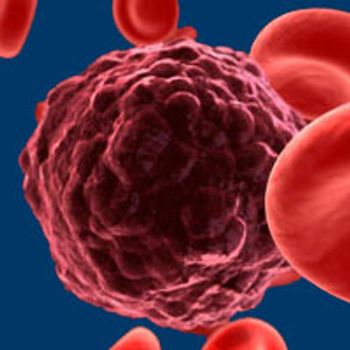
Early steroid intervention has the potential to reduce the severity of adverse events associated with axicabtagene ciloleucel in patients with refractory large B-cell lymphoma, according to an analysis of the phase I/II ZUMA-1 trial.
Iodine (131I) apamistamab (Iomab-B) conditioning induced a complete remission in 84% (31/38) of patients with active acute myeloid leukemia, who were then able to receive allogeneic hematopoietic stem cell transplant, according to preliminary results from the phase III SIERRA trial.
Carlos R. Bachier, MD, discusses the toxicity profile of lisocabtagene maraleucel that has been observed in 3 ongoing clinical trials in relapsed/refractory large B-cell non-Hodgkin lymphoma.
Shaji K. Kumar, MD, discusses the role of stem cell mobilization in multiple myeloma. This is important in patients with myeloma who are eligible for stem cell transplantation.
Ruxolitinib is an effective and well-tolerated treatment in the refractory setting for patients with chronic graft-versus-host disease, regardless of age.