
More than three times as many patients with transplant-ineligible newly diagnosed multiple myeloma remained alive and progression free after >3 years when they received daratumumab (Darzalex) in addition to standard first-line therapy.
More than three times as many patients with transplant-ineligible newly diagnosed multiple myeloma remained alive and progression free after >3 years when they received daratumumab (Darzalex) in addition to standard first-line therapy.
The CAR T cell therapy bb21217 demonstrated high very good partial response or better rates in patients with heavily pretreated relapsed/refractory multiple myeloma.
A majority of adult patients with β-thalassemia who require regular red blood cell transfusions experienced clinically meaningful and durable transfusion burden reduction associated with luspatercept (Reblozyl).
REGN1979 demonstrated antitumor activity with an acceptable safety profile in heavily pretreated patients with relapsed/refractory B-cell non-Hodgkin lymphoma.
The addition of CP-0610 to ruxolitinib (Jakafi) in JAK inhibitor-naïve patients with myelofibrosis induced splenic and symptomatic responses as early as 12 weeks.
The CAR T-cell therapy tisagenlecleucel (Kymriah) showed similar real-world efficacy and safety findings to that of the JULIET trial in the treatment of adult patients with relapsed/refractory diffuse large B-cell lymphoma.
Adding an anti-CD38 antibody to a 3-drug chemotherapy-free regimen led to deeper and more frequent responses in patients with transplant-eligible, newly diagnosed multiple myeloma.
Navitoclax plus ruxolitinib (Jakafi) showed clinically meaningful spleen responses and improvements in symptoms for patients with primary or secondary myelofibrosis, following the development of resistance to frontline ruxolitinib.
Ilaria Iacobucci, PhD, staff scientist, St. Jude Children’s Research Hospital, discusses the use of integrated transcriptomic and genomic sequencing in identifying prognostic constellations of driver mutations in acute myeloid leukemia and myelodysplastic syndromes.
Patrick Brown, MD, chair of NCCN Guidelines for Adult and Pediatric ALL, and director of the Pediatric Leukemia Program at Sidney Kimmel Comprehensive Cancer Center, discusses the results of the randomized phase III Children’s Oncology Group Study AALL1331 trial of blinatumomab (Blincyto) versus chemotherapy as post-reinduction therapy in high- and intermediate-risk children and young adults with B-acute lymphoblastic leukemia in first relapse.
Adding daratumumab (Darzalex) to carfilzomib (Kyprolis) and dexamethasone reduced the risk of disease progression or death by 37% compared with carfilzomib and dexamethasone alone in patients with relapsed/refractory multiple myeloma.
Maintenance treatment with CC-486, an oral formulation of azacitidine, extended median overall survival by 9.9 months compared with placebo for older patients with acute myeloid leukemia in first remission.
Blinatumomab (Blincyto) as post-reinduction consolidation therapy before hematopoietic stem cell transplantation improved disease-free survival and overall survival by approximately 20% compared with intensive chemotherapy in pediatric and adolescent and young adult patients with high- or intermediate-risk of first relapse of B-cell acute lymphoblastic leukemia.
Enasidenib significantly improves complete remission and overall response when combined with azacitidine compared with azacitidine alone in patients with newly diagnosed acute myeloid leukemia with IDH2 mutations.
Treatment with the anti-CD19 CAR T-cell therapy KTE-X19 elicited a complete remission rate of 67% and an objective response rate of 93% for patients with relapsed/refractory mantle cell lymphoma.
Patients with relapsed/refractory chronic lymphocytic leukemia had ongoing benefits 42 months after starting treatment with the BTK inhibitor acalabrutinib.
CPI-0610 showed promising spleen volume responses and a meaningful reduction in total symptom score as monotherapy and in combination with ruxolitinib (Jakafi) for patients with refractory or intolerant advanced myelofibrosis.
Vecabrutinib, a reversible, noncovalent Bruton’s tyrosine kinase inhibitor, exhibited evidence of clinical activity in adults with B-cell malignancies without producing any grade ≥3 treatment-related adverse events.
Deepu Madduri, MD, assistant professor, medicine, hematology and medical oncology, Mount Sinai Hospital, discusses the results of the phase Ib/II CARTITUDE-1 trial of the BCMA-directed CAR T-cell therapy JNJ-4528 in patients with heavily pretreated relapsed/refractory multiple myeloma.
Benjamin L. Lampson, MD, PhD, medical oncologist at Dana-Farber Cancer Institute, discusses preliminary safety and efficacy results from a phase II study of acalabrutinib (Calquence), venetoclax (Venclexta), and obinutuzumab (Gazyva) in patients with previously untreated chronic lymphocytic leukemia (CLL).
The CD19-directed CAR T-cell therapy lisocabtagene maraleucel showed promising clinical activity and manageable toxicity in heavily pretreated patients with high-risk chronic lymphocytic leukemia or small lymphocytic lymphoma, all of whom had progressed on ibrutinib.
Patients with relapsed/refractory peripheral T-cell lymphoma who received a higher initial dose of duvelisib at 75 mg BID had a higher overall response rate of 62% than those who received 25 mg BID.
The BTK inhibitor zanubrutinib continues to demonstrate high overall response rates for patients with chronic lymphocytic leukemia or small lymphocytic lymphoma, regardless of the presence of high-risk cytogenetics.
More than half of patients with heavily pretreated B-cell malignancies responded to the noncovalent BTK inhibitor LOXO-305, including those with resistance or intolerance to other BTK inhibitors or BCL2 inhibitors.
Steroid use while cytokine release syndrome and neurologic toxicities are at grade 1, instead of waiting until grade 3, reduces the rate of CAR T-cell treatment–related CRS and neurologic events.
The combination of lenalidomide (Revlimid) and obinutuzumab (Gazyva) elicited a 100% overall response rate in patients with relapsed indolent non-Hodgkin lymphoma that was refractory to rituximab (Rituxan).
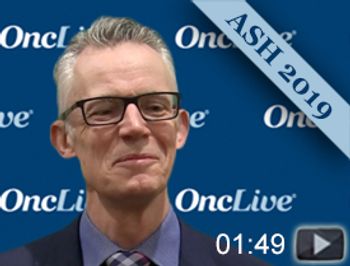
John F. Seymour, MBBS, PhD, clinical hematologist, associate director of Clinical Research, Peter MacCallum Centre, director of the integrated Haematology Department of the Peter MacCallum Cancer Centre and the Royal Melbourne Hospital, discusses the 4-year update of the phase III MURANO trial in chronic lymphocytic leukemia (CLL).
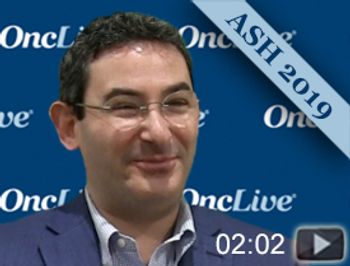
Jeremy S. Abramson, MD, clinical director, Center for Lymphoma, Massachusetts General Hospital, discusses the pivotal safety and efficacy results from phase I TRANSCEND NHL 001 trial of lisocabtagene maraleucel (liso-cel) in patients with relapsed/refractory large B-cell lymphoma.
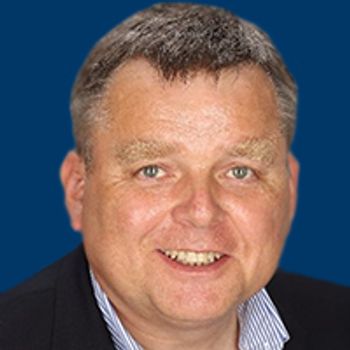
The combination of lenalidomide (Revlimid) and rituximab showed a 34% reduction in the risk of disease progression or death compared with rituximab plus placebo in patients ≥70 years old with indolent non-Hodgkin lymphoma, although it was not found to be statistically significant.
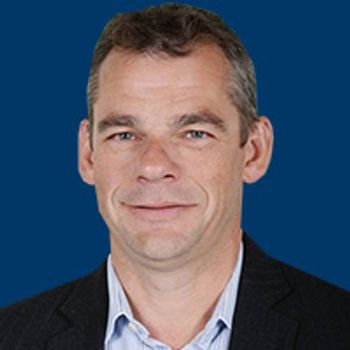
In patients with relapsed mantle cell lymphoma, treatment with ibrutinib might mitigate a historical trend toward decreased progression-free survival with succeeding lines of therapy.