

Tadeusz Robak, MD, discussed the 7-year safety and efficacy data from the RESONATE-2 trial examining frontline ibrutinib in CLL.

Your AI-Trained Oncology Knowledge Connection!
Tadeusz Robak, MD, discussed the 7-year safety and efficacy data from the RESONATE-2 trial examining frontline ibrutinib in CLL.
Robert J. Motzer, MD, spoke about the “exceptional” efficacy of the combination and how it fits into the evolving RCC treatment landscape.

Sandip P. Patel, MD, discussed the real-world application of the phase 3 PACIFIC trial in unresectable stage III non–small cell lung cancer.

The triplet combination comprised of encorafenib, binimetinib, and cetuximab elicited encouraging responses with a manageable safety profile in patients with previously untreated BRAF V600E–mutant metastatic colorectal cancer, meeting the primary end point of the phase 2 ANCHOR-CRC trial.
The sustainability of next-generation sequencing will be dependent on the implementation of thorough informatics and infrastructure that can support the integration of genomic results into electronic medical records.
Senior leaders of Florida Cancer Specialists & Research Institute have been invited to serve on the faculty for the Association for Value-Based Cancer Care 2021 Summit & Educational Program being held in New York, NY on Oct. 13 – 15.

The FDA has granted a breakthrough therapy designation to repotrectinib as a potential therapeutic option for patients with advanced solid tumors that harbor an NTRK gene fusion who have progressed after treatment with 1 or 2 prior TRK TKIs, with or without prior chemotherapy, and who have no satisfactory alternative options.
Bradley J. Monk, MD, FACS, FACOG, discusses the practice-changing data from KEYNOTE-826 examining pembrolizumab plus chemotherapy with or without bevacizumab and next steps for research in recurrent or metastatic cervical cancer.

Sacituzumab govitecan-hziy resulted in a statistically significant and clinically meaningful improvement in health-related quality of life compared with single-agent chemotherapy of physician’s choice in patients with metastatic triple-negative breast cancer.

Two indications have been granted by the FDA to the Nectin-4directed antibody, enfortumab vedotin-ejfv, marking a shift in the treatment landscape for patients with advanced urothelial carcinoma.
Amivantamab-vmjw in combination with lazertinib demonstrated significant clinical activity with durable responses in patients with EGFR-mutated non–small cell lung cancer who had progressed on osimertinib.
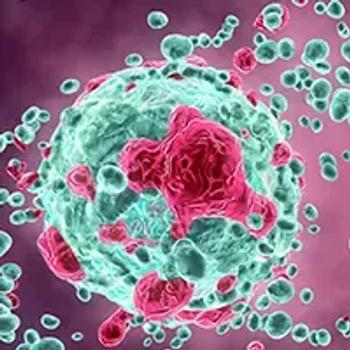
Soft tissue sarcoma was the primary cause of death in patients over the age of 75 years, indicating that age alone should not be a prohibitive factor for treatment in older patients, according to findings from a retrospective analysis that was presented at the 2021 ESMO Congress.

Miranda Gogishvili, MD, discusses the rationale for examining cemiplimab plus platinum-doublet chemotherapy as a frontline treatment in patients with advanced NSCLC and key findings from the phase 3 EMPOWER-Lung 3 trial.

Although the efficacy of PARP inhibitors has been established in patients with metastatic castration-resistant prostate cancer in previous studies, the use of these agents earlier on in the disease process has yet to be evaluated.

Martin F. Dietrich, MD, PhD, discusses the significance of the PACIFIC trial on clinical practice and research efforts in stage III non–small cell lung cancer, expectations for ongoing clinical trials, and the emergence of targeted therapy in the adjuvant setting
The FDA has granted a breakthrough therapy designation to trastuzumab deruxtecan-nxki for use in adult patients with unresectable or metastatic HER2-positive breast cancer who have previously received 1 or more anti–HER2-based regimens.
American Nurses Credentialing Center gives nod of distinction to popular program.

There has been limited discussion in the cancer literature for how peer review among the multiple oncology journals and international cancer conferences is conducted.
A linear correlation between magnitude of circulating tumor DNA reduction and improved overall survival was observed in patients with metastatic uveal melanoma who were treated with tebentafusp, suggesting that ctDNA may be a better surrogate end point for OS compared with RECIST response criteria.
Heloisa P. Soares, MD, PhD, discusses recent developments in NETS, pancreatic cancer, and GEJ tumors, as well as sequencing strategies aimed at improving patient outcomes across GI cancers.
Six months after receiving a second dose of the Pfizer-BioNTech COVID-19 vaccine, patients with solid tumors retained similar levels of COVID-19 antibodies in their blood as individuals without cancer.
The FDA has approved brexucabtagene autoleucel as a treatment for adult patients with relapsed/refractory B-cell precursor acute lymphoblastic leukemia.
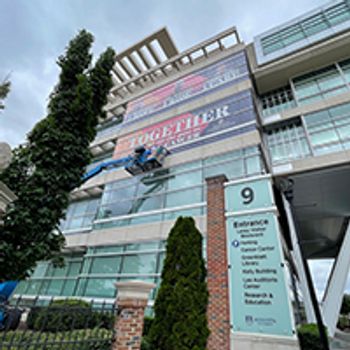
The Augusta University community is encouraged to participate in this year’s Paceline bicycle ride on October 16.

Although adjuvant targeted therapy options are reserved for patients with EGFR-mutated non–small cell lung cancer, molecular testing is a critical step in the treatment of all patients with metastatic disease, where multiple driver mutations are associated with FDA-approved therapeutics.

The European Medicines Agency has validated its marketing authorization application for the fixed-dose combination of relatlimab and nivolumab in the frontline treatment of adult and pediatric patients with advanced melanoma.
A supplemental biologics license application has been submitted to the FDA to expand the current indication of the CAR T-cell therapy axicabtagene ciloleucel to include the second-line treatment of adult patients with relapsed/refractory large B-cell lymphoma.
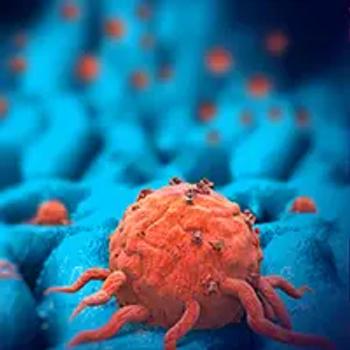
The understanding of EGFR signaling in non–small cell lung cancer continues to evolve, helping to spark the development of novel therapies for new patient populations with uncommon alterations.
Brian A. Van Tine, MD, PhD, discusses the study design, key findings, adverse events, and research beyond the APROMISS study.
Rovalpituzumab tesirine failed to show an efficacy or safety benefit as a frontline, maintenance, and second-line treatment for patients with advanced small cell lung cancer, warranting its discontinued development.
Epcoritamab had a manageable toxicity profile when subcutaneously administered to patients with relapsed/refractory B-cell non-Hodgkin lymphoma and was found to elicit encouraging responses in those who were heavily pretreated.