
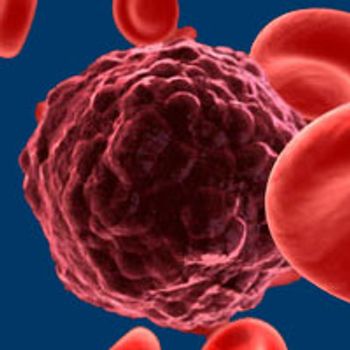
Tocilizumab resolved cytokine release syndrome in patients with relapsed/refractory pediatric B-cell acute lymphoblastic leukemia without reducing the efficacy of tisagenlecleucel.
Tocilizumab resolved cytokine release syndrome in patients with relapsed/refractory pediatric B-cell acute lymphoblastic leukemia without reducing the efficacy of tisagenlecleucel.

Apalutamide (Erleada) lowered the risk of PSA progression by 94% in patients with nonmetastatic castration-resistant prostate cancer, according to a posthoc analysis from the phase III SPARTAN trial.

Eric A. Collisson, MD, speaks to the challenges and emerging advancements in cholangiocarcinoma and colon cancer.

Anna Farago, MD, PhD, discusses the biology of larotrectinib, as well as the importance of genetic testing for molecular alterations like TRK in patients with locally advanced solid tumors.

The FDA has issued a drug safety notification warning against the use of frontline single-agent immune checkpoint inhibition for patients with PD-L1–low expressing platinum-eligible urothelial carcinoma.

Dennis J. Slamon, MD, PhD, and Sara A. Hurvitz, MD, discuss the impact of CDK4/6 inhibitors in ER-positive breast cancer.

Paul E. Oberstein, MD, discusses incorporating novel agents and sequencing approaches in advanced pancreatic neoplasms.

Anas Younes, MD, discusses the current and future state of CAR T-cell therapies and immune checkpoint inhibitors in the landscape of hematologic malignancies.

Selina Chen-Kiang, PhD, details the research being conducted with CDK4/6 inhibitors in mantle cell lymphoma.

The European Commission has approved cabozantinib (Cabometyx) for previously untreated patients with intermediate- or poor-risk advanced renal cell carcinoma.
Ryan W. Jacobs, MD, discusses the use of small molecule inhibitors in the treatment of patients with chronic lymphocytic leukemia.

Jeffrey Wolf, MD, emphasizes the importance of identifying risk when diagnosing patients with multiple myeloma.

CMS's initial payment codes for CAR T-cell therapies are opposed by the medical community on the basis that they would be cumbersome to implement and wouldn't reflect the full amount of care delivered to each patient.
The FDA has approved epoetin alfa-epbx (Retacrit) as a biosimilar to epoetin alfa (Epogen/Procrit) for the treatment of anemia caused by chronic kidney disease, chemotherapy, or use of zidovudine in patients with HIV infection.

Shana Wingo, MD, discusses the surgical landscape in patients with newly diagnosed ovarian cancer.

Lauren C. Harshman, MD, discusses ongoing clinical trials examining the incorporation of immune therapies into practice.

Dennis R. Scribner Jr, MD, discusses the elements and evolution of treatment for patients with recurrent ovarian cancer.
President Donald Trump announced a sweeping “blueprint” to lower prescription drug costs, promising to expand access to generic drugs and biosimilars and remove incentives that keep drug prices high.

Mike Janicek, MD, discusses the importance of genetic testing and how the ovarian field can benefit from a better understanding of it through genetic counselors and self-education.

James B. Yu, MD, discusses techniques with radiation therapy, potential roadblocks, and the importance of genomic testing in treating patients with prostate cancer.

Radionuclide treatment with Lutetium-177 [177Lu]-PSMA-617 nearly doubled median PSA progression-free survival in men with progressive metastatic castrate-resistant prostate cancer compared with previous results with radium-223.
Matthew Borst, MD, highlights the need for neoadjuvant therapy versus upfront surgery in newly diagnosed patients, effective treatment management for recurrent platinum-sensitive disease, and what to do in the third-line setting and beyond.
Toni K. Choueiri, MD, discusses recent advancements and shares his insight on the future treatment landscape of patients with kidney cancer.

Combination therapy with the PD-L1 inhibitor atezolizumab and the MEK inhibitor cobimetinib failed to improve overall survival versus regorafenib in previously treated patients with locally advanced or metastatic colorectal cancer, according to topline findings from the phase III IMblaze370 study.

Heather Dalton, MD, discusses the developing standard of care for the frontline treatment of patients with ovarian cancer.

Xiao X. Wei, MD, MAS, discusses managing possible adverse events of different systemic therapies in kidney and bladder cancer.

Rena D. Callahan, MD, discusses controversies in the management of early-stage HR-positive breast cancer and neoadjuvant trial designs for these patients.

Aashini Master, DO, discusses efforts to integrate nutrition and health into breast cancer survivorship.

Findings from the phase III TAGS trial showed that TAS-102 (trifluridine/tipiracil; Lonsurf) extended overall survival in previously treated patients with metastatic gastric cancer.

Snehal Bhoola, MD, discusses the implementation of enhanced recovery after surgery in ovarian cancer.