
Opinion|Videos|June 23, 2026
Clinical Workflow Integration for ctDNA Testing and Patient Communication
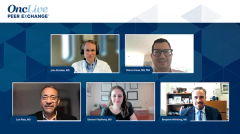
Dr. Teplinsky addresses where ctDNA and MRD testing fit within the patient care continuum, noting that value isn't uniform across disease stages or tumor types. The strongest signal currently exists in the post-treatment surveillance setting, where tumor-informed assays can identify patients at higher recurrence risk before disease becomes visible on imaging.
Advertisement
Episodes in this series
Dr. Teplinsky addresses where ctDNA and MRD testing fit within the patient care continuum, noting that value isn't uniform across disease stages or tumor types. The strongest signal currently exists in the post-treatment surveillance setting, where tumor-informed assays can identify patients at higher recurrence risk before disease becomes visible on imaging.
She emphasizes that the central challenge involves determining clinical actionability: can intervention on positive ctDNA before imaging-detected disease improve outcomes? Colorectal cancer has the most mature data, with other tumor types catching up. She characterizes ctDNA primarily as a risk stratification and monitoring tool, with the field still determining how to act on this information.
In her breast and gynecologic oncology practice, she lacks robust action points for routine testing given uncertainty about appropriate responses to results. She primarily uses ctDNA within clinical trials, encouraging trial enrollment, though she occasionally tests high-risk patients who specifically want recurrence risk information even without actionable next steps, emphasizing the importance of discussing benefits, limitations, and unknowns to support informed patient decision-making.
Regarding molecular relapse impact on surveillance, she explains that positive ctDNA typically triggers immediate imaging to assess for radiographic evidence of relapse. If imaging remains negative, questions arise about appropriate scan frequency, with her practice generally defaulting to approximately every 3 months absent robust supporting data.
Dr. Grivas addresses communicating results without triggering anxiety, explaining his approach of describing imaging limitations (requiring lesions to reach detectable size) versus ctDNA's ability to detect molecular residual disease at more microscopic levels before imaging-threshold disease develops. He emphasizes discussing test timing relevance, prognostic versus predictive implications, and ensuring tests are used judiciously where actionable data exists, citing the IMvigor011 trial in immunotherapy-naïve bladder cancer patients with high-risk pathologic staging as an example where serial ctDNA monitoring informs adjuvant immune checkpoint inhibitor decisions and timing.
Advertisement
Related to this article

Updated phase 2 LINKER-SMM1 data show single-agent, fixed-duration linvoseltamab produced deep, durable, and MRD-negative responses in high-risk smoldering multiple myeloma.

The FDA has approved lirafugratinib (Lyrfigtu) for the treatment of adult patients with previously treated unresectable, locally advanced or metastatic cholangiocarcinoma harboring an FGFR2 gene fusion or other rearrangement.

An IDMC recommended continuing a phase 2 minimal residual disease study of IMNN-001 without modification following a favorable safety review.

Shailender Bhatia, MD, discusses next steps for adjuvant therapy research in light of the phase 3 ADAM trial data and broader implications for Merkel cell carcinoma.

Clinicians and researchers are set to gather for the UCSF-cosponsored International Invasive Lobular Carcinoma Symposium.

SOT106 now holds both orphan drug and fast track designations across soft tissue sarcoma and osteosarcoma ahead of a first-in-human trial.

Shailender Bhatia, MD, discusses ADAM trial design, key efficacy and safety findings, and treatment implications in Merkel cell carcinoma.

Read a refresh of breast cancer FDA news from August 2026, including an sNDA application in PIK3CA-mutant disease and a fast track designation.
Advertisement
Advertisement