Now Playing
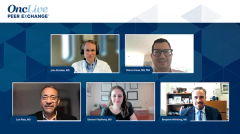
Dr. John Strickler introduces the program on circulating tumor DNA (ctDNA) and minimal residual disease (MRD) testing across solid tumors, joined by Dr. Eleonora Teplinsky (breast and gynecologic oncology, Valley Health System), Dr. Ben Weinberg (gastrointestinal oncology, Georgetown University), Dr. Petros Grivas (genitourinary oncology, Fred Hutchinson Cancer Center), and Dr. Luis Raez (thoracic oncology, Memorial Healthcare System).
Dr. John Strickler introduces the program on circulating tumor DNA (ctDNA) and minimal residual disease (MRD) testing across solid tumors, joined by Dr. Eleonora Teplinsky (breast and gynecologic oncology, Valley Health System), Dr. Ben Weinberg (gastrointestinal oncology, Georgetown University), Dr. Petros Grivas (genitourinary oncology, Fred Hutchinson Cancer Center), and Dr. Luis Raez (thoracic oncology, Memorial Healthcare System).
Dr. Raez establishes foundational definitions, explaining that ctDNA refers to small DNA fragments shed by cancer cells into the bloodstream, carrying tumor-specific genetic alterations including mutations, insertions, deletions, rearrangements, and methylation patterns. He emphasizes that detection depends on tumor burden, location, and stage, with stage I lung cancers and brain metastases presenting particular detection challenges due to minimal shedding, though brain-only metastases aren't an absolute contraindication to detection.
He differentiates 2 testing approaches: tumor-informed assays, which use tissue-based sequencing to identify specific genomic alterations to track in blood, versus tumor-naïve assays, which rely on methylation patterns when tissue is unavailable for sequencing.
Dr. Raez emphasizes the critical distinction between next-generation sequencing (NGS) for diagnosis or recurrence detection versus ctDNA for tracking residual disease or monitoring metastatic tumors over time. When ctDNA is detected in the blood after surgery, this raises concern that the tumor remains present despite being undetectable on imaging, indicating the patient may not be cured.
He notes that bladder cancer currently represents the only FDA-approved indication for this technology, though significant ongoing efforts aim to improve sensitivity and specificity for broader application across solid tumor management.