
Opinion|Videos|July 13, 2026
Practical Implementation and Tissue Tropism Considerations
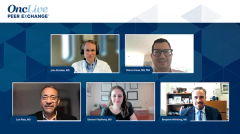
Dr. Weinberg addresses practical workflows for ctDNA-positive, imaging-negative patients, noting no current standard of care exists despite NCCN guidelines addressing elevated CEA management.
Advertisement
Episodes in this series
Dr. Weinberg addresses practical workflows for ctDNA-positive, imaging-negative patients, noting no current standard of care exists despite NCCN guidelines addressing elevated CEA management.
His approach begins with imaging escalation: obtaining recent CT scans of chest, abdomen, and pelvis if not already performed, then escalating to PET scans and potentially liver MRI, particularly for patients with fatty liver where small-volume metastatic disease might be missed.
He introduces the concept of tissue tropism, explaining that tumor-informed testing sensitivity varies significantly by metastatic site.
Liver metastasis detection is quite sensitive, giving him confidence that ctDNA clearance to zero after liver surgery may indicate cure.
However, lung and peritoneal metastases, representing a long-standing challenge across gastrointestinal cancers, show lower sensitivity, representing an area where improved blood-based detection would be particularly valuable given current limitations of standard imaging and laparoscopy.
Dr. Weinberg describes his Georgetown trial testing atezolizumab and bevacizumab for ctDNA-positive, no-evidence-of-disease patients across multiple gastrointestinal cancer cohorts, modeled after the INTERCEPT program, with ongoing efforts through the Colorectal Cancer Alliance to develop a platform study specifically for colorectal cancer patients completing curative-intent treatment.
Regarding barriers to trial enrollment, he identifies the need for reproducible assays providing near-real-time results, since ctDNA monitoring requires tracking clearance over time rather than single-timepoint decisions.
He highlights that patients with MSI-high colorectal cancer receiving immunotherapy as a population deriving exceptional ctDNA monitoring benefit, where rapid early clearance indicates treatment efficacy and can help interpret ambiguous early scans showing pseudoprogression, sharing an example of a patient achieving pathologic complete response despite a concerning initial scan.
Advertisement
Related to this article
Updated phase 2 LINKER-SMM1 data show single-agent, fixed-duration linvoseltamab produced deep, durable, and MRD-negative responses in high-risk smoldering multiple myeloma.
The FDA has approved lirafugratinib (Lyrfigtu) for the treatment of adult patients with previously treated unresectable, locally advanced or metastatic cholangiocarcinoma harboring an FGFR2 gene fusion or other rearrangement.

An IDMC recommended continuing a phase 2 minimal residual disease study of IMNN-001 without modification following a favorable safety review.

Shailender Bhatia, MD, discusses next steps for adjuvant therapy research in light of the phase 3 ADAM trial data and broader implications for Merkel cell carcinoma.

Clinicians and researchers are set to gather for the UCSF-cosponsored International Invasive Lobular Carcinoma Symposium.
SOT106 now holds both orphan drug and fast track designations across soft tissue sarcoma and osteosarcoma ahead of a first-in-human trial.

Shailender Bhatia, MD, discusses ADAM trial design, key efficacy and safety findings, and treatment implications in Merkel cell carcinoma.

Read a refresh of breast cancer FDA news from August 2026, including an sNDA application in PIK3CA-mutant disease and a fast track designation.
Advertisement
Advertisement