
Opinion|Videos|June 29, 2026
Treatment on Molecular Recurrence and Access Barriers
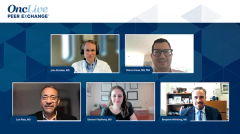
Dr. Weinberg explains the treatment on molecular recurrence (TOMR) concept, drawing parallels to biochemical relapse monitoring in prostate cancer. In colorectal cancer, patients with positive ctDNA after completing curative-intent surgery and adjuvant chemotherapy will experience radiographic recurrence at a median of approximately 5.5 months, representing a population potentially amenable to curative intervention through escalated imaging to identify oligometastatic disease suitable for metastasectomy, or enrollment in novel drug development trials.
Advertisement
Episodes in this series
Dr. Weinberg explains the treatment on molecular recurrence (TOMR) concept, drawing parallels to biochemical relapse monitoring in prostate cancer. In colorectal cancer, patients with positive ctDNA after completing curative-intent surgery and adjuvant chemotherapy will experience radiographic recurrence at a median of approximately 5.5 months, representing a population potentially amenable to curative intervention through escalated imaging to identify oligometastatic disease suitable for metastasectomy, or enrollment in novel drug development trials.
He emphasizes that current colorectal cancer adjuvant options (fluoropyrimidines and oxaliplatin) haven't proven effective in the ctDNA-positive, no-evidence-of-disease setting, making this a ripe area for novel therapeutics. He also highlights the power of negative ctDNA results, noting that approximately half of patients with stage III colorectal cancer are cured by surgery alone, yet all fit patients receive adjuvant chemotherapy, creating opportunity for de-escalation in ctDNA-negative patients.
Regarding which populations might benefit most from treatment intensification, Dr. Weinberg references recent ASCO data suggesting patients with positive ctDNA that decreases at the 3-month mark during adjuvant chemotherapy benefit from extending treatment to 6 months, whereas patients negative throughout or those whose positive ctDNA increases at three months don't benefit from continued chemotherapy, suggesting alternative approaches are needed for this group.
Dr. Teplinsky addresses reimbursement challenges, noting inconsistent and often non-transparent coverage creates significant patient anxiety about costs and billing. Patients with better insurance, academic center access, or clinical trial enrollment have substantially better access than those facing high out-of-pocket costs. She emphasizes that professional society guidelines incorporating ctDNA as routine care, supported by robust prospective data, represent the path toward more consistent coverage and reduced disparities.
Advertisement
Related to this article
A pilot study represents a milestone toward testing a faster, more powerful, and potentially less-toxic form of radiation therapy for cancer treatment.
Oral azacitidine and cedazuridine met the end point of total cycle azacitidine exposure vs subcutaneous azacitidine in MDS or CMML.

UTRxMYCN M1-14 received orphan drug status for soft tissue sarcoma and RPDD for rhabdomyosarcoma.

Interim data showed that the BCMA-directed CAR T-cell therapy NXC-201 generated complete responses in relapsed/refractory AL amyloidosis.

Estelamari Rodriguez, MD, MPH, discusses the rationale, design, and practice implications of the phase 3 RELATIVITY-1093 trial in nonsquamous NSCLC.

Experts spotlight the variety of breast cancer research being presented at the 2026 ESMO Congress.

The third BLA submission for tabelecleucel follows 2 CRLs and includes updated ALLELE data with additional patients and longer follow-up.

A New England Journal of Medicine report describes complete hepatoblastoma regression in a 3-year-old treated with a novel immunotherapy.
Advertisement
Advertisement
Trending on OncLive
1
FDA Grants Fast Track Designation to Plinabulin Plus Docetaxel in Post-ICI Non-Squamous NSCLC
2
Breast Cancer Experts Highlight Abstracts to Watch at ESMO 2026
3
Navigating DLL3-Targeting T-Cell Engagers and the Evolving Small Cell Lung Cancer Treatment Landscape
4
FDA Approves Denosumab Biosimilar for Skeletal-Related Events, GCTB, and Hypercalcemia of Malignancy
5