
Opinion|Videos|July 20, 2026
Common Themes Across Tumor Types
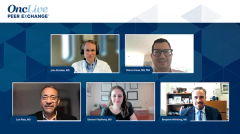
Dr. Teplinsky, reflecting on commonalities across tumor types, notes that although the discussion focused on early-stage breast cancer, increasing ctDNA use exists in metastatic disease to identify treatment-emergent mutations guiding therapy selection, representing a different application context.
Advertisement
Episodes in this series
Dr. Teplinsky, reflecting on commonalities across tumor types, notes that although the discussion focused on early-stage breast cancer, increasing ctDNA use exists in metastatic disease to identify treatment-emergent mutations guiding therapy selection, representing a different application context.
She observes that challenges discussed are remarkably similar across tumor types: data needs, result interpretation, de-escalation and intensification questions, and access barriers.
Although research maturity differs by cancer type based on where each field is in the research process, the underlying questions and needs remain consistent, raising the possibility that tumor-agnostic research approaches might help advance the field collectively across disease types.
Dr. Weinberg identifies important commonalities around imaging intensification effects on surveillance and adjuvant therapy decisions, while emphasizing critical differences in tumor shedding patterns.
Colorectal and breast cancers represent high-shedding tumors, whereas pancreatic cancer sheds substantially less, creating false-negative results where tumors exist but aren't detectable in bloodstream due to mutational burden, disease burden, and tumor biology differences.
He cautions against cross-disease comparisons even using identical assays, while affirming the technology's broad applicability across solid tumors given increasing biomarker-directed therapy approaches requiring understanding of individual tumor genomic composition, ideally before metastatic progression occurs.
He notes this represents where the field is moving: toward better understanding the genomics of localized tumors before they become metastatic, applying lessons learned across disease types while respecting tumor-specific shedding biology.
Advertisement
Related to this article
Updated phase 2 LINKER-SMM1 data show single-agent, fixed-duration linvoseltamab produced deep, durable, and MRD-negative responses in high-risk smoldering multiple myeloma.

The FDA has approved lirafugratinib (Lyrfigtu) for the treatment of adult patients with previously treated unresectable, locally advanced or metastatic cholangiocarcinoma harboring an FGFR2 gene fusion or other rearrangement.

An IDMC recommended continuing a phase 2 minimal residual disease study of IMNN-001 without modification following a favorable safety review.

Shailender Bhatia, MD, discusses next steps for adjuvant therapy research in light of the phase 3 ADAM trial data and broader implications for Merkel cell carcinoma.

Clinicians and researchers are set to gather for the UCSF-cosponsored International Invasive Lobular Carcinoma Symposium.
SOT106 now holds both orphan drug and fast track designations across soft tissue sarcoma and osteosarcoma ahead of a first-in-human trial.

Shailender Bhatia, MD, discusses ADAM trial design, key efficacy and safety findings, and treatment implications in Merkel cell carcinoma.

Read a refresh of breast cancer FDA news from August 2026, including an sNDA application in PIK3CA-mutant disease and a fast track designation.
Advertisement
Advertisement