
Opinion|Videos|June 29, 2026
Multidisciplinary Tumor Board Integration of ctDNA Results
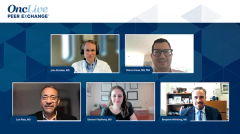
Dr. Grivas confirms ctDNA integration into multidisciplinary tumor boards is increasing, describing his bladder cancer multidisciplinary clinic involving urology, medical oncology, radiation oncology, and pathology/radiology review focused on localized muscle-invasive bladder cancer.
Advertisement
Episodes in this series
Dr. Grivas confirms ctDNA integration into multidisciplinary tumor boards is increasing, describing his bladder cancer multidisciplinary clinic involving urology, medical oncology, radiation oncology, and pathology/radiology review focused on localized muscle-invasive bladder cancer. He emphasizes judicious test ordering based on clinical utility rather than routine ordering, illustrating with a scenario where patients achieving complete clinical response after neoadjuvant therapy (negative scans, cystoscopy, biopsies, and cytology) inquire about bladder preservation through chemoradiation or surveillance alone: ctDNA can provide additional prognostic information influencing these decisions, though local therapy remains standard until more long-term data on systemic therapy alone becomes available.
Dr. Weinberg describes a paradigm shift in colorectal cancer where patients are now referred and seen preoperatively rather than weeks post-surgery, as ctDNA testing requires blood draws within two weeks post-operatively for studies like Circulate North America. He has begun ordering tests off biopsy specimens when adequate tissue exists, finding pre-operative positive confirmation followed by post-operative testing represents the optimal scenario, with surgeons generally supportive of this testing algorithm.
Dr. Raez summarizes panel consensus that ctDNA serves as a prognostic factor (positive correlates with worse outcomes) but isn't yet established as a predictive factor guiding therapy selection outside Dr. Grivas's bladder cancer data. This absence from guidelines creates challenges enforcing standardized use, particularly given the substantial unmet need, citing lung cancer where 100 patients undergo surgery and all receive immunotherapy because clinicians cannot identify which patients are already cured. He notes hematology has used MRD-guided remission monitoring for 2 decades, suggesting solid tumor oncology remains behind but is progressing toward similar capabilities.
Advertisement
Related to this article
A pilot study represents a milestone toward testing a faster, more powerful, and potentially less-toxic form of radiation therapy for cancer treatment.
Oral azacitidine and cedazuridine met the end point of total cycle azacitidine exposure vs subcutaneous azacitidine in MDS or CMML.
UTRxMYCN M1-14 received orphan drug status for soft tissue sarcoma and RPDD for rhabdomyosarcoma.

Interim data showed that the BCMA-directed CAR T-cell therapy NXC-201 generated complete responses in relapsed/refractory AL amyloidosis.

Estelamari Rodriguez, MD, MPH, discusses the rationale, design, and practice implications of the phase 3 RELATIVITY-1093 trial in nonsquamous NSCLC.

Experts spotlight the variety of breast cancer research being presented at the 2026 ESMO Congress.

The third BLA submission for tabelecleucel follows 2 CRLs and includes updated ALLELE data with additional patients and longer follow-up.

A New England Journal of Medicine report describes complete hepatoblastoma regression in a 3-year-old treated with a novel immunotherapy.
Advertisement
Advertisement
Trending on OncLive
1
FDA Grants Fast Track Designation to Plinabulin Plus Docetaxel in Post-ICI Non-Squamous NSCLC
2
Breast Cancer Experts Highlight Abstracts to Watch at ESMO 2026
3
Navigating DLL3-Targeting T-Cell Engagers and the Evolving Small Cell Lung Cancer Treatment Landscape
4
FDA Approves Denosumab Biosimilar for Skeletal-Related Events, GCTB, and Hypercalcemia of Malignancy
5