
Opinion|Videos|July 20, 2026
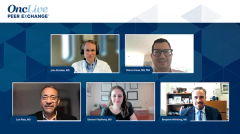
Evidence Gaps, De-escalation Opportunities, and Test Selection
Dr. Weinberg addresses where evidence is strongest versus where the field risks getting ahead of itself.
Advertisement
Episodes in this series
Dr. Weinberg addresses where evidence is strongest versus where the field risks getting ahead of itself.
Although the prognostic value is clearly established with growing data, predictive value for guiding therapeutic decisions remains less mature.
He notes that negative interventional escalation trials (ALTAIR with trifluridine/tipiracil, and early Australian escalation studies) suggest that simply giving "more of the same" therapy doesn't rescue ctDNA-positive patients.
He believes the field is moving toward breaking down traditional stage-based risk stratification (where stage III automatically receives adjuvant chemotherapy and stage II usually doesn't) in favor of positive/negative ctDNA status combined with other risk features, potentially complemented by AI-based histologic analysis.
De-escalation represents the most powerful near-term application.
He's already de-escalating most patients with stage II colorectal cancer, requiring strong justification for adjuvant chemotherapy even in T4N0 cases.
Regarding potential harms, Dr. Weinberg acknowledges concern about under-treating ctDNA-negative stage III patients by withholding standard adjuvant therapy without adequate prospective randomized data, though stage II risk is already low enough to support de-escalation comfort.
He also discusses non-operative rectal cancer management, suggesting ctDNA-negative status could increase comfort pursuing organ-preservation approaches, whereas positive results wouldn't necessarily mandate permanent ostomy but would warrant further study.
Advertisement
Related to this article
Updated phase 2 LINKER-SMM1 data show single-agent, fixed-duration linvoseltamab produced deep, durable, and MRD-negative responses in high-risk smoldering multiple myeloma.

The FDA has approved lirafugratinib (Lyrfigtu) for the treatment of adult patients with previously treated unresectable, locally advanced or metastatic cholangiocarcinoma harboring an FGFR2 gene fusion or other rearrangement.
An IDMC recommended continuing a phase 2 minimal residual disease study of IMNN-001 without modification following a favorable safety review.

Shailender Bhatia, MD, discusses next steps for adjuvant therapy research in light of the phase 3 ADAM trial data and broader implications for Merkel cell carcinoma.

Clinicians and researchers are set to gather for the UCSF-cosponsored International Invasive Lobular Carcinoma Symposium.
SOT106 now holds both orphan drug and fast track designations across soft tissue sarcoma and osteosarcoma ahead of a first-in-human trial.

Shailender Bhatia, MD, discusses ADAM trial design, key efficacy and safety findings, and treatment implications in Merkel cell carcinoma.

Read a refresh of breast cancer FDA news from August 2026, including an sNDA application in PIK3CA-mutant disease and a fast track designation.
Advertisement
Advertisement