
Opinion|Videos|July 27, 2026
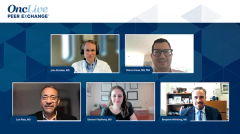
Guideline Integration and the TOMR Paradigm
Dr. Raez addresses choosing between tumor-informed and tumor-naïve platforms, noting no formal prospective comparison exists.
Advertisement
Episodes in this series
Dr. Raez addresses choosing between tumor-informed and tumor-naïve platforms, noting no formal prospective comparison exists.
Conceptually, tumor-informed testing should be more accurate since it identifies specific genomic aberrations from tissue, but tissue availability remains challenging given existing difficulties obtaining adequate tissue for diagnostic NGS.
In practice, research enrollment often determines test selection pragmatically: patients with available tissue receive tumor-informed testing, whereas those without adequate tissue receive tumor-naïve testing.
He emphasizes that ctDNA testing isn't currently recommended for widespread clinical use outside research contexts, given unresolved issues around patient anxiety, costs, billing, and accuracy, and that laboratory-approved tests don't automatically translate to guideline inclusion.
Dr. Teplinsky addresses guideline integration requirements, emphasizing the need to demonstrate that acting on ctDNA results improves meaningful outcomes including disease-free survival, distant recurrence-free survival, overall survival, and quality of life.
This requires prospective data showing management changes that help patients live longer, avoid recurrence, avoid unnecessary treatment, and optimize quality of life.
She emphasizes that simply mandating guideline inclusion isn't sufficient; clinicians need tangible, practical guidance regarding which specific test to order for which clinical scenario and resolution of coverage questions.
Dr. Grivas provides his honest assessment of TOMR readiness, emphasizing significant cancer-type-dependent variation in ctDNA detection ability and clinical setting relevance.
For bladder cancer specifically, he considers the IMvigor010/011, TOMBOLA, and CheckMate-274 data collectively make a strong case for serial ctDNA use in the adjuvant, immunotherapy-naïve setting, helping inform both the decision and timing of adjuvant checkpoint inhibitor initiation.
He acknowledges an "aura effect" where enthusiasm from bladder cancer success may drive broader application before adequate validation, emphasizing the need for honest patient discussions about test limitations including possible false-negatives, plus practical workflow considerations regarding result tracking and electronic medical record integration.
He notes emerging interest in renal cell carcinoma using more sensitive whole-genome-based assays in the adjuvant setting and anticipates future complementary use of plasma and urine tumor DNA for urinary tract cancers, though emphasizes that in metastatic disease, current data doesn't yet inform de-escalation or treatment discontinuation decisions.
Advertisement
Related to this article
Updated phase 2 LINKER-SMM1 data show single-agent, fixed-duration linvoseltamab produced deep, durable, and MRD-negative responses in high-risk smoldering multiple myeloma.

The FDA has approved lirafugratinib (Lyrfigtu) for the treatment of adult patients with previously treated unresectable, locally advanced or metastatic cholangiocarcinoma harboring an FGFR2 gene fusion or other rearrangement.

An IDMC recommended continuing a phase 2 minimal residual disease study of IMNN-001 without modification following a favorable safety review.

Shailender Bhatia, MD, discusses next steps for adjuvant therapy research in light of the phase 3 ADAM trial data and broader implications for Merkel cell carcinoma.

Clinicians and researchers are set to gather for the UCSF-cosponsored International Invasive Lobular Carcinoma Symposium.
SOT106 now holds both orphan drug and fast track designations across soft tissue sarcoma and osteosarcoma ahead of a first-in-human trial.

Shailender Bhatia, MD, discusses ADAM trial design, key efficacy and safety findings, and treatment implications in Merkel cell carcinoma.

Read a refresh of breast cancer FDA news from August 2026, including an sNDA application in PIK3CA-mutant disease and a fast track designation.
Advertisement
Advertisement