
Opinion|Videos|July 13, 2026
Lung Cancer Whole-Genome Sequencing, Treatment Decisions, and Clonal Hematopoiesis
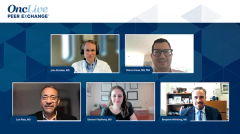
Dr. Raez discusses IASLC 2025 data, now published in the Journal of Thoracic Oncology, representing important progress for lung cancer's MRD research, which has historically lagged behind gastrointestinal and genitourinary cancers.
Advertisement
Episodes in this series
Dr. Raez discusses IASLC 2025 data, now published in the Journal of Thoracic Oncology, representing important progress for lung cancer's MRD research, which has historically lagged behind gastrointestinal and genitourinary cancers.
He traces technological evolution from initial approaches using 16 truncal mutations through whole-exome sequencing to current whole-genome sequencing with enhanced techniques improving sensitivity and specificity.
This study enrolled 216 post-surgical patients with stage I to III disease, conducting 2 key analyses.
The landmark analysis (immediately post-surgery, pre-treatment) showed that ctDNA-negative patients had significantly improved disease-free and overall survival.
The second analysis, conducted after completing adjuvant immunotherapy and chemotherapy, showed that patients remaining ctDNA-positive had worse relapse-free and overall survival.
Sensitivity was approximately 89%.
Dr. Raez references a complementary ASCO presentation by Dr. Julia Rotow using similar technology to guide therapy in metastatic lung cancer: patients receiving immunotherapy alone were monitored via MRD testing after 2 months, with persistently positive results triggering escalation to immunotherapy plus chemotherapy, showing significant survival improvement.
Regarding adjuvant osimertinib (EGFR-mutant resected NSCLC) and durvalumab following chemoradiation (stage III NSCLC), Dr. Raez notes osimertinib isn't universally successful, with some patients developing resistance mutations (C797S and others) that MRD monitoring could potentially detect.
Similarly, despite durvalumab following the PACIFIC protocol representing best available stage III treatment, only approximately half of patients are cured; MRD monitoring could identify non-responders earlier, enabling escalation strategies rather than waiting years to recognize treatment failure.
Regarding clonal hematopoiesis of indeterminate potential (CHIP), Dr. Raez confirms this represents a significant challenge: acquired somatic mutations originating from hematopoietic cells rather than tumor tissue that can be indistinguishable from tumor-derived mutations without verification.
Tumor-informed testing reduces but doesn't eliminate this problem, whereas tumor-naïve testing lacks tissue-based verification, increasing false-positive rates.
CHIP-related false-positives can trigger unnecessary imaging, additional testing, and significant patient psychological distress, representing a critical barrier requiring resolution before MRD becomes standard of care.
Advertisement
Related to this article
Updated phase 2 LINKER-SMM1 data show single-agent, fixed-duration linvoseltamab produced deep, durable, and MRD-negative responses in high-risk smoldering multiple myeloma.

The FDA has approved lirafugratinib (Lyrfigtu) for the treatment of adult patients with previously treated unresectable, locally advanced or metastatic cholangiocarcinoma harboring an FGFR2 gene fusion or other rearrangement.

An IDMC recommended continuing a phase 2 minimal residual disease study of IMNN-001 without modification following a favorable safety review.

Shailender Bhatia, MD, discusses next steps for adjuvant therapy research in light of the phase 3 ADAM trial data and broader implications for Merkel cell carcinoma.

Clinicians and researchers are set to gather for the UCSF-cosponsored International Invasive Lobular Carcinoma Symposium.

SOT106 now holds both orphan drug and fast track designations across soft tissue sarcoma and osteosarcoma ahead of a first-in-human trial.

Shailender Bhatia, MD, discusses ADAM trial design, key efficacy and safety findings, and treatment implications in Merkel cell carcinoma.

Read a refresh of breast cancer FDA news from August 2026, including an sNDA application in PIK3CA-mutant disease and a fast track designation.
Advertisement
Advertisement