
Opinion|Videos|July 27, 2026
Five-Year Outlook and Closing Perspectives on ctDNA Testing
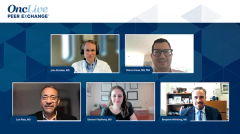
Dr. Weinberg envisions increasing ctDNA incorporation into adjuvant decision-making, anticipating that Circulate North America results will provide comfort for de-escalating ctDNA-negative patients while escalating ctDNA-positive patients.
Advertisement
Episodes in this series
Dr. Weinberg envisions increasing ctDNA incorporation into adjuvant decision-making, anticipating that Circulate North America results will provide comfort for de-escalating ctDNA-negative patients while escalating ctDNA-positive patients.
He hopes the ctDNA-positive population becomes fertile ground for drug development, potentially accelerating large prospective adjuvant trials and opening doors to curative-intent therapy testing earlier in the treatment paradigm.
Dr. Grivas anticipates continued movement toward ctDNA-guided adjuvant decisions in bladder cancer, though emphasizing need for additional data regarding patients already exposed to neoadjuvant checkpoint inhibition, referencing ongoing perioperative trials (KEYNOTE-B15, KEYNOTE-905, NIAGARA, and the upcoming VOLGA trial) where ctDNA data could help determine whether both neoadjuvant and adjuvant components are necessary.
Dr. Teplinsky discusses breast cancer's transformational potential, noting current absence of routine asymptomatic imaging surveillance creates opportunity for ctDNA to serve as a much stronger surveillance marker within adjuvant settings, supporting both de-escalation and intensification strategies as part of the broader movement toward reducing treatment intensity when appropriate.
Dr. Raez emphasizes incorporating ctDNA into every study lacking established biomarkers, particularly relevant given immunotherapy's current biomarker limitations, framing adoption as a matter of "when" rather than "if."
Closing thoughts emphasized clinical trial enrollment as the vehicle for progress, transparent patient communication regarding risks and benefits, efficient clinic workflow implementation, and addressing global access disparities, with Dr. Grivas specifically highlighting the importance of community oncology dialogue and ensuring equitable access to both diagnostic testing and therapeutics across the globe.
Advertisement
Related to this article
Updated phase 2 LINKER-SMM1 data show single-agent, fixed-duration linvoseltamab produced deep, durable, and MRD-negative responses in high-risk smoldering multiple myeloma.
The FDA has approved lirafugratinib (Lyrfigtu) for the treatment of adult patients with previously treated unresectable, locally advanced or metastatic cholangiocarcinoma harboring an FGFR2 gene fusion or other rearrangement.

An IDMC recommended continuing a phase 2 minimal residual disease study of IMNN-001 without modification following a favorable safety review.

Shailender Bhatia, MD, discusses next steps for adjuvant therapy research in light of the phase 3 ADAM trial data and broader implications for Merkel cell carcinoma.

Clinicians and researchers are set to gather for the UCSF-cosponsored International Invasive Lobular Carcinoma Symposium.
SOT106 now holds both orphan drug and fast track designations across soft tissue sarcoma and osteosarcoma ahead of a first-in-human trial.

Shailender Bhatia, MD, discusses ADAM trial design, key efficacy and safety findings, and treatment implications in Merkel cell carcinoma.

Read a refresh of breast cancer FDA news from August 2026, including an sNDA application in PIK3CA-mutant disease and a fast track designation.
Advertisement
Advertisement