
Opinion|Videos|April 1, 2026
Counseling on Fertility and Reproductive Health in Desmoid Tumor Management
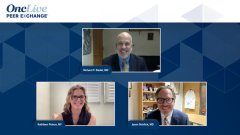
Learn how clinicians proactively manage toxicities from targeted systemic cancer therapies, using early education, monitoring, and dose adjustments to maintain adherence.
Advertisement
Episodes in this series
This section centers specifically on reproductive health considerations in patients with desmoid tumor. Given that desmoid tumor frequently affects younger adults, fertility counseling is an essential component of comprehensive care. The panel discusses how certain systemic therapies, particularly gamma secretase inhibitors, have been associated with ovarian dysfunction, raising important questions about reversibility and long-term reproductive implications.
The discussion emphasizes that conversations about fertility should occur before initiating systemic therapy. Patients of childbearing potential should be informed about possible risks, the available evidence regarding ovarian suppression, and the potential for recovery after discontinuation when data are available. Transparent counseling allows patients to weigh treatment urgency against family planning goals.
Referral to reproductive endocrinology specialists may be appropriate for patients interested in fertility preservation strategies. The panel highlights the importance of shared decision making, particularly when balancing symptom control with long-term reproductive considerations. In some cases, treatment timing may be influenced by personal plans regarding pregnancy.
Ultimately, integrating fertility counseling into desmoid tumor management reflects a patient-centered approach that extends beyond tumor control. Addressing reproductive health proactively ensures that therapeutic decisions align with both medical priorities and individual life goals.
Advertisement
Related to this article
Here is your cheat sheet to all therapeutic options that were cleared by the FDA in September 2026 spanning tumor types.

The FDA approved tucatinib plus trastuzumab and pertuzumab as maintenance for advanced HER2-positive breast cancer after induction.
The c-Met–directed ADC was designated for EGFR wild-type nonsquamous NSCLC after platinum chemotherapy and anti–PD-(L)1 therapy.
Dana-Farber’s Xin Gu, PhD, and Nicholas Polizzi, PhD, received NIH New Innovator Awards for high-risk, high-reward research.
The c-Met–directed ADC-based combination was designated for mCRC previously treated with fluoropyrimidine, irinotecan, oxaliplatin, and anti-VEGF therapy.

Pooled data from 3 randomized trials showed ropeginterferon alfa-2b improved responses vs phlebotomy alone but not vs hydroxyurea in polycythemia vera.

Experts break down key multiple myeloma data and trends from the 23rd Annual IMS Meeting.

Firmonertinib did not significantly improve BICR-assessed PFS vs platinum/pemetrexed chemotherapy in first-line EGFR exon 20–mutant NSCLC in FURVENT trial.
Advertisement
Advertisement
Trending on OncLive
1
FDA Approves Tucatinib Plus Trastuzumab/Pertuzumab as First-Line Maintenance in Advanced HER2+ Breast Cancer
2
FDA Grants Breakthrough Therapy Designation to Telisotuzumab Adizutecan Plus Bevacizumab in Refractory mCRC
3
FDA Grants Breakthrough Therapy Designation to Temab-A in Previously Treated c-Met–Expressing Nonsquamous NSCLC
4
Firmonertinib Fails to Meet PFS End Point in First-Line EGFR Exon 20 Insertion–Mutant NSCLC
5