
Opinion|Videos|March 18, 2026
Integrating Patient Reported Outcomes and Optimizing Referral Timing in Desmoid Tumor
Desmoid tumor care shifts from surgery to systemic options like gamma secretase inhibitors; experts weigh chemo, TKIs, and selective cryoablation or radiation.
Advertisement
Episodes in this series
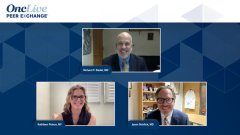
In this segment, the panel highlights the growing importance of patient reported outcomes in guiding treatment decisions for desmoid tumor. While radiographic imaging remains a key monitoring tool, improvements in pain, mobility, and overall functioning are often more clinically meaningful to patients. Clinical trial data demonstrate that symptom relief may occur even in the absence of dramatic tumor shrinkage, reinforcing the importance of evaluating treatment benefit beyond imaging alone.
Quality of life considerations frequently influence the threshold for initiating systemic therapy. Persistent pain, impaired physical activity, or limitations in daily function may justify treatment even when tumor growth is modest. Conversely, patients who remain asymptomatic with stable disease may continue on observation despite imaging changes. Incorporating patient reported outcomes into routine clinical practice ensures that decision making reflects lived patient experience rather than imaging metrics alone.
Recognizing the impact of symptoms on daily functioning also underscores the importance of timely referral to centers experienced in desmoid tumor management. The panel discusses how delayed referral to medical oncology or multidisciplinary teams can lead to inconsistent care and unnecessary interventions. Early evaluation by clinicians familiar with contemporary guidelines improves alignment with evidence-based strategies and supports individualized care planning.
By integrating patient reported outcomes with structured referral pathways, clinicians can enhance both the quality and coordination of desmoid tumor management.
Advertisement
Related to this article
Here is your cheat sheet to all therapeutic options that were cleared by the FDA in September 2026 spanning tumor types.

The FDA approved tucatinib plus trastuzumab and pertuzumab as maintenance for advanced HER2-positive breast cancer after induction.
The c-Met–directed ADC was designated for EGFR wild-type nonsquamous NSCLC after platinum chemotherapy and anti–PD-(L)1 therapy.
Dana-Farber’s Xin Gu, PhD, and Nicholas Polizzi, PhD, received NIH New Innovator Awards for high-risk, high-reward research.
The c-Met–directed ADC-based combination was designated for mCRC previously treated with fluoropyrimidine, irinotecan, oxaliplatin, and anti-VEGF therapy.
Pooled data from 3 randomized trials showed ropeginterferon alfa-2b improved responses vs phlebotomy alone but not vs hydroxyurea in polycythemia vera.

Experts break down key multiple myeloma data and trends from the 23rd Annual IMS Meeting.
Firmonertinib did not significantly improve BICR-assessed PFS vs platinum/pemetrexed chemotherapy in first-line EGFR exon 20–mutant NSCLC in FURVENT trial.
Advertisement
Advertisement
Trending on OncLive
1
FDA Approves Tucatinib Plus Trastuzumab/Pertuzumab as First-Line Maintenance in Advanced HER2+ Breast Cancer
2
FDA Grants Breakthrough Therapy Designation to Telisotuzumab Adizutecan Plus Bevacizumab in Refractory mCRC
3
FDA Grants Breakthrough Therapy Designation to Temab-A in Previously Treated c-Met–Expressing Nonsquamous NSCLC
4
Firmonertinib Fails to Meet PFS End Point in First-Line EGFR Exon 20 Insertion–Mutant NSCLC
5