
Opinion|Videos|April 8, 2026
Future Directions and Key Clinical Takeaways in Desmoid Tumor
Learn how clinicians judge tumor treatment success beyond scan shrinkage, using symptoms, stable disease, and surveillance insights from desmoid tumor trials.
Advertisement
Episodes in this series
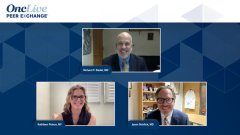
In the closing discussion, the panel reflects on opportunities to improve desmoid tumor care moving forward. A central theme is the importance of early multidisciplinary referral and adherence to guideline based management strategies. Increasing awareness among community providers may reduce unnecessary surgical interventions and promote appropriate use of surveillance.
The panel emphasizes that desmoid tumor management requires balancing biology, symptom burden, and patient preference. Observation is appropriate for many patients, while systemic therapy offers meaningful benefit for those with progressive or symptomatic disease. The key takeaway for clinicians is to adopt an individualized, patient centered framework grounded in multidisciplinary collaboration. By integrating diagnostic accuracy, molecular understanding, thoughtful treatment selection, and attention to quality of life, clinicians can deliver more aligned and effective care.
Desmoid tumor management continues to evolve, and sustained education and collaboration will remain essential to improving outcomes.
Advertisement
Related to this article

FDA has granted fast track designation to LYT-200 plus a hypomethylating agent in relapsed/refractory high-risk myelodysplastic syndromes.

Toon Van Gorp, MD, PhD, discusses key data with TUB-040 in platinum-resistant ovarian cancer and next steps for development.

Japan approved subcutaneous pembrolizumab and berahyaluronidase alfa across all indications for which intravenous pembrolizumab is approved in the country.

New research reveals how cancers carrying mutations in the p53 tumor-suppressor protein can hide those mutations from T cells.
Elise A. Chong, MD, discusses real-world liso-cel efficacy and safety, outpatient use, and future directions in relapsed/refractory mantle cell lymphoma.

Brad S. Kahl, MD, discusses TRIANGLE and EA4151 data reshaping ASCT use in frontline MCL, induction intensity, and high-risk disease strategies.

Mary Ann Anderson, MBBS, FRACP, FRCPA, PhD, discusses recent CLL approvals, BTK and BCL-2 inhibitor safety, and individualizing frontline therapy.

The top 5 OncLive TV videos of the week cover insights in NSCLC, large granular lymphocytic leukemia, ovarian cancer, and myelofibrosis.
Advertisement
Advertisement
Trending on OncLive
1
CLL Treatment Individualization Prompts Changes in Patient Evaluation and Care
2
Japan Approves Subcutaneous Pembrolizumab for All Approved Pembrolizumab Indications
3
FDA Grants Fast Track Designation to LYT-200 in R/R High-Risk MDS
4
Olaparib Maintenance Yields Promising Long-Term OS Outcomes in Asian Patients With Platinum-Sensitive, Relapsed Ovarian Cancer
5