
Opinion|Videos|March 18, 2026
Positioning Systemic Therapy and Select Local Approaches in Desmoid Tumor
Explore updated desmoid tumor care: NCCN-backed targeted drugs like nirentasertib, plus when cryoablation or radiation fits.
Advertisement
Episodes in this series
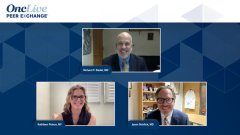
The therapeutic landscape for desmoid tumor has evolved considerably, with systemic therapy now playing a central role in the management of progressive or symptomatic disease. In this segment, the panel discusses how contemporary guidelines increasingly favor systemic treatment over routine local intervention, particularly for tumors in anatomically challenging locations or those associated with meaningful symptom burden.
Agents such as tyrosine kinase inhibitors and gamma secretase inhibitors have demonstrated clinically meaningful activity, including disease stabilization and symptomatic improvement. These options provide an alternative to surgery, particularly when resection would carry substantial morbidity or risk of recurrence. The panel emphasizes that systemic therapy decisions should be individualized based on tumor location, symptom severity, patient preference, and overall functional impact.
Local therapies, including radiation or ablative approaches, may still have a role in carefully selected patients. However, their use requires thoughtful consideration of long-term toxicity, potential complications, and institutional expertise. Rather than viewing systemic and local modalities as competing strategies, clinicians are encouraged to consider them within a broader, patient-centered framework.
Ultimately, the discussion reinforces that treatment selection in desmoid tumor is nuanced. Systemic therapy is often positioned as the preferred initial active intervention when observation is no longer appropriate, while local approaches may be reserved for specific circumstances. Aligning therapeutic choice with both disease biology and patient priorities remains central to contemporary desmoid tumor management.
Advertisement
Related to this article
Here is your cheat sheet to all therapeutic options that were cleared by the FDA in September 2026 spanning tumor types.

The FDA approved tucatinib plus trastuzumab and pertuzumab as maintenance for advanced HER2-positive breast cancer after induction.
The c-Met–directed ADC was designated for EGFR wild-type nonsquamous NSCLC after platinum chemotherapy and anti–PD-(L)1 therapy.
Dana-Farber’s Xin Gu, PhD, and Nicholas Polizzi, PhD, received NIH New Innovator Awards for high-risk, high-reward research.
The c-Met–directed ADC-based combination was designated for mCRC previously treated with fluoropyrimidine, irinotecan, oxaliplatin, and anti-VEGF therapy.
Pooled data from 3 randomized trials showed ropeginterferon alfa-2b improved responses vs phlebotomy alone but not vs hydroxyurea in polycythemia vera.

Experts break down key multiple myeloma data and trends from the 23rd Annual IMS Meeting.
Firmonertinib did not significantly improve BICR-assessed PFS vs platinum/pemetrexed chemotherapy in first-line EGFR exon 20–mutant NSCLC in FURVENT trial.
Advertisement
Advertisement
Trending on OncLive
1
FDA Approves Tucatinib Plus Trastuzumab/Pertuzumab as First-Line Maintenance in Advanced HER2+ Breast Cancer
2
FDA Grants Breakthrough Therapy Designation to Telisotuzumab Adizutecan Plus Bevacizumab in Refractory mCRC
3
FDA Grants Breakthrough Therapy Designation to Temab-A in Previously Treated c-Met–Expressing Nonsquamous NSCLC
4
Firmonertinib Fails to Meet PFS End Point in First-Line EGFR Exon 20 Insertion–Mutant NSCLC
5