
Opinion|Videos|April 1, 2026
Assessing Response Beyond Radiographic Tumor Size in Desmoid Tumor
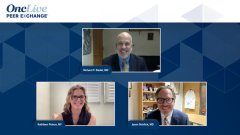
Learn how clinicians address fertility risks from newer cancer therapies, discuss ovarian toxicity, pregnancy avoidance, and when to refer for preservation.
Advertisement
Episodes in this series
This segment explores how clinicians evaluate treatment response in desmoid tumor, particularly when radiographic changes do not align with clinical improvement. Traditional oncology metrics often rely heavily on tumor shrinkage. However, in desmoid tumor, stable imaging may still represent meaningful therapeutic benefit. The panel explains that improvements in pain, mobility, and functional capacity are often more clinically relevant than size reduction alone. Patients may report substantial symptom relief even when imaging demonstrates minimal change. Conversely, radiographic progression without worsening symptoms may not immediately require therapy modification.
Integrating patient reported outcomes with imaging findings provides a more comprehensive assessment of benefit. This approach aligns with the evolving understanding of desmoid tumor as a chronic, locally aggressive condition in which quality of life preservation is paramount. By broadening response assessment beyond tumor measurements, clinicians can better tailor management decisions to individual patient experience and avoid unnecessary treatment changes.
Advertisement
Related to this article
Here is your cheat sheet to all therapeutic options that were cleared by the FDA in September 2026 spanning tumor types.

The FDA approved tucatinib plus trastuzumab and pertuzumab as maintenance for advanced HER2-positive breast cancer after induction.
The c-Met–directed ADC was designated for EGFR wild-type nonsquamous NSCLC after platinum chemotherapy and anti–PD-(L)1 therapy.

Dana-Farber’s Xin Gu, PhD, and Nicholas Polizzi, PhD, received NIH New Innovator Awards for high-risk, high-reward research.
The c-Met–directed ADC-based combination was designated for mCRC previously treated with fluoropyrimidine, irinotecan, oxaliplatin, and anti-VEGF therapy.

Pooled data from 3 randomized trials showed ropeginterferon alfa-2b improved responses vs phlebotomy alone but not vs hydroxyurea in polycythemia vera.

Experts break down key multiple myeloma data and trends from the 23rd Annual IMS Meeting.

Firmonertinib did not significantly improve BICR-assessed PFS vs platinum/pemetrexed chemotherapy in first-line EGFR exon 20–mutant NSCLC in FURVENT trial.
Advertisement
Advertisement
Trending on OncLive
1
FDA Approves Tucatinib Plus Trastuzumab/Pertuzumab as First-Line Maintenance in Advanced HER2+ Breast Cancer
2
FDA Grants Breakthrough Therapy Designation to Telisotuzumab Adizutecan Plus Bevacizumab in Refractory mCRC
3
FDA Grants Breakthrough Therapy Designation to Temab-A in Previously Treated c-Met–Expressing Nonsquamous NSCLC
4
Firmonertinib Fails to Meet PFS End Point in First-Line EGFR Exon 20 Insertion–Mutant NSCLC
5