
Patients with endometrial cancer who had a high tumor mutational burden experienced high responses to single-agent dostarlimab-gxly, irrespective of mismatch repair or microsatellite stability status.

Senior Editor, OncLive®
Courtney Marabella joined the MJH Life Sciences team in 2021 and is Senior Editor for OncLive®. Prior to joining the company she worked as the Audience Development Editor for the Asbury Park Press, part of the USA Today Network. Email: cmarabella@onclive.com
Patients with endometrial cancer who had a high tumor mutational burden experienced high responses to single-agent dostarlimab-gxly, irrespective of mismatch repair or microsatellite stability status.

Olaparib was still found to produce greater clinical benefit than enzalutamide or abiraterone acetate in patients with metastatic castration-resistant prostate cancer when the novel hormonal agents were examined separately rather than combined.
Enzalutamide plus androgen-deprivation therapy produced clinical benefit over ADT alone in patients with metastatic hormone-sensitive prostate cancer, regardless of prior antiandrogen therapy and its pretreatment duration.
Bacille Calmette-Guérin (BCG) plus N-803 yielded promising responses and an encouraging safety profile in patients with BCG-unresponsive, non-muscle invasive bladder cancer carcinoma in situ.

A single dose of ciltacabtagene autoleucel continued to elicit early, deep, and durable responses and showcase a manageable safety profile in heavily pretreated patients with multiple myeloma.

The combination of lurbinectedin and doxorubicin produced comparable efficacy to that of standard-of-care vincristine, cyclophosphamide, and doxorubicin or topotecan in patients with relapsed small cell lung cancer, missing the primary end point of the phase 3 ATLANTIS trial.
Selpercatinib demonstrated robust and durable efficacy with a favorable safety profile in Chinese patients with advanced, RET fusion–positive non–small cell lung cancer.
Adjuvant treatment with pembrolizumab led to a significant improvement in disease-free survival compared with placebo after nephrectomy in patients with renal cell carcinoma who are at high risk for recurrence, as underscored by data from the pivotal phase 3 KEYNOTE-564 trial.

Josep M. Llovet, MD, discusses the importance of identifying biomarkers of response to checkpoint inhibitors for patients with hepatocellular carcinoma, as well as future research directions.

More detrimental effects on health-related quality of life were reported, and lasted for at least 12 months, with the combination of trastuzumab plus chemotherapy compared with trastuzumab alone in older patients with HER2-positive breast cancer, according to an analysis of the phase 3 RESPECT trial.

The universal cancer vaccine UV1 and granulocyte-macrophage colony-stimulating factor in combination with pembrolizumab elicited encouraging initial signs of clinical response with favorable safety and tolerability when used in the first-line treatment of patients with metastatic melanoma, meeting the primary end point of an ongoing phase 1 trial.
The rolling submission of a biologics license application to support the approval of both toripalimab plus gemcitabine- and cisplatin-based chemotherapy as a first-line treatment for patients with advanced recurrent or metastatic nasopharyngeal carcinoma, as well as toripalimab monotherapy for the second-line or beyond treatment of patients with recurrent or metastatic nasopharyngeal carcinoma after platinum-based chemotherapy has been completed.
The topical HDAC inhibitor remetinostat demonstrated favorable tolerability and clinically significant efficacy in reducing disease burden in patients with basal cell carcinoma, according to results from a phase 2 trial.

Jay M. Lee, MD, discusses the implications of the ADAURA trial in early-stage resectable NSCLC, the importance of molecular testing, and the need for a multidisciplinary approach in this population.

During the height of the COVID-19 pandemic, Black patients were significantly less likely to undergo prostate cancer surgery compared with White patients, highlighting potential systemic inequities in care across medical specialties, and providing further rationale to recognize and the unintended diversion in cancer care due to the pandemic.
Increased intake of vitamin D was associated with a decreased risk of early-onset colorectal cancer and precursors in younger women between the ages of 25 years and 42 years.

Extended adjuvant endocrine therapy via intermittent administration of letrozole did not improve disease-free survival vs continuous use in postmenopausal patients with hormone receptor–positive breast cancer, but represents a valid approach for those who require or prefer a treatment interruption.

Riad Salem MD, discusses previous data with TheraSphere™ Yttrium-90 in metastatic colorectal cancer, the potential role of this modality in the second-line setting, and future research directions.
Chris Labaki, MD, and Quoc-Dien Trinh, MD, discuss their research on the decline in cancer screenings during the height of the COVID-19 pandemic, the recovery of these tests, and potential existing disparities to be addressed.

Nivolumab followed by treatment with tumor-infiltrating lymphocytes was generally safe and found to have clinical benefit in patients with metastatic non–small cell lung cancer.

Alexander M. Lesokhin, MD, discusses the promise of elranatamab in the treatment of patients with relapsed/refractory multiple myeloma, the objective of MagnetisMM-3, and other emerging approaches that are generating excitement in the paradigm.
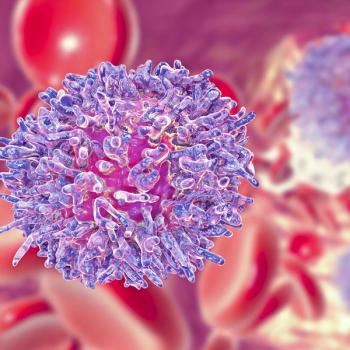
Jean-Jacques Kiladjian, MD, PhD, discusses the effectiveness of momelotinib compared with ruxolitinib in patients with myelofibrosis who have anemia and are naïve to JAK inhibitors.

Neoadjuvant stereotactic radiation followed by radical nephrectomy and thrombectomy is a safe and feasible treatment option for patients with renal cell carcinoma and inferior vena cava tumor thrombus.
Nagla F. Abdel Karim, MD, discusses the ongoing CheckMate-73L trial in patients with stage III non–small cell lung cancer, the potential impact of the research on the paradigm, and future areas of exploration.
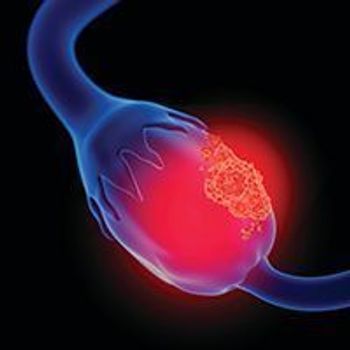
The addition of GEN-1 to standard-of-care neoadjuvant chemotherapy has shown preliminary safety and clinical activity and appears to have an impact on the tumor microenvironment in patients with advanced epithelial ovarian cancer.

Benjamin H. Kann, MD, discusses the significance of the PACIFIC trial in patients with stage III NSCLC, existing barriers to treatment, and shared strategies to overcome common challenges faced in clinical practice.

The role of CD38 within prostate cancer progression must be further explored, along with CD38-targeting in patients with high-risk disease.

Joshua F. Zeidner, MD, discusses the role that HMAs have played in the MDS treatment landscape and shared data reported with promising emerging agents like pevonedistat that can be combined with HMAs to improve outcomes for certain patient subsets.

Ongoing studies with biomarker-selected cohorts may help to identify subsets of patients with thoracic malignancies who might confer benefit from PARP inhibitors.

Leslie L. Montgomery, MD, and Tara M. Balija, MD, discuss the benefits of a novel reflector device in patients with breast cancer, its efficacy in identifying clipped axillary lymph nodes, and the potential future use of this device in other cancer types.