
HEPZATO KIT has demonstrated statistically significant benefit compared to best alternative care in patients with liver-dominant metastatic ocular melanoma, according to preliminary results from the phase 3 FOCUS trial.

Senior Editor, OncLive®
Courtney Marabella joined the MJH Life Sciences team in 2021 and is Senior Editor for OncLive®. Prior to joining the company she worked as the Audience Development Editor for the Asbury Park Press, part of the USA Today Network. Email: cmarabella@onclive.com
HEPZATO KIT has demonstrated statistically significant benefit compared to best alternative care in patients with liver-dominant metastatic ocular melanoma, according to preliminary results from the phase 3 FOCUS trial.

The first-in-class N-terminal domain androgen receptor inhibitor EPI-7386 is being examined in combination with enzalutamide in patients with metastatic castration-resistant prostate cancer as part of a phase 1/2 trial.

A prospective, multicenter, observational USOPTIVAL study has been initiated in the United States to examine an investigational cell-free DNA blood test to detect advanced adenoma and colorectal cancer.

From delayed diagnoses, to the emergence of telemedicine, to managing the increased emotional burden experienced by patients and healthcare professionals alike, the community has been forced to approach cancer care in ways they never had before in light of the COVID-19 pandemic.

The combination of mirvetuximab soravtansine and rucaparib was found to be well tolerated, with encouraging activity reported in heavily pretreated patients with endometrial, ovarian, fallopian tube, or primary peritoneal cancer.
Japan’s Ministry of Health, Labour and Welfare has approved lisocabtagene maraleucel, a CAR T-cell therapy designed to target CD19, for the treatment of patients with relapsed or refractory large B-cell lymphoma, as well as relapsed/refractory follicular lymphoma.
Treatment with chemotherapy plus immunotherapy did not demonstrate significant clinical benefit over chemotherapy alone in patients with EGFR-mutated non–small cell lung cancer after progression on osimertinib.

Tipifarnib showed promising clinical activity in patients with recurrent and/or metastatic, HRAS-mutant head and neck squamous cell carcinoma whose disease had progressed after prior therapy.

The fatty acid synthase inhibition caused by AZ12756122 could represent a promising therapeutic alternative to overcome resistance to EGFR TKIs because of the synergistic interaction that it has with osimertinib and its ability to reduce cancer stem cell properties in EGFR-mutant non–small cell lung cancer cell models.

Donald W. Northfelt, MD, MS, FACP, discusses the progress made with CDK4/6 inhibitors in the treatment of patients with ER-expressing breast cancer and pivotal trials that have moved the needle forward.
David C. Portnoy, MD, FACP, discusses ongoing studies examining immunotherapy and what is needed to move the needle forward in SCLC.

The pipeline of new agents in gastrointestinal cancers is robust, with the emergence of several antibody-drug conjugates, KRAS G12C inhibitors, and novel TKI/immune checkpoint inhibitor combinations.
The GAS6/AXL inhibitor AVB-500, when combined with paclitaxel, elicited clinical benefit with favorable tolerability in patients with platinum-resistant ovarian cancer, according to data from a phase 1b study.

Eribulin induced limited activity with a favorable toxicity profile in patients with recurrent or advanced cervical cancer, and prior exposure to paclitaxel was associated with decreased response to the agent.

M Lia Palomba, MD, discusses the data from the TRANSCEND-NHL-001 trial and projected how lisocabtagene maraleucel could fit into the treatment paradigm for patients with MCL.

Anjana Pillai, MD, discusses recent advances made in the HCC treatment paradigm, as well as what the conference will offer to healthcare providers working in the field.

Edgardo Santos, MD, FACP, discusses advances made with immunotherapy regimens in the first-line treatment of patients with metastatic non–small cell lung cancer and areas of active investigation.

Jerald Radich, MD, highlights the role minimal residual disease in acute myeloid leukemia, how different technological advanced have increased the application of MRD-based strategies, and ongoing efforts that are being made to address remaining questions.

Ciltacabtagene autoleucel has a manageable safety profile at its recommended phase 2 dose, and yielded early, deep, and durable responses in heavily pretreated patients with relapsed/refractory multiple myeloma.
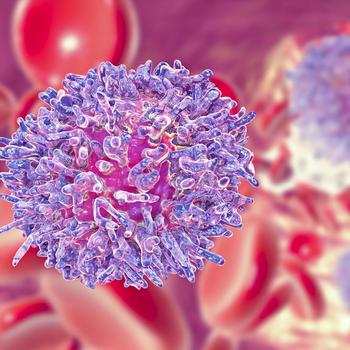
A risk-adapted CD19 CAR T-cell therapy dosing approach allowed pediatric patients with relapsed/refractory acute lymphocytic leukemia to maintain a high rate of remission, while reducing the risk of severe toxicities among those with a high initial disease burden
Daniel Lin, MD, MS, discusses pivotal trials examining important targeted agents for patients with cholangiocarcinoma and the importance of comprehensive genomic testing to guide treatment decisions.

Even in 2021, disparities in outcomes of younger women with breast cancer vs their older counterparts remain; addressing behavioral issues and psychological concerns in this population could vastly improve their quality of life, treatment adherence, and ultimately, survival.

James R. Waisman, MD, shares his process for matching patients with the right treatment in the metastatic setting and areas for future exploration.

The FDA has granted priority review to the new drug application for the novel compound pafolacianine sodium injection for use in the identification of ovarian cancer during surgery.
With an increased understanding of disease biology, several approaches are under examination to optimize the management of patients with graft-versus-host disease.

Several options have emerged for patients with acute myeloid leukemia who are not candidates to receive chemotherapy, with venetoclax-based regimens chief among them.
Hun Ju Lee, MD, discusses a phase 1/2 study evaluating cirmtuzumab in combination with ibrutinib in patients with mantle cell lymphoma or chronic lymphocytic leukemia.

Kerry A, Rogers, MD, discusses the rationale behind the phase 1b study of VAY736 combined with ibrutinib in patients with chronic lymphocytic leukemia and the next steps for this research.
Neoantigen long peptide vaccines continued to show durable T-cell responses in patients with high-risk melanoma that persisted 4 years after initial vaccination.

February 24, 2021—The off-the-shelf immune primer ilixadencel in combination with sunitinib showcased an encouraging, clinically meaningful survival benefit when used in the first-line treatment of newly diagnosed patients with metastatic renal cell carcinoma.