Articles by Tony Berberabe, MPH

Ibrutinib did not prolong survival vs placebo and is linked with increased susceptibility to bleeding in patients with asymptomatic early-stage chronic lymphocytic leukemia, suggesting that a watch-and-wait approach should continue as the standard for this population.
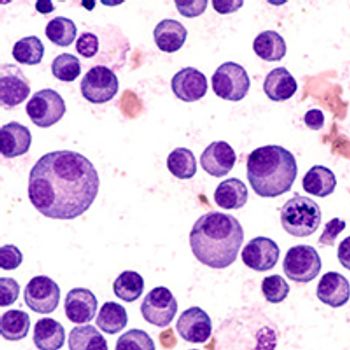
The addition of daratumumab to frontline induction therapy prior to peripheral blood stem cell collection reduced the number of patients with newly diagnosed multiple myeloma who were able to meet their stem cell collection goals on first attempt.
Treatment with doxorubicin plus zalifrelimab and balstilimab produced a favorable 6-month progression-free survival rate in patients with difficult-to-treat soft tissue sarcoma subtypes unlikely to respond to doxorubicin or immune checkpoint inhibitor monotherapy.
The CAR T-cell therapy PHE885 produced responses and high minimal residual disease negativity rates with no new safety signals in patients with relapsed/refractory multiple myeloma.

Second-line atezolizumab plus cabozantinib did not generate a clinical benefit over standard-of-care docetaxel in patients with metastatic non–small cell lung cancer previously treated with immune checkpoint inhibitors and chemotherapy.

Pembrolizumab plus standard-of-care chemotherapy, followed by maintenance pembrolizumab, reduced the risk of disease progression or death vs chemotherapy alone in patients with mismatch repair–deficient and mismatch repair–proficient advanced or recurrent endometrial cancer.

Third-line bevacizumab plus trifluridine/tipiracil demonstrated a survival and disease control benefit vs trifluridine/tipiracil alone in patients with refractory metastatic colorectal cancer and all clinically relevant subgroups.
Low doses of lenalidomide prolonged time to and decreased the risk of transfusion dependency and induced quality clonal responses with no increases in progression rate or clonal evolution in patients with low-risk myelodysplastic syndrome.

ARV-471 monotherapy elicited a significant clinical benefit rate in patients with estrogen receptor–positive/HER2-negative locally advanced or metastatic breast cancer who had undergone prior hormonal therapy and chemotherapy, including those with ESR1 mutations.

REGN5458 produced durable responses with low rates of cytokine release syndrome in patients with relapsed/refractory multiple myeloma.
Pembrolizumab plus chemotherapy with or without bevacizumab prolonged progression-free survival and overall survival in key subgroups of patients with persistent, recurrent, or metastatic cervical cancer, displaying benefits similar to those seen in the broader patient population.

Extended follow-up data from the LIBRETTO-001 demonstrated that selpercatinib elicited durable responses in patients with RET fusion-positive solid tumors, including refractory gastrointestinal malignancies.

The combination of lenvatinib and pembrolizumab demonstrated clinically meaningful improvements in progression-free survival on next line of therapy among all-comer patients with advanced endometrial cancer and those with DNA mismatch repair proficient disease, according to an exploratory analysis of the phase 3 KEYNOTE-775 trial.

The addition of subcutaneous epcoritamab to standard-of-care R-CHOP demonstrated clinically meaningful response in the first-line treatment of patients with high-risk diffuse large B-cell lymphoma according to updated results of a single-arm of the EPCORE NHL-2 trial.
Infigratinib yielded notable activity and tolerability in patients with localized upper tract urothelial carcinoma harboring FGFR1/2/3 mutations.

Patients with low-grade non-muscle invasive bladder cancer who received the chemoablative reverse thermal gel UGN-102 were found to have maintained health-related quality-of-life outcomes.
Axicabtagene ciloleucel continued to elicit high response rates and durable activity in patients with relapsed/refractory follicular lymphoma and marginal zone lymphoma, according to updated findings from the phase 2 ZUMA-5 trial.

The combination of the CD40 agonist antibody sotigalimab and pembrolizumab demonstrated a favorable safety profile and led to immunologic changes that correlated with clinical response in patients with unresectable stage III or IV metastatic melanoma.
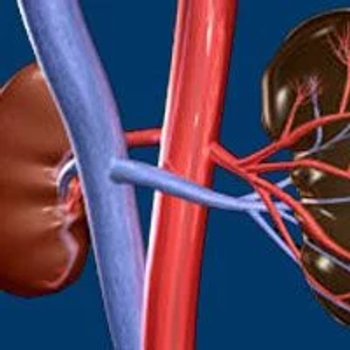
Treatment with cabozantinib (Cabometyx, Cometriq) in the second-line setting generated similar time-to-event end points and response rates in patients with advanced renal cell carcinoma, regardless of frontline immune-oncology combinations.
Niraparib in combination with cabozantinib demonstrated a manageable safety profile, with preliminary efficacy observed in heavily pretreated patients with metastatic urothelial carcinoma.

Pembrolizumab plus regorafenib failed to demonstrate a significant improvement in progression-free survival in pretreated patients with microsatellite stable colorectal cancer (MSSCRC), missing the primary end point of the phase 1/2 trial.
The addition of daratumumab to lenalidomide, bortezomib, and dexamethasone continued to elicit improved outcomes vs RVd alone in patients with newly diagnosed, transplant-eligible multiple myeloma, according to findings from the extended 2-year follow-up analysis of the phase 2 GRIFFIN trial.
The use of the International Prognostic Scoring System score and JAK2 mutation status may identify patients at risk for major arterial and venous thrombosis in primary myelofibrosis, and suggests appropriate anti-thrombotic prophylaxis.

Pyrotinib plus capecitabine exhibited longer overall survival (OS), compared with lapatinib plus capecitabine, in patients with HER2-positive breast cancer

Higher Oncotype DX recurrence scores were associated with prolonged persistence to 5 years of endocrine therapy vs lower Oncotype DX recurrence scores in patients with low-risk, estrogen receptor-positive/progesterone receptor–positive breast cancer, according to findings from a retrospective review.

CAR T-cell products targeting CD19 are eliciting clinical activity in patients with indolent non-Hodgkin lymphoma, as seen in the ZUMA-5, SCHOLAR-5, and ELARA trials, but longer follow-up will showcase the true potential of this treatment in this subpopulation.

Estimated 4-year mortality rates were greater than 10% in patients with polycythemia vera and vascular complications led to approximately one-third of these deaths, according to a retrospective analysis of the prospective REVEAL trial (NCT02252159) presented during the Society of Hematologic Oncology (SOHO) 2021 Annual Meeting.

The cure rate for patients with T-cell acute lymphoblastic leukemia has improved dramatically over the past few decades, with outcomes becoming comparable to what is observed in those with B-cell acute lymphoblastic leukemia.

Time-to-next treatment and overall survival were improved in a real-world study evaluating patients who received rituximab maintenance after first-line treatment with bendamustine and rituximab or R-CHOP in patients with mantle cell lymphoma.

Patients with stage III melanoma who progressed following placebo-based treatment in the first part of the phase 3 EORTC 1325/KEYNOTE-054 trial and crossed over to receive pembrolizumab post-recurrence derived a 38.8% overall response rate and a 32% overall 3-year progression-free survival rate.
