

CAR T-Cell Therapy
Latest News
Advertisement
Latest Videos























































Advertisement
More News
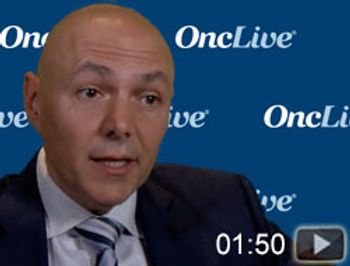
Ezra Cohen, MD, associate director, Moores Cancer Center at the University of California, San Diego, discusses CAR T-cell therapy for patients with head and neck cancer.
Ezra Cohen, MD, discusses anti–PD-1/PD-L1 combination regimens in HNSCC, the potential for CAR T-cell therapy, and remaining challenges with immunotherapy in the field.
Bajil J. Shah, MD, discusses the significant impact CAR T-cell therapy can have on the treatment landscape for patients with acute lymphoblastic leukemia.
Oncologic Drugs Advisory Committee voted 10-0 today to recommend approval of a biologics license application for tisagenlecleucel (CTL019) for the treatment of patients aged 25 or younger with relapsed/refractory B-cell acute lymphoblastic leukemia.
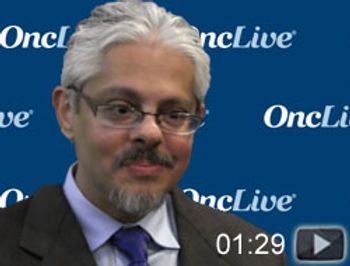
Bijal D. Shah, MD, medical oncology, of Moffit Cancer Center, explains why chimeric antigen receptor (CAR) T-cell therapy has shown the most progress in acute lymphoblastic leukemia (ALL).
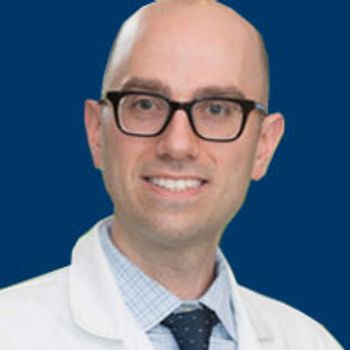
Eric Smith, MD, PhD, discusses the response to CD19 CAR T-cell therapy in B-cell ALL.
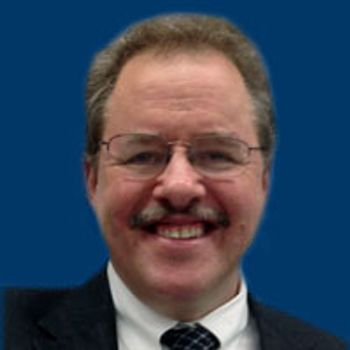
CTL019, an investigational chimeric antigen receptor T-cell therapy, demonstrated high response rates and a manageable safety profile in pediatric and young adult patients with relapsed and/or refractory acute lymphoblastic leukemia.

Miguel-Angel Perales, MD, deputy chief, Adult Bone Marrow Transplant Service, director, Adult Bone Marrow Transplantation Fellowship Program, Memorial Sloan Kettering Cancer Center, discusses the remaining questions with CAR T-cell therapy in hematologic malignancies.
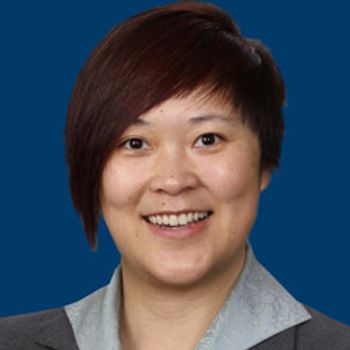
All patients with multiple myeloma in a phase I study showed a response following treatment with an active dose of bb2121, an investigational anti–BCMA CAR T-cell construct.
Investigators reported the characterization of early clinical and serum biomarkers that may identify specific patients with ALL being treated with 19-28z chimeric antigen receptor T cells needing an early intervention to mitigate the development of severe neurotoxicity.
Saad Z. Usmani, MD, Department of Hematologic Oncology and Blood Disorders, Levine Cancer Institute/Carolinas HealthCare System, discusses CAR T-cell therapy in multiple myeloma.
Jeremy S. Abramson, MD, clinical director, Center for Lymphoma, Massachusetts General Hospital, discusses the TRANSCEND study, which is exploring the CD19-directed chimeric antigen receptor (CAR) T-cell therapy JCAR017 in patients with relapsed/refractory aggressive B-cell non-Hodgkin lymphoma (NHL).
Sundar Jagannath, MD, director of the Multiple Myeloma program and professor of medicine at the Tisch Cancer Institute, Mount Sinai, discusses chimeric antigen receptor (CAR) T-cell therapy for patients with multiple myeloma.
Concurrent treatment with CTL-119 cell therapy and ibrutinib (Imbruvica) led to complete marrow clearance of leukemic cells in 8 of 9 evaluable patients with heavily pretreated or genetically high-risk chronic lymphocytic leukemia, results of a pilot study showed.
The FDA’s Oncologic Drugs Advisory Committee has scheduled a public hearing to discuss a biologics license application for tisagenlecleucel-T for patients aged 3 to 25 years with relapsed/refractory B-cell acute lymphoblastic leukemia.
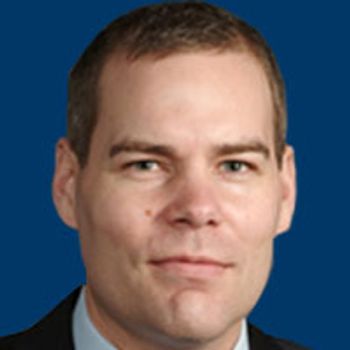
Peter Martin, MD, discusses the evolution of treatment and ongoing research for patients with mantle cell lymphoma.
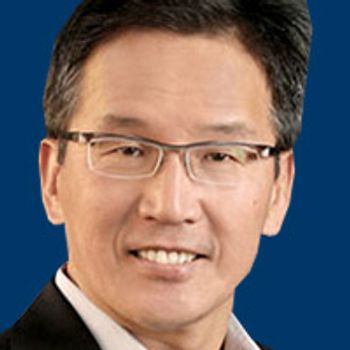
The FDA has granted a priority review to axicabtagene ciloleucel for transplant-ineligible patients with relapsed or refractory non-Hodgkin lymphoma.
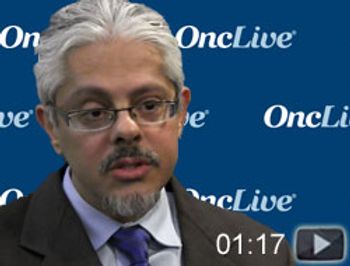
Bijal D. Shah, MD, medical oncology, of Moffit Cancer Center, discusses the status of chimeric antigen receptor (CAR) T-cell therapy in acute lymphoblastic leukemia (ALL).
Sophie Papa, PhD, MBBS, MRCP, medical oncologist, Clinical Academic Group, Department of Research Oncology, King’s College London, discusses leukapheresis manufacturing approach in head and neck cancer.
John P. Leonard, MD, discusses advancements across hematologic malignancies and pivotal trial data he is anticipating at the 2017 ASCO Annual Meeting.
The first cerebral edema death in the ZUMA-1 CAR T-cell therapy trial was disclosed today by Kite Pharma on a conference call with investors announcing the company’s first quarter financial results.

JUNO Therapeutics announced that it hopes to accelerate its process for developing CAR T cells from weeks to just 2 days.

Sattva S. Neelapu, MD, discusses the ZUMA-1 trial and the potential impact of these results on patients with non-Hodgkin lymphoma.
John P. Leonard, MD, associate dean of Clinical Research, interim chair of the Department of Medicine, Weill Cornell Medical College, Weill Cornell Medicine/NewYork-Presbyterian Hospital, discusses the emergence and potential of chimeric antigen receptor (CAR) T-cell therapy across hematologic malignancies.
Shaji Kumar, MD, professor of Medicine, Mayo Clinic, discusses the potential of chimeric antigen receptor (CAR) T-cell therapy in the field of multiple myeloma.
Advertisement
Advertisement
Trending on OncLive
1
FDA Approval of Dostarlimab Brings Potential Organ-Sparing Approach in dMMR Locally Advanced Rectal Cancer
2
Casdatifan Demonstrates Activity in Advanced Clear Cell RCC
3
Treatment Tailoring and Weighing Alternative Formulations Support Optimal TKI Deployment in CML
4
HER2+ Maintenance Therapy Approvals and Innovative Brain Metastasis Care Reshape Breast Cancer Management
5