




Chronic Lymphocytic Leukemia
Latest News
Advertisement
Latest Videos
























































Advertisement
More News
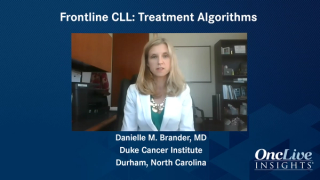
Danielle Marie Brander, MD, assistant professor of medicine, Duke Cancer Institute, discusses the treatment landscape for patients with high-risk chronic lymphocytic leukemia (CLL).

Jacqueline D. Barrientos, MD, MS, discusses the current treatment landscape for CLL, highlights some of the biggest challenges for physicians, and gives her insight on how to move forward in the field.
Kerry Rogers, MD, discusses the feasibility of a new treatment for tumor lysis syndrome and what research still needs to be done with these agents in chronic lymphocytic leukemia.
With newer agents approved for patients with chronic lymphocytic leukemia, physicians are now challenged with how best to utilize them.

Jacqueline D. Barrientos, MD, MS, CLL Research and Treatment Program, Northwell Health Systems, discusses the current challenges oncologists are faced with in the field of chronic lymphocytic leukemia.
Robert L. Talley, MD, hematologist/medical oncologist, Centerpoint Medical Center, Sarah Cannon Cancer Institute, discusses clinical trials for patients with chronic leukemias.
Robert L. Talley, MD, hematologist/medical oncologist, Centerpoint Medical Center, Sarah Cannon Cancer Institute, discusses the CAPTIVATE trial in patients with chronic lymphocytic leukemia (CLL).
Anthony R. Mato, MD, hematologic oncologist, director, CLL Program, Memorial Sloan Kettering Cancer Center, discusses a phase II trial of umbralisib in chronic lymphocytic leukemia.

Matthew S. Davids, MD, MMSc, associate director, Center for Chronic Lymphocytic Leukemia, Dana-Farber Cancer Institute, discusses duvelisib in relapsed/refractory chronic lymphocytic leukemia.
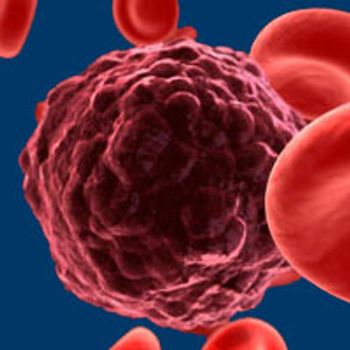
Antibody-drug conjugates represent a targeted class of agents with an improved therapeutic index over traditional chemotherapy in the treatment of non-Hodgkin lymphoma.
Anthony R. Mato, MD, hematologic oncologist, director, CLL Program, Memorial Sloan Kettering Cancer Center, discusses the safety and efficacy of umbralisib in patients with chronic lymphocytic leukemia.

The combination of duvelisib and fludarabine-cyclophosphamide-rituximab demonstrated efficacy as a frontline treatment for younger patients with chronic lymphocytic leukemia.
Matthew Davids, MD, MMSc, associate director, Center for Chronic Lymphocytic Leukemia, Dana-Farber Cancer Institute, discusses duvelisib plus fludarabine-cyclophosphamide-rituximab (FCR) as a frontline therapy for the treatment of younger patients with chronic lymphocytic leukemia.

The combination of obinutuzumab and chlorambucil reduced the risk of death by 24% versus rituximab plus chlorambucil in treatment-naïve patients with chronic lymphocytic leukemia with comorbidities.

The FDA has granted a regular approval to venetoclax for the treatment of patients with chronic lymphocytic leukemia or small lymphocytic lymphoma, with or without 17p deletion, following at least 1 prior therapy. The BCL-2 inhibitor is now also approved for use in combination with rituximab in the same patient population.

The frontline combination of ibrutinib and venetoclax demonstrated a 100% objective response rate for patients with chronic lymphocytic leukemia, with 77% of patients testing negative for minimal residual disease in the peripheral blood after 6 cycles.

Frontline treatment with the combination of ibrutinib (Imbruvica) and obinutuzumab (Gazyva) improved progression-free survival compared with chlorambucil plus obinutuzumab in patients with CLL or SLL.
Ryan W. Jacobs, MD, discusses the use of small molecule inhibitors in the treatment of patients with chronic lymphocytic leukemia.

Ryan W. Jacobs, MD, physician, Levine Cancer Institute, discusses the frontline treatment of patients with chronic lymphocytic leukemia.
Experts offer their perspectives on developments in the field of chronic lymphocytic leukemia, such as novel combinations and emerging agents.
Alan Skarbnik, MD, staff physician, Department of Bone Marrow Transplantation and Department of Lymphoma, John Theurer Cancer Center, discusses the changing treatment landscape of chronic lymphocytic leukemia.

Results from a recent study may show why some patients with chronic lymphocytic leukemia are resistant to tisagenlecleucel, while potentially offering a pathway to enhance patient response.
Advertisement
Advertisement
Trending on OncLive
1
Adjuvant Giredestrant Preserves QOL With Sustained Tolerability in ER+, HER2– Early Breast Cancer
2
Sacituzumab Govitecan Triplet Elicits Durable Responses in Treatment-Naive Metastatic Urothelial Cancer
3
Perioperative Enfortumab Vedotin Plus Pembrolizumab Improves ctDNA Clearance in Cisplatin-Eligible MIBC
4
Ad Hoc Analysis Supports Contributions of Both Enfortumab Vedotin and Pembrolizumab in Cisplatin-Ineligible MIBC
5